

The Broom-Making Livelihood of Angkor Residents in Samraong Village
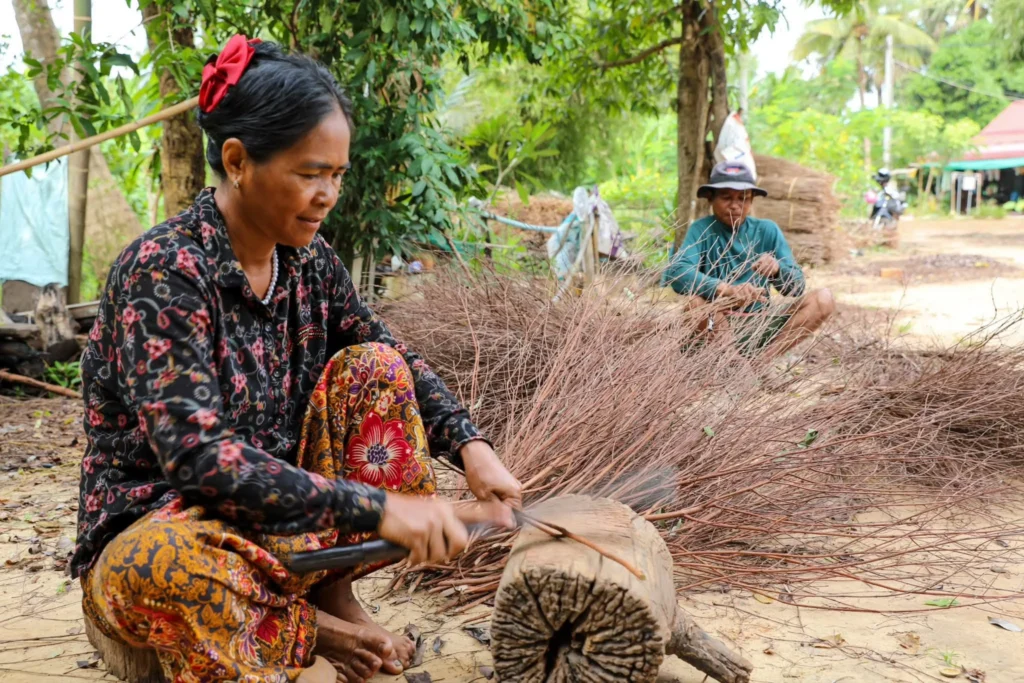
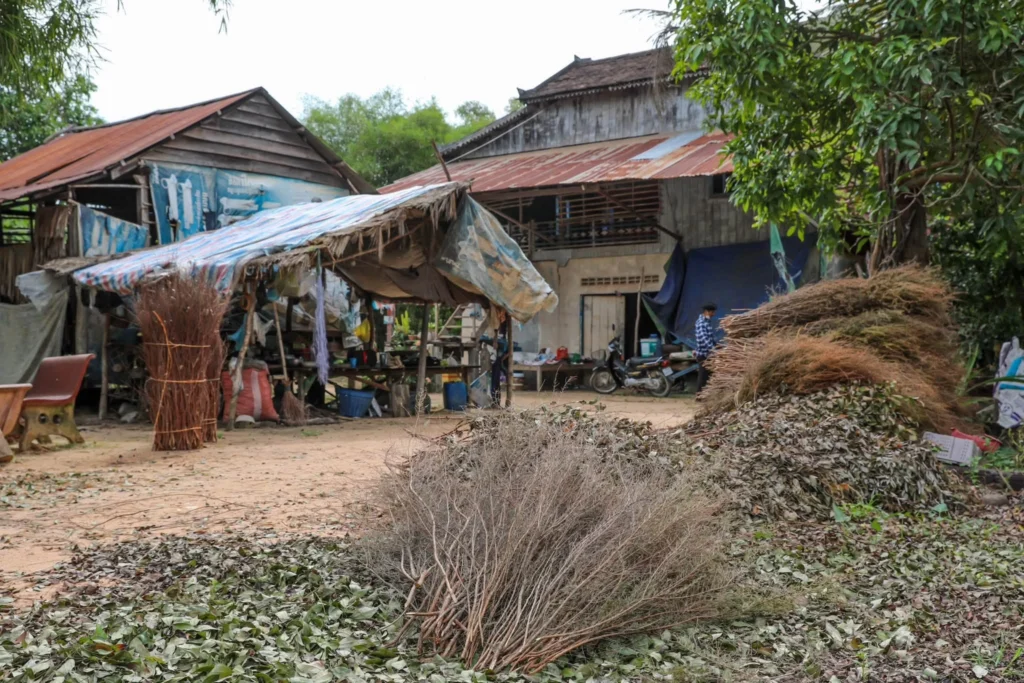
Brooms are an essential everyday household item used for sweeping homes, yards, and streets. While brooms made from plants come in various types, the villagers of Samraong in Leang Dai commune, Angkor Thom district, primarily craft them from Pouch plants (wild broom grass/shrubs) and Mrech Tonsay (a wild shrub/herb).
Mr. Roeum Saro’s family is one among several in the village that earn a living by making and selling brooms. He has to travel into the forests to gather these plants for production; nowadays, he travels all the way to Stoung district in Kampong Thom province, as the local forests in his village have become increasingly depleted. He shared that each trip takes him at least nearly 10 days to find and cut enough Pouch and Mrech Tonsay stems to fill a hand-tractor trailer, which requires him and fellow villagers to camp out in the forest overnight.
Meanwhile, his wife, Mrs. Rim Hav, noted that from the raw materials gathered on each trip, they can assemble between 500 and 600 brooms—or sometimes up to 1,000 brooms if the harvest is abundant. Middlemen buy each broom from them at a price of 500 to 600 riels.
Although the selling price is not very high, this Samraong villager emphasized that the craft significantly eases her family’s financial burden, supplementing their income from rice farming and other day-labor jobs. Moreover, broom-making is a traditional livelihood passed down through generations; Mrs. Rim Hav mentioned that she has known how to make and sell these brooms since she was 20 years old.
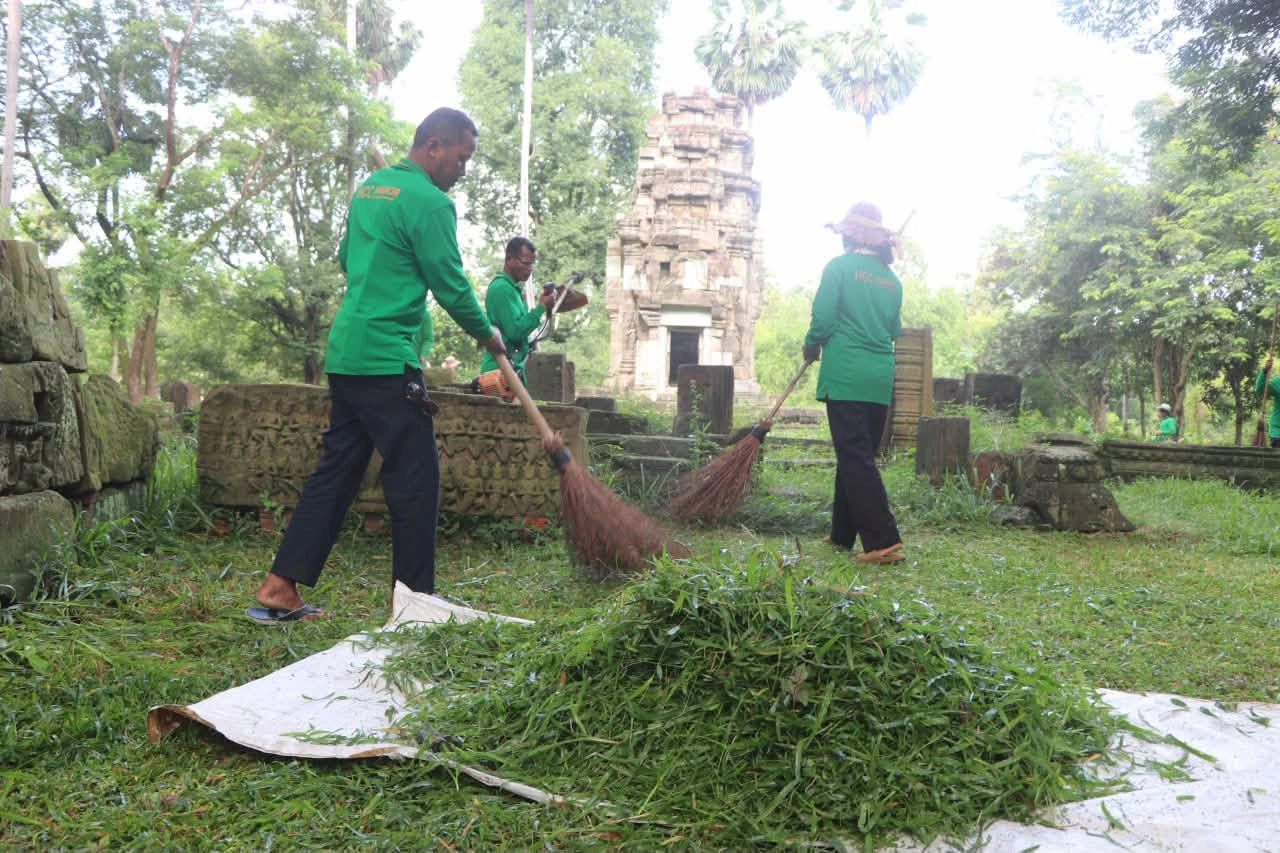
At the Angkor Archaeological Park, this specific type of broom is commonly seen being used to sweep the temple grounds—especially in areas heavily covered with fallen leaves—as it sweeps cleaner and more effectively than other types of brooms.