

Six Trainees from Three Heritage Protection Institutions Complete Training on Conservation and Restoration of Ancient Metal and Ceramic Artworks
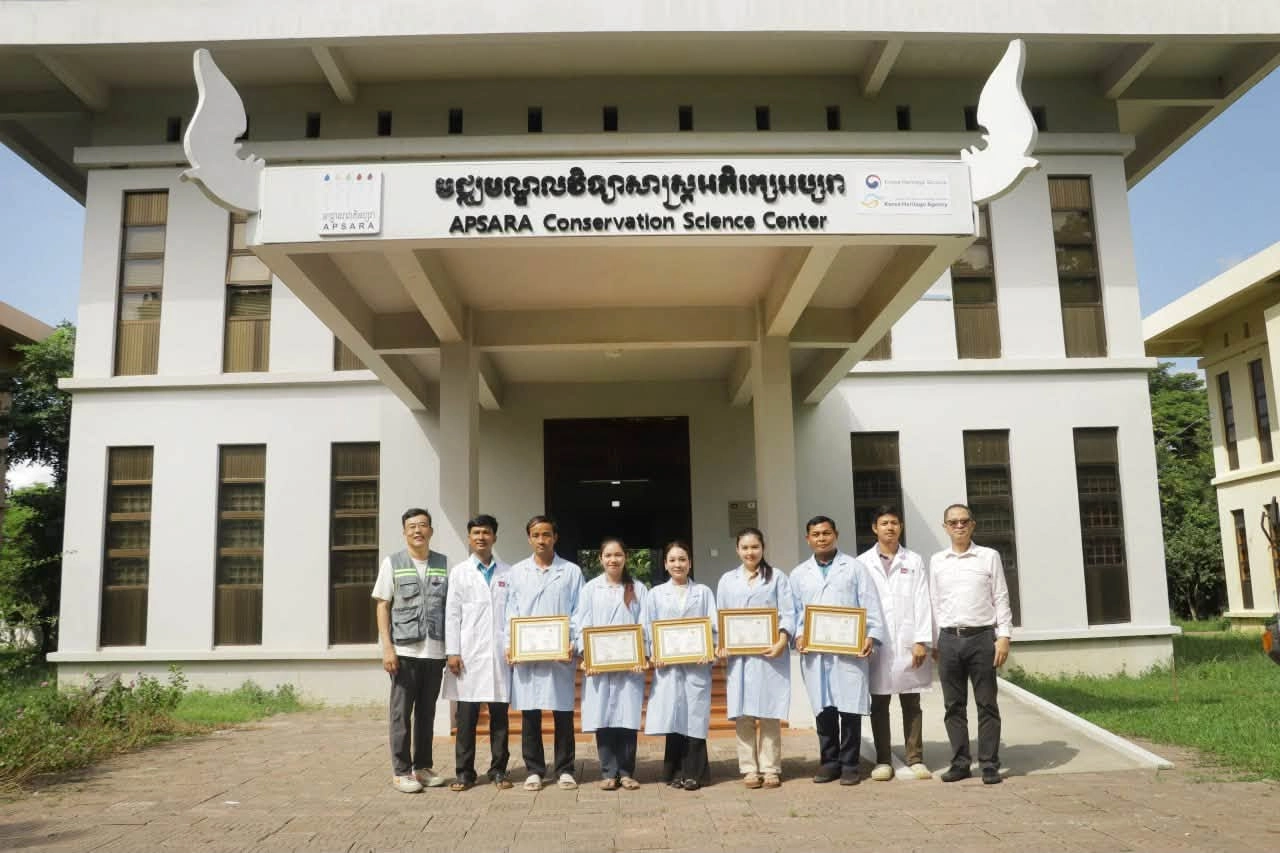
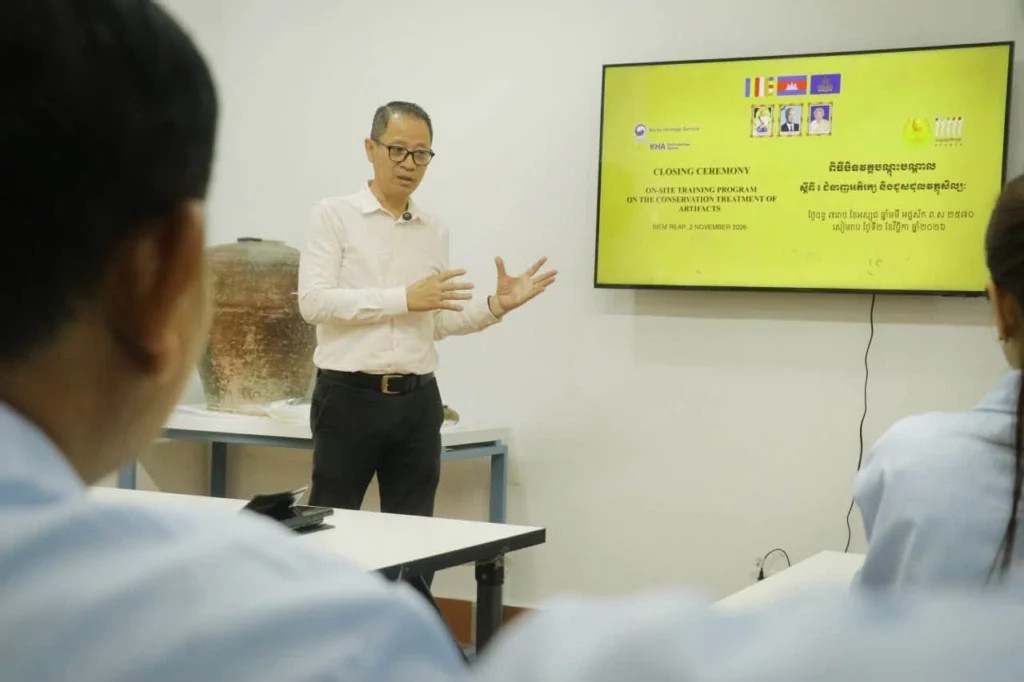
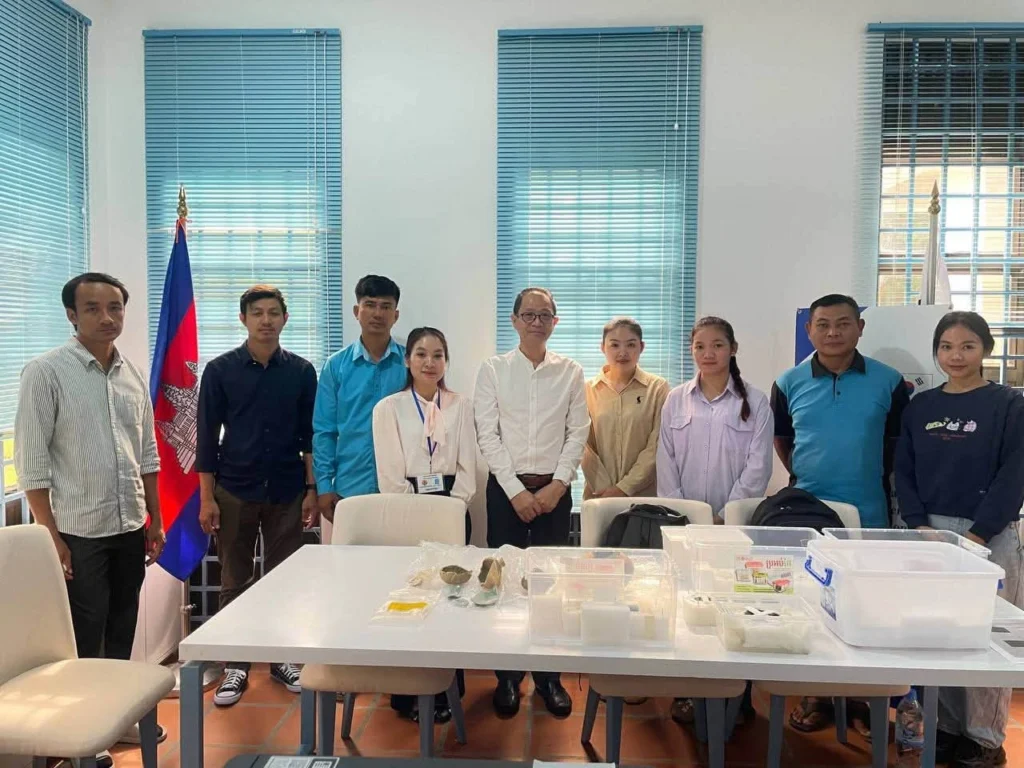
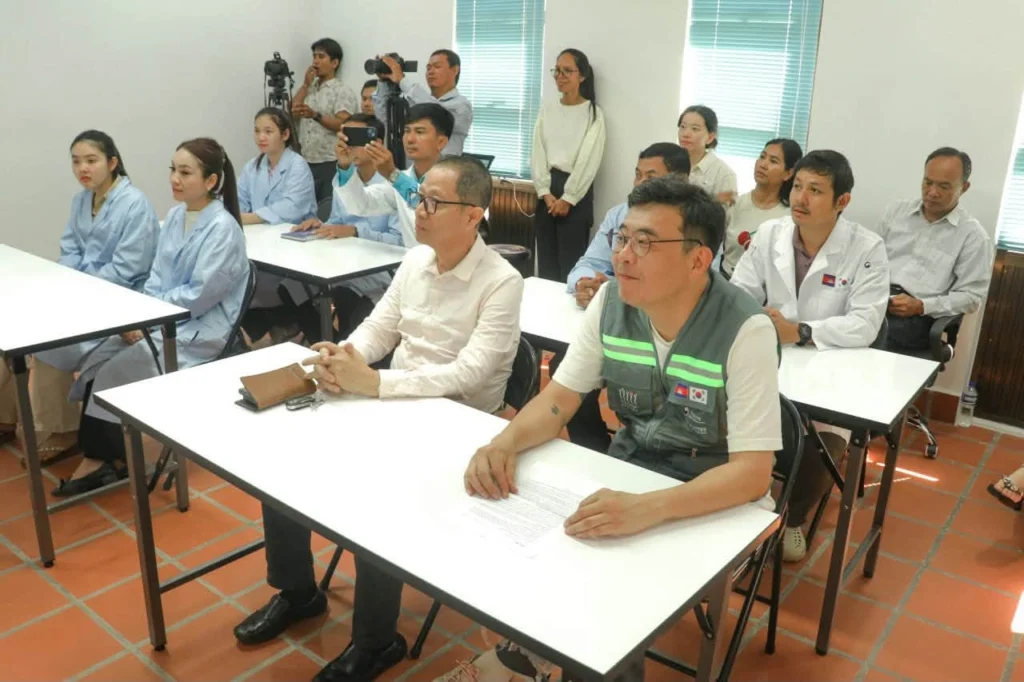
The APSARA National Authority, in collaboration with the Korea Heritage Agency, concluded the training course on the conservation and restoration of ancient metal and ceramic artworks on the morning of November 2, 2026.
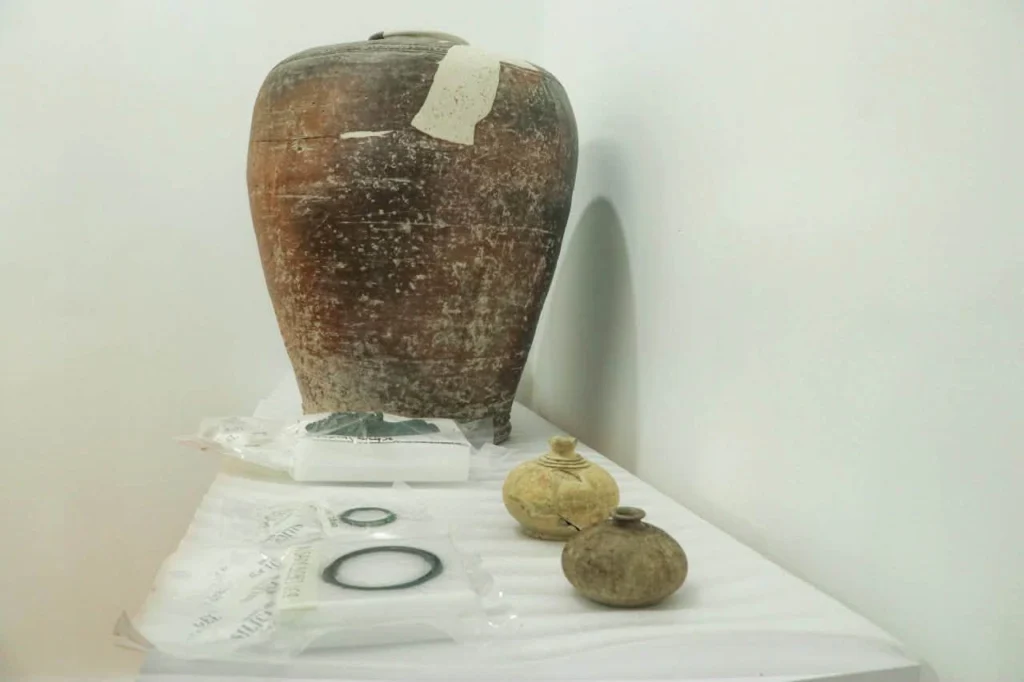
Mr. Kom Sopheaprom, an archaeologist and training instructor, stated that this capacity-building training course—which shared techniques and provided knowledge on caring for, protecting, and rescuing ancient metal (bronze, iron) and ceramic artifacts—included 3 trainees from the APSARA National Authority, 2 from the Sambor Prei Kuk National Authority, and 1 from the Preah Vihear National Authority, making 6 trainees in total. The training course began on August 31 and concluded on October 30, 2026. This important training course, under the collaboration between the Korea Heritage Agency and the APSARA National Authority, trained all 6 trainees with a focus on preliminary conservation techniques—such as methods for cleaning, restoring, and preventing damage to metal (bronze and iron) artworks and ceramics—in accordance with proper scientific and technical standards. It covered general theoretical instruction by examining causes of damage and deterioration factors, including weather, moisture, oxidation, and chemical reactions on metals and ceramics; understanding report writing before, during, and after restoration; methods for inspecting, analyzing, and documenting original states of corrosion/rust or erosion; mechanical cleaning techniques (microscope, air blaster, air blower, scalpel, bamboo pick, cotton, and safe levels of certain chemicals such as acetone and alcohol); and applying protective coatings (stabilization and coating using a BTA and SSQ mixture) to prevent recurrence of damage, among other topics.
Mr. Kim Dongmin, Project Manager at the Korea Heritage Agency, stated at the closing ceremony of the training course that this training holds great significance for Cambodia, which has worked hard to build expertise in conserving and restoring ancient artworks. Going forward, Cambodia will be able to train the next generation of researchers on its own, with technical support and sharing from Korea inside the laboratory built with Korean support.
Mr. Kim Dongmin observed that the most important factor in cultural heritage conservation depends on human resources. Even if we have good infrastructure and modern equipment, sustainable cultural heritage conservation is very difficult without experts who know how to use them properly and can transfer techniques from the previous generation to the next. He hoped that the knowledge and experience gained by all trainees today would be applied at the cultural heritage conservation sites of their respective institutions, as well as shared further with more colleagues in the future.
Meanwhile, the Director of the Department of Training, Research, and Dissemination of the APSARA National Authority, Mr. Im Sokrithy, remarked that although over the past 30 years Cambodia has learned ancient temple restoration and maintenance skills from many countries—and has now become a specialist able to carry out restoration on its own as well as participate in international restoration work at sites in the Angkor area—Cambodia still lacks expertise in conserving and restoring metal artifacts, such as in the laboratory built by Korea. For many years, Cambodia has had specialists in maintaining and conserving ancient artifacts and stone carvings at temples, with training support from the German organization (GIZ) and universities in Italy; however, for metal artworks kept in museums, we still lack skills in conservation, restoration, and maintenance.
Cambodia began developing expertise in the conservation and restoration of metal and ceramic artworks after the Korea International Cooperation Agency (KOICA) and the Korea Heritage Agency cooperated with the APSARA National Authority and established a cultural conservation science center. Mr. Im Sokrithy believed that training in new skills that were not previously prepared for requires trainees to accelerate their knowledge to keep pace with evolving times that involve modern laboratory and operational equipment.