WMF is Underway with the Restoration of the Western Section of Phnom Bakheng Temple
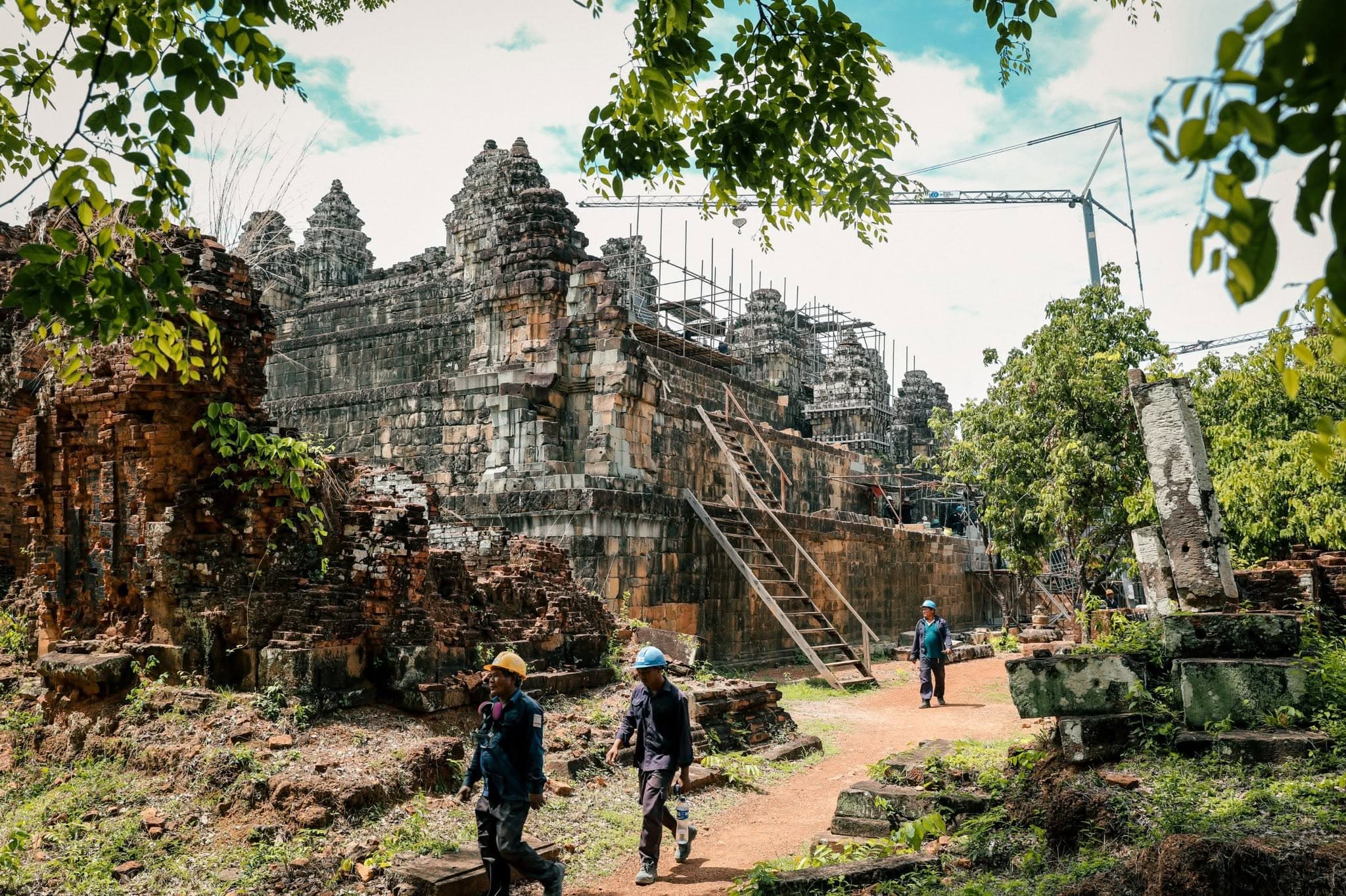
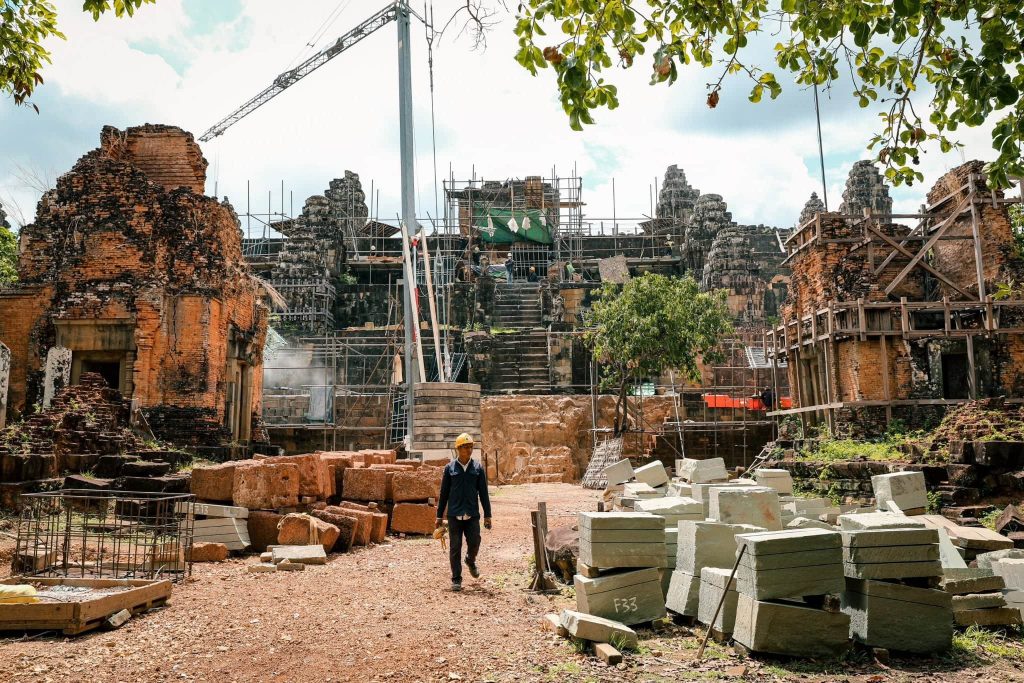
The World Monuments Fund (WMF), in collaboration with the APSARA National Authority, is continuing restoration work on the western section of Phnom Bakheng Temple, a crucial component of this mountain temple.
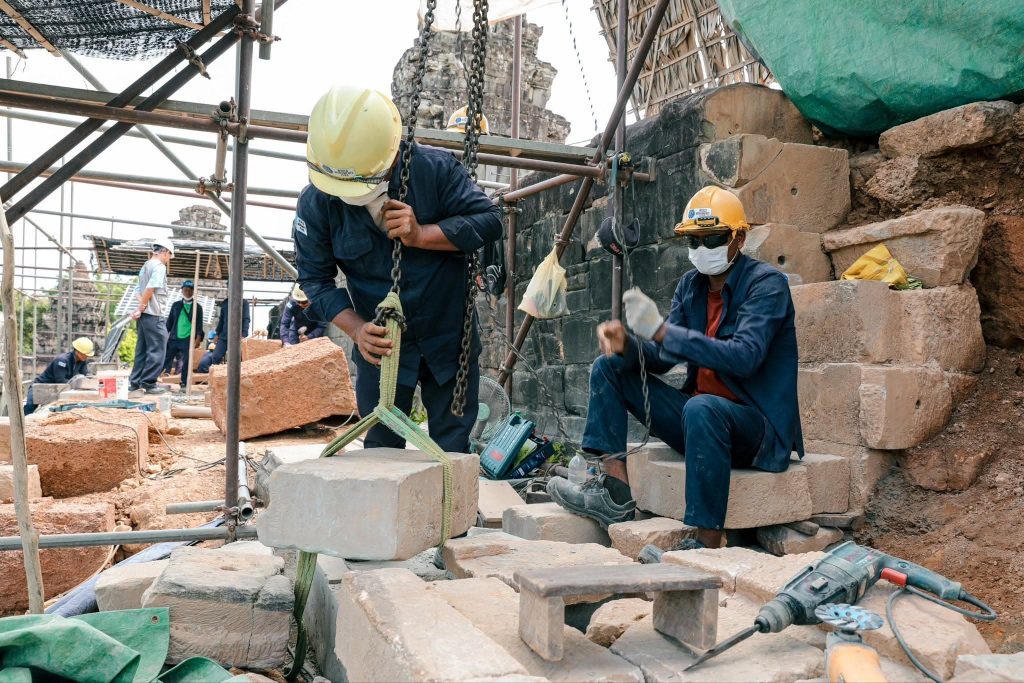
Mr. Kong Savbot, WMF Country Director, stated that the western section of Phnom Bakheng has suffered damage similar to other corners of the temple. The restoration team has reinforced and reassembled the walls and flooring, replacing deteriorated or missing laterite blocks in areas where they were decayed or lost.
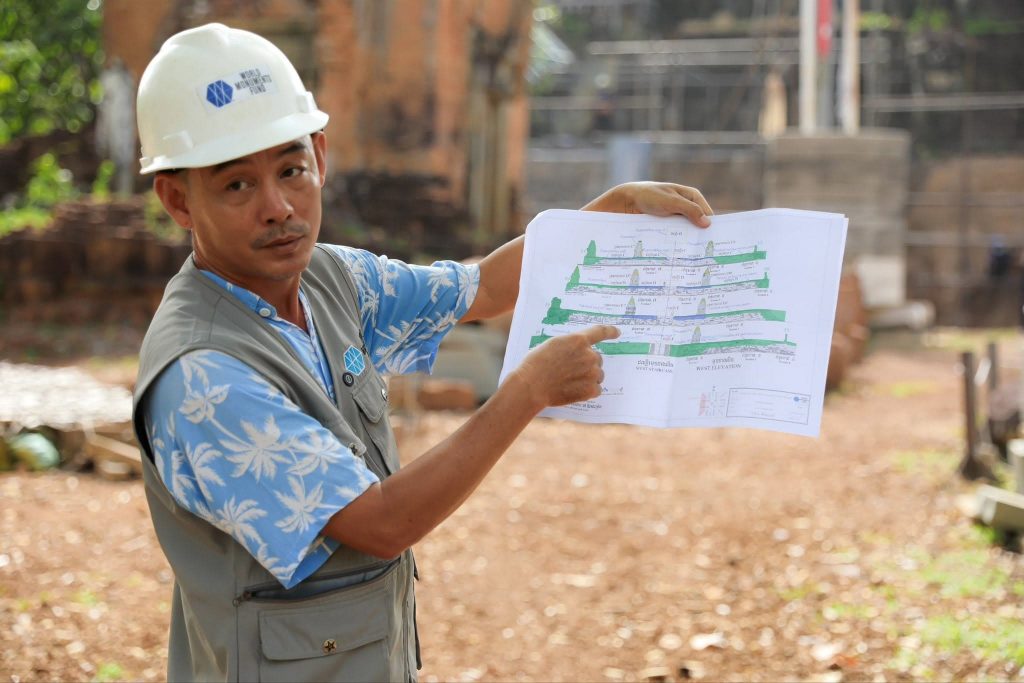
Mr. Chiv Phirom, Project Engineer for the Phnom Bakheng restoration project, mentioned that the restoration project on the western section of Phnom Bakheng Temple commenced in March 2026. For this project, the team dismantled the walls, flooring, and two small shrines, C6 and C7 (where the letter “C” represents the 4th level counting from the bottom), as well as carrying out stairway work. The project is executed by a team of 10 members, covering foundation reinforcement, wall reassembly, and stairway restoration.
Regarding the technical methods of the restoration, Mr. Phirom explained that prior to starting the physical repairs, the team studied the drainage system, the temple compound, the type of natural bedrock, and the entire structure of the temple body, drawing up plans to map out the causes of damage. Subsequently, further studies were conducted by national and international technical experts from both the APSARA National Authority and WMF, before submitting the proposed restoration master plans to the Ad Hoc Experts of the ICC-Angkor/Sambor Prei Kuk for additional recommendations on the conservation work.
Mr. Phirom added that the restoration is divided into several sections, including internal repairs to reinforce the natural bedrock, reinforcing the foundation if damaged, realigning the walls to be straight, and arranging the drainage system on the 3rd level. For the 5th and 7th levels, fiberglass reinforcement rods (glass anchors) are added to secure the natural bedrock to the back of the walls to prevent them from tilting. The sixth method involves adding drainage outlets on the upper levels, adding laterite blocks between the natural bedrock and the walls, and then constructing a 2-3% slope to lay a waterproof rubber membrane to prevent water infiltration.
According to the experts, the factors leading to the damage of Phnom Bakheng Temple include natural elements and past neglect without maintenance, which allowed vegetation roots to grow through stone joints, rainwater to erode the structure, and the foundation to decay over time.
Article: Neang Samnang
Photos: Sin Pranei