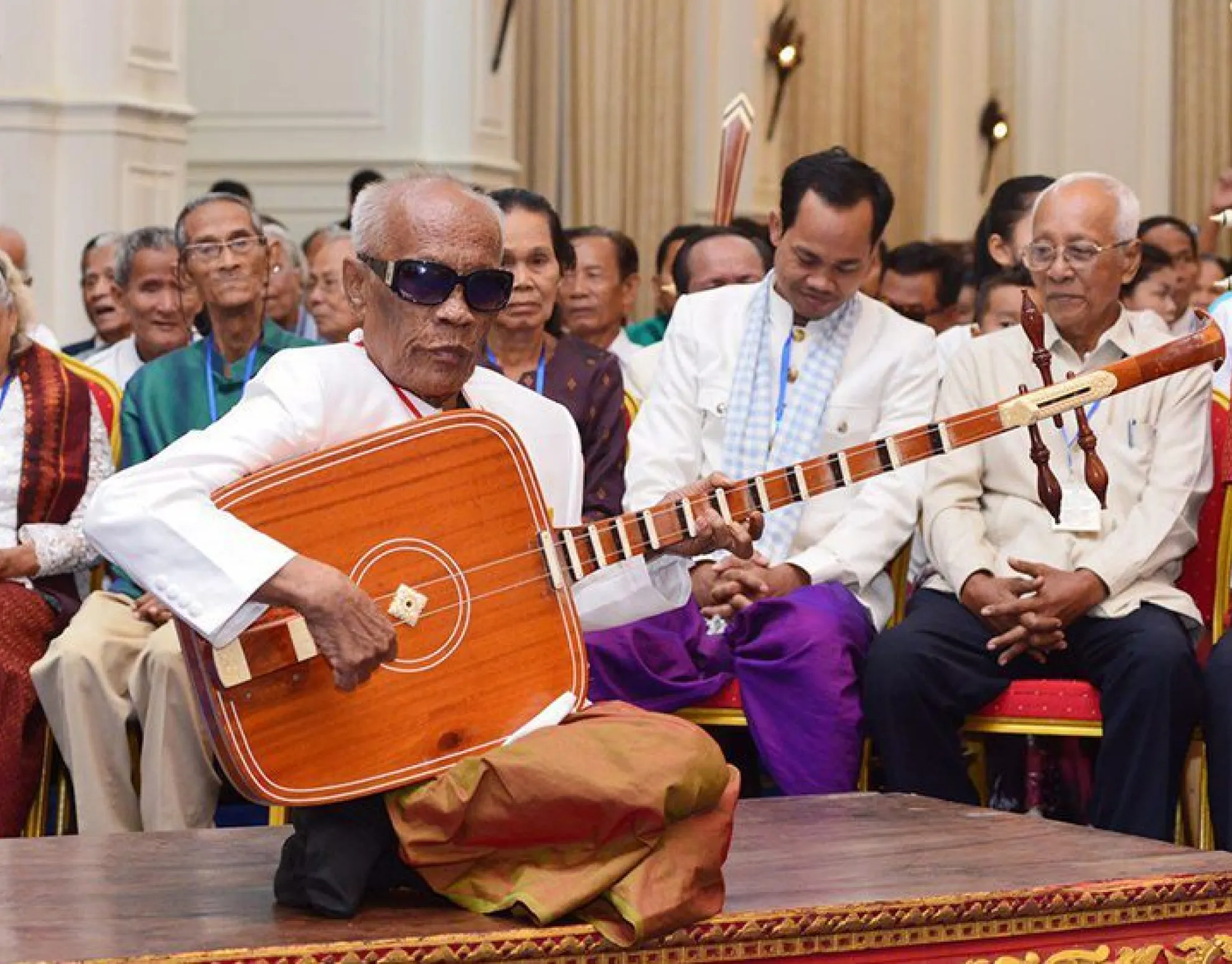
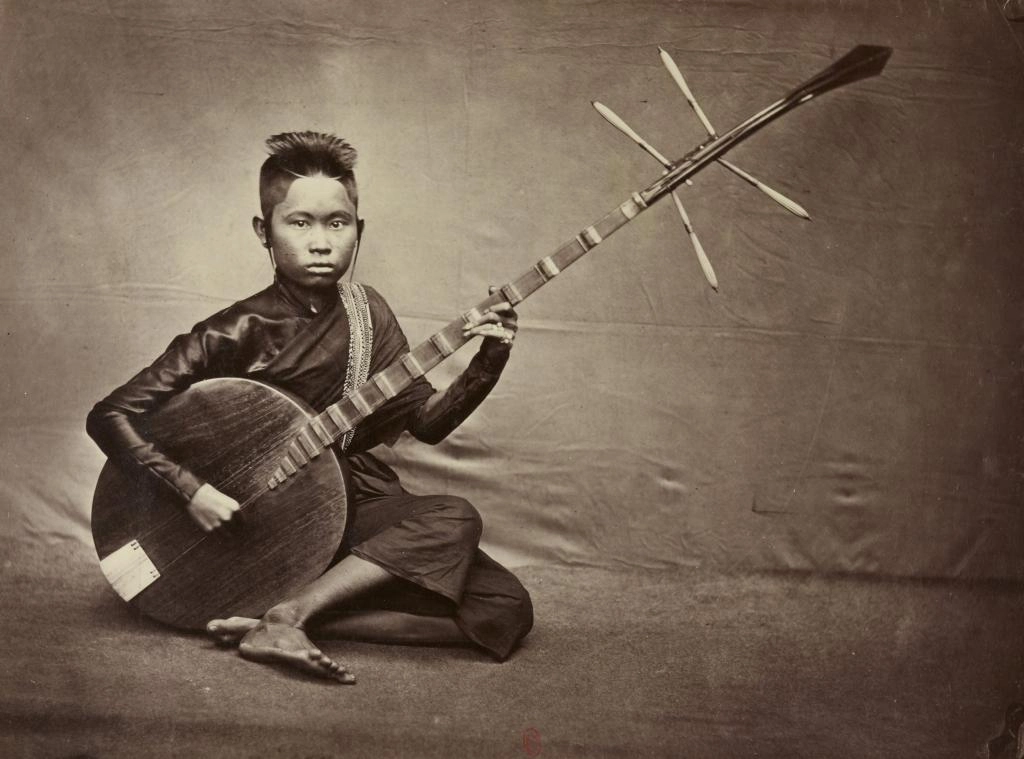
Chapei Dang Veng is a highly popular traditional art form in Khmer society and was inscribed on the UNESCO Intangible Cultural Heritage of Humanity list on November 30, 2016. This art form utilizes the Chapei (a long-necked lute) as an instrument to pluck for accompaniment while singing to narrate stories or various themes. Generally, the Chapei is approximately 1.5 meters long; it is noted for having a soundbox made from the Reang tree (or jackfruit tree), a neck from the Krasang tree, a soundboard from the Khtom tree, a bridge from the Thnong tree, and frets made of bone.
Chapei Dang Veng is popular with audiences because of its beautiful melodic sound and because the performers possess not only beautiful voices but also exceptional talents in rhetoric and comedy. Occasionally, Chapei performers engage in “Chhlong Chhloey” (duets) with a partner, involving questioning and answering various riddles or improvising poetic verses without prior preparation. Consequently, Chapei singers are often individuals who have been ordained or are well-versed in literature, skilled in rhyming, gifted in comedy, and possess sharp intelligence, as they must remember many stories and spontaneously create lyrics that align with the atmosphere of the ceremony or event where they are performing.
For these reasons, Chapei is seen to be deeply integrated into the lifestyle, traditions, and beliefs of the local people. It is frequently observed in significant traditional ceremonies, such as the Dowry Presentation (Cheav Khan Sla) in weddings, hair-cutting ceremonies (Kaor Juk), monk ordination ceremonies (Bombous Neak), and the Kathina festival.