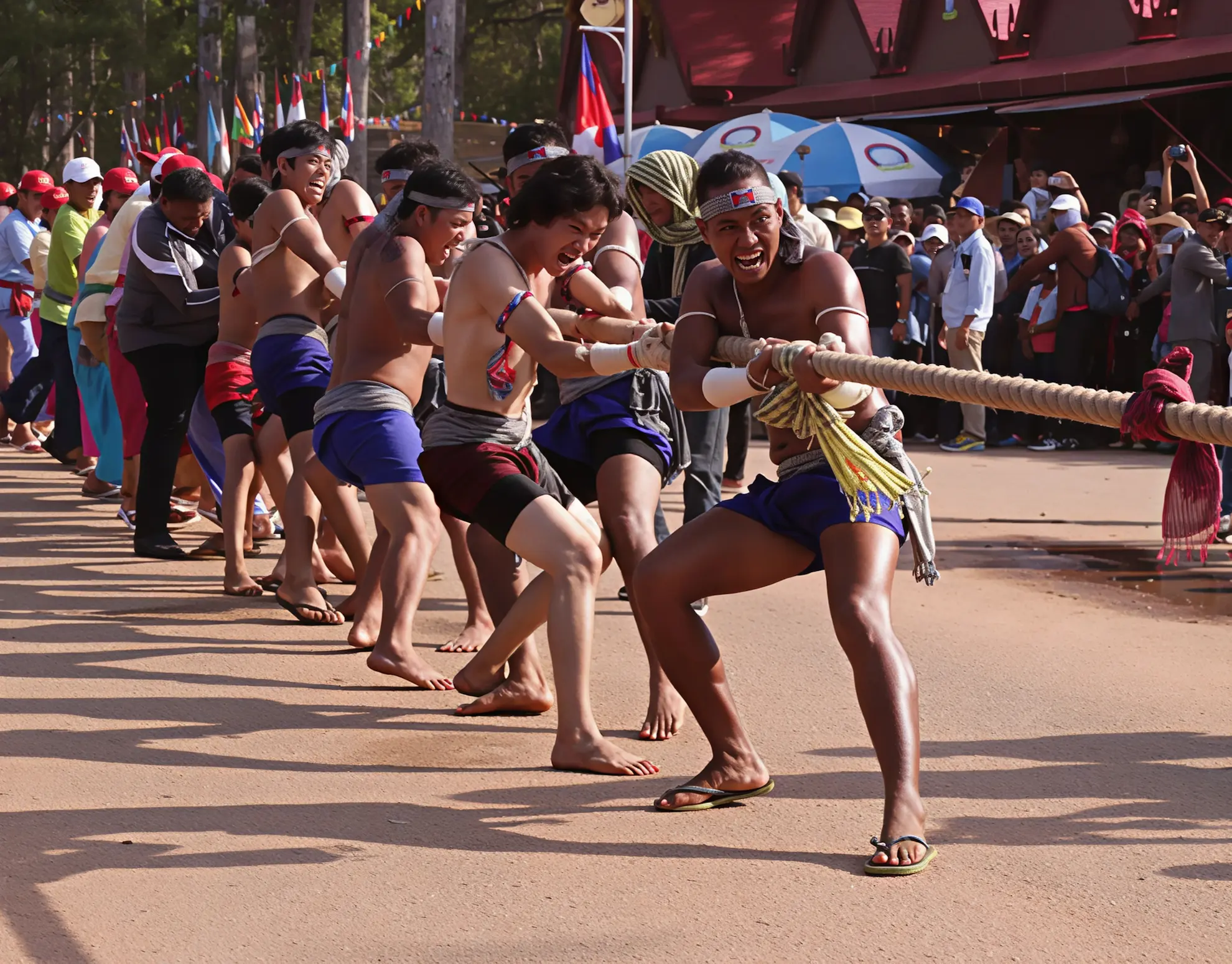
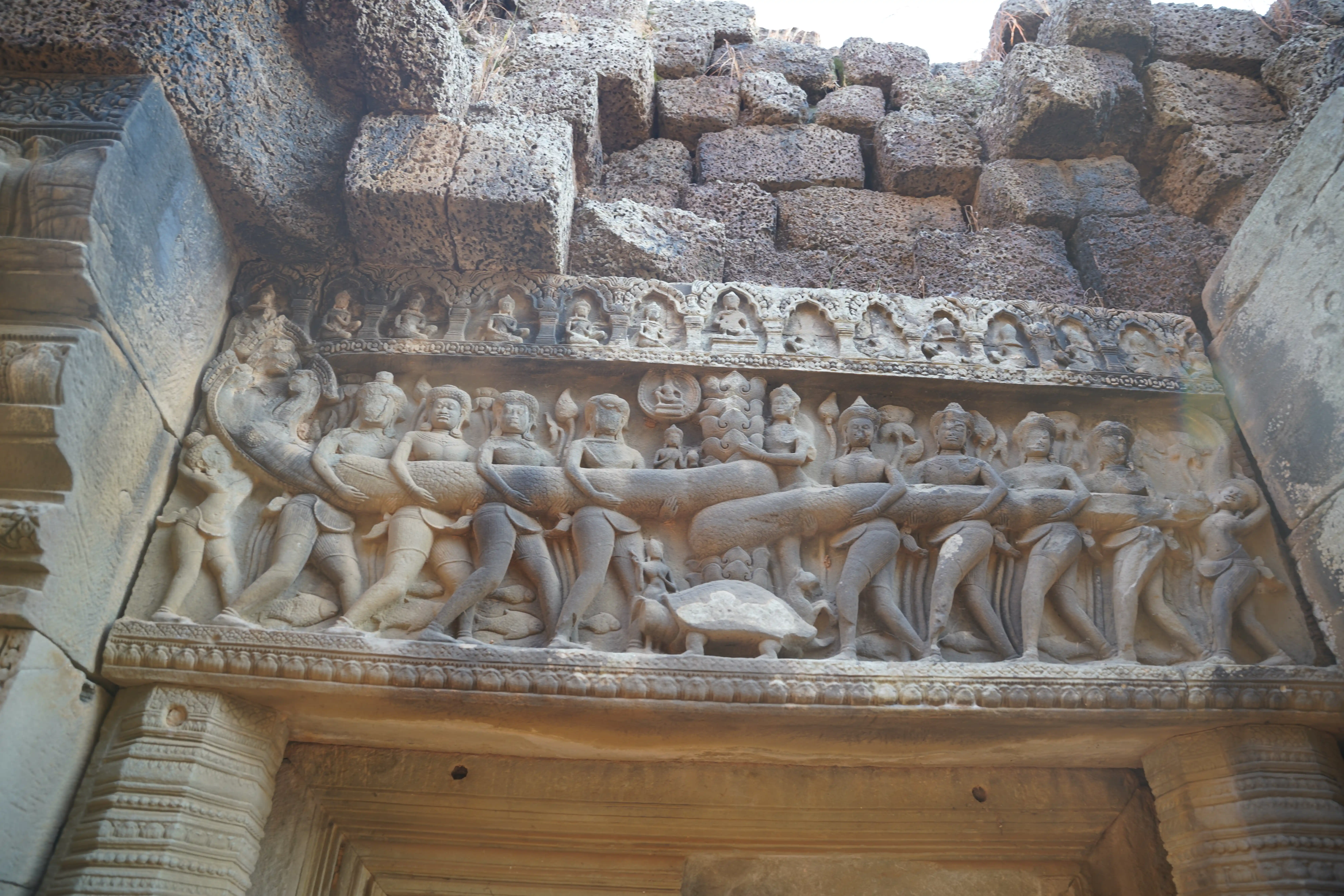
Tugging is not merely a game for testing physical strength; it holds deep meaning and significance within the beliefs of people in several agricultural countries across Asia. In Khmer belief, Tugging is both a recreational game and a “ritual” performance typically played during the New Year festival, the Chhlong Chet ceremony, or Neak Ta (spirit) worship at pagodas and in various villages. The final day of the New Year is known as the “Final Day of the Rope” (Pdach Proat), meaning the rope must be pulled until it breaks or is severed at midday. The general essence of this in Khmer thought is to sever the old year and transition into the new year. Tugging rituals and games were inscribed on the Representative List of the Intangible Cultural Heritage of Humanity on December 2, 2015, following a joint nomination by four countries: Cambodia, the Republic of Korea, Vietnam, and the Philippines.



To play the tugging game, a rope made of rattan or cord is required, with a thickness roughly the size of a child’s wrist or slightly smaller, and a length depending on the number of participants. A spacious open area is selected, and a center line is marked on the ground. A mark or a piece of cloth is tied to the center of the rope to divide it equally between the two opposing sides. The participants are divided into two teams, often with men on one side and women on the other. Generally, the female side has more members than the male side, as it is understood that women’s physical strength is less than men’s. Once everything is ready, a person holding a gong or a bell begins to strike it and shouts a loud cheer, while the pullers also shout in unison and pull with all their might to win for their respective teams.
The game must result in the rope breaking, as this symbolizes the start of a new farming cycle. Occasionally, if the rope does not break from pulling, a knife is used to cut the rope at the center point to ensure it is severed.