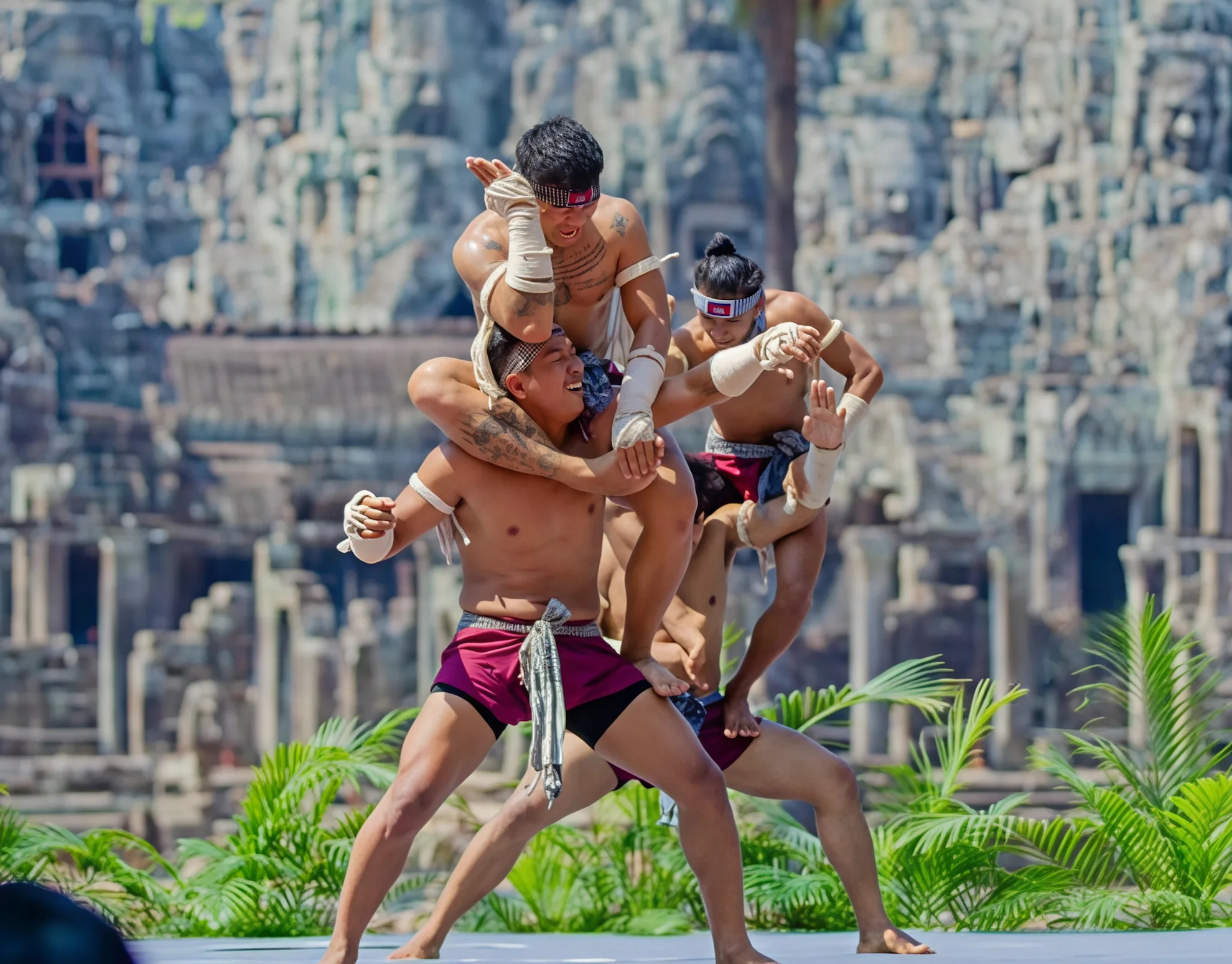
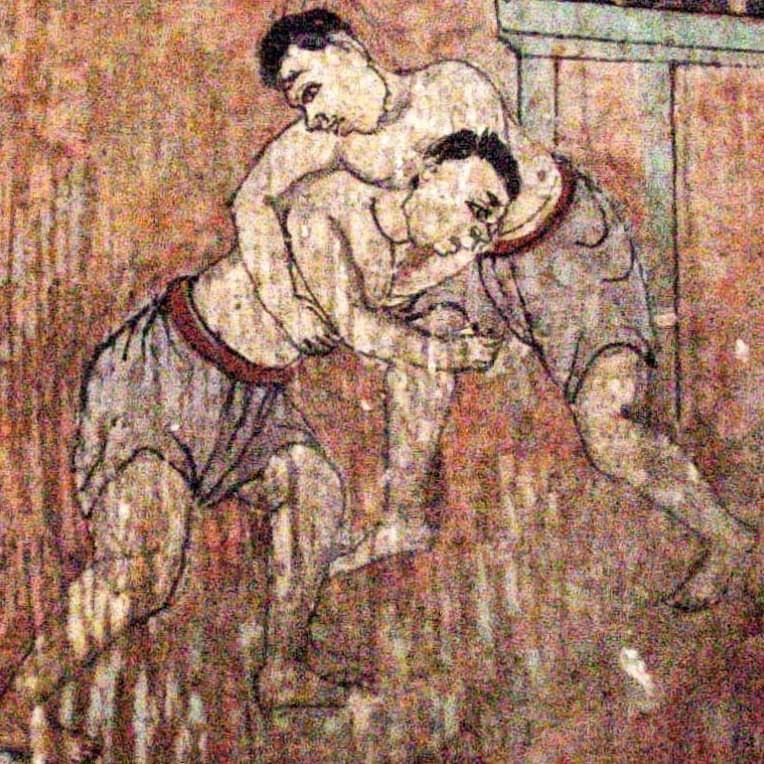
In Khmer society, evidence of the popularity of physical games or ancient martial arts is shown through carvings on ancient temples, ancient paintings in pagodas, and visual performances during rituals. Today, Khmer martial arts may be called by different names depending on the district, region, or teacher, but most people call it “Lbokator”. Kun Lbokator is an ancient martial art deeply rooted in Khmer society for many centuries and continues to the present day. Some remaining martial arts carvings, both small and large, are found on the platforms, doorframes, and walls of ancient temples such as Angkor Wat, Bayon, Ta Prohm, Baphuon, Banteay Samre, Preah Khan, and Prasat Prei.
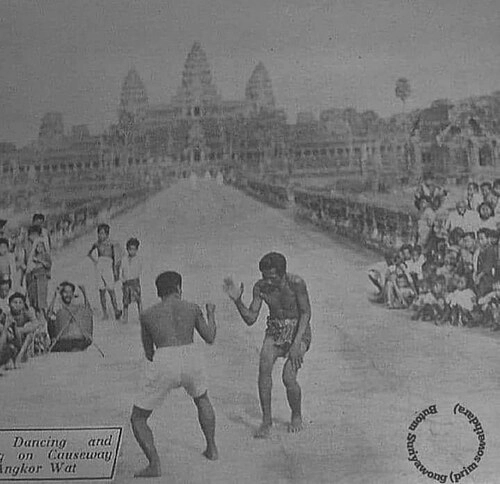
The training of Kun Lbokator from one generation to another is intended to strengthen the intellect, physical strength, mental fortitude, and discipline of the practitioners, providing the ability to protect oneself from wild animals and various enemies, as well as to protect society. Kun Lbokator is not only a form of martial art but also embodies cultural aspects, specifically through performances during various festivals such as the Khmer New Year, Pchum Ben, Royal Cremation ceremonies, Dal Lean (harvest festival), or other ceremonies. Furthermore, in some areas, martial arts matches are held as an offering to the local Neak Ta (guardian spirits).
Kun Lbokator is a synthesis of all techniques and movements from Khmer athletic rules, such as Pradal Serey (free boxing), wrestling, and Kun Dambong (staff fighting). Many movements and techniques of Kun Lbokator mimic actual nature found in the daily lives of humans and the gestures of various animals such as birds, horses, monkeys, tigers, lions, crocodiles, elephants, Kinnara, snakes, and Nagas. Kun Lbokator is divided into 12 “Dvear” (gates), where the 1st through 8th gates use the physical body, and the 9th through 12th gates use weapons, including both dangerous and non-dangerous weapons. This martial art requires close-quarter combat with the opponent, primarily using elbows and knees. When fighting, Kun Lbokator practitioners can use bare hands or various weapons such as swords, spears, knives, arrows, crossbows, staffs, Krama (scarves), towels, sacred cords (Katha), and shields. Students are required to train in offensive and defensive techniques relying on bare hands and feet first; only once a student demonstrates proficiency can they learn the use of weapons.
Additionally, Kun Lbokator is divided into 7 different levels, identifiable by the color of the Krama: white, green, red, brown, blue, black, and gold. The black Krama level ranges from the 1st rank to the 10th rank, requiring students to train for at least 10 years and master at least one thousand movements. Meanwhile, the gold Krama is the highest level of Kun Lbokator, meaning the recipient of this level must master almost all aspects of Kun Lbokator.
In present-day Cambodia, Kun Lbokator is being actively practiced in 13 provinces: Kampot, Takeo, Kampong Chhnang, Kampong Thom, Siem Reap, Pailin, Pursat, Koh Kong, Banteay Meanchey, Svay Rieng, Prey Veng, Tboung Khmum, and Kandal.
On November 29, 2022, in Rabat, Kingdom of Morocco, during the 17th session of the Intergovernmental Committee for the Safeguarding of the Intangible Cultural Heritage of UNESCO, Kun Lbokator was officially approved for inscription on the Representative List of the Intangible Cultural Heritage of Humanity in decision 17.COM 7.b.1.