The Krama is of great importance in Khmer society, especially for people in rural and farming areas. It is an indispensable item that they carry with them wherever they go. Cambodians use the Krama in numerous ways in daily life and ceremonies from birth to death, such as wrapping or covering newborns, tying it to make a hammock for babies, and wearing it as clothing or as a headscarf. In ceremonies, it is used to wrap betel flowers in weddings, wrap ritual offerings (Thong Rong), wrap “Bay Prolung” (spirit rice), serve as an offering to Preah Pisnukar, or be used in funeral rites.
Beyond these uses, the Krama can be tied to make a “Chhoung” ball or used in games like “Leak Kanseng” (hiding the towel), blindfolding players for “Reav Bongkong” (shrimp catching), or for “Veay K-am” (pot hitting) during the New Year. Occasionally, locals use it as a keepsake or a token of commitment between lovers or spouses.
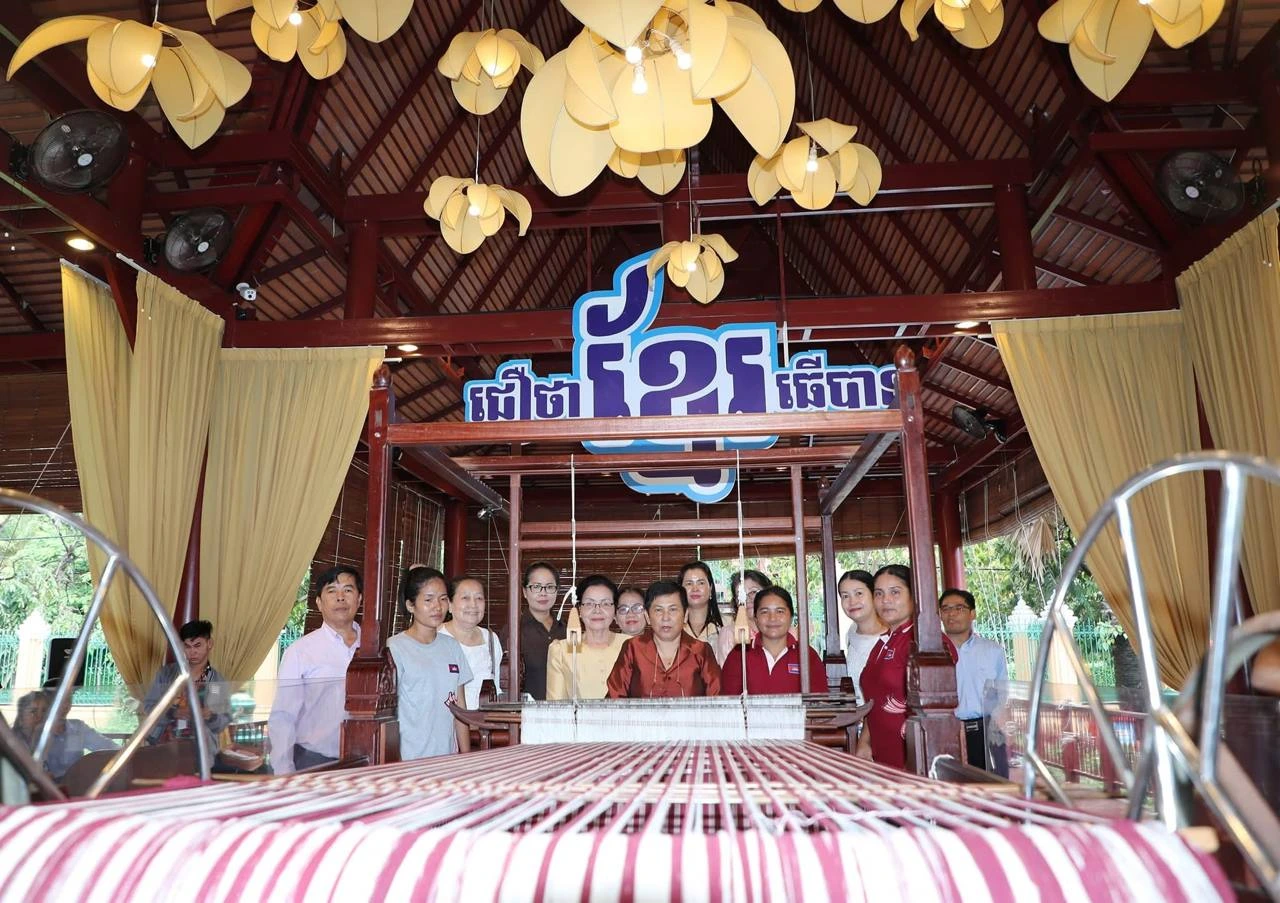
There are many types and colors of Krama. Some are dyed with natural colors derived from plants like Indigo (Trum), Prahoot, Makluea, or other botanical sources, while some weavers use chemical dyes. Regarding the thread, most are woven from ordinary cotton yarn, though silk is sometimes used. Today, Krama weaving is done both by hand and by machine.
The terminology used to refer to it also varies. People in cities or urban areas often call it “Krama,” whereas rural people call it “Kanseng,” “Sampot Dondob,” or “Chhnuot,” depending on the local dialect. The words “Kanseng,” “Chhnuot,” and “Sampot Dondob” are Khmer words, while the word “Krama” is a loanword from the Persian language.
The Krama, a symbol of Khmer identity, was recognized and inscribed on the UNESCO Representative List of the Intangible Cultural Heritage of Humanity on December 4, 2024, during the 19th session of the Intergovernmental Committee for the Safeguarding of the Intangible Cultural Heritage in Asunción, Paraguay.