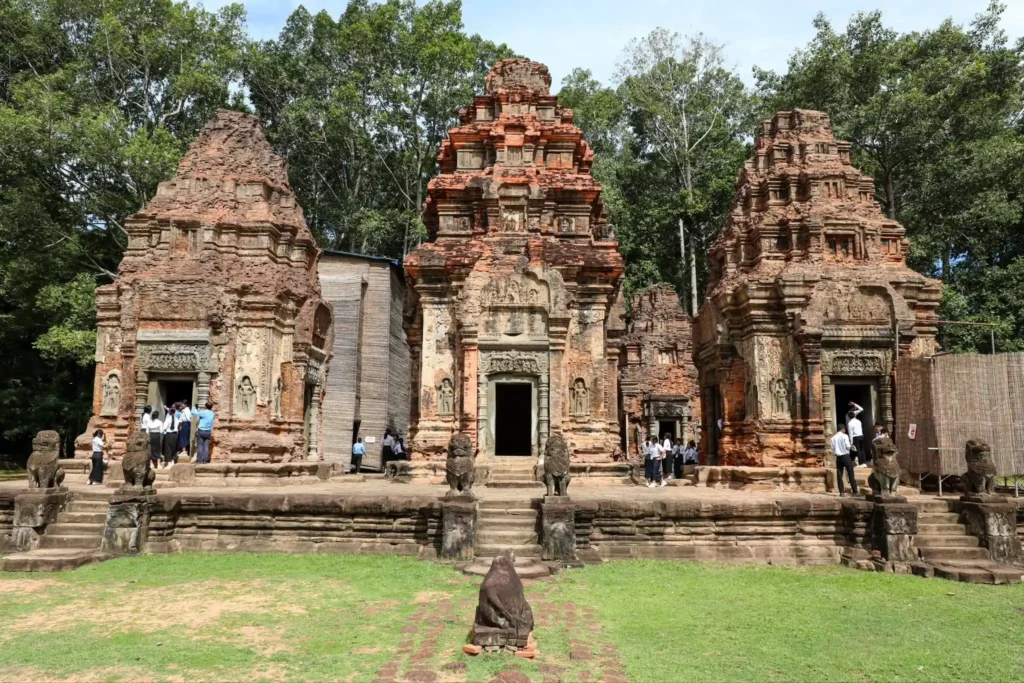
An Important Training Session for Bakong District Youth on the Conservation and Restoration of Preah Ko Temple
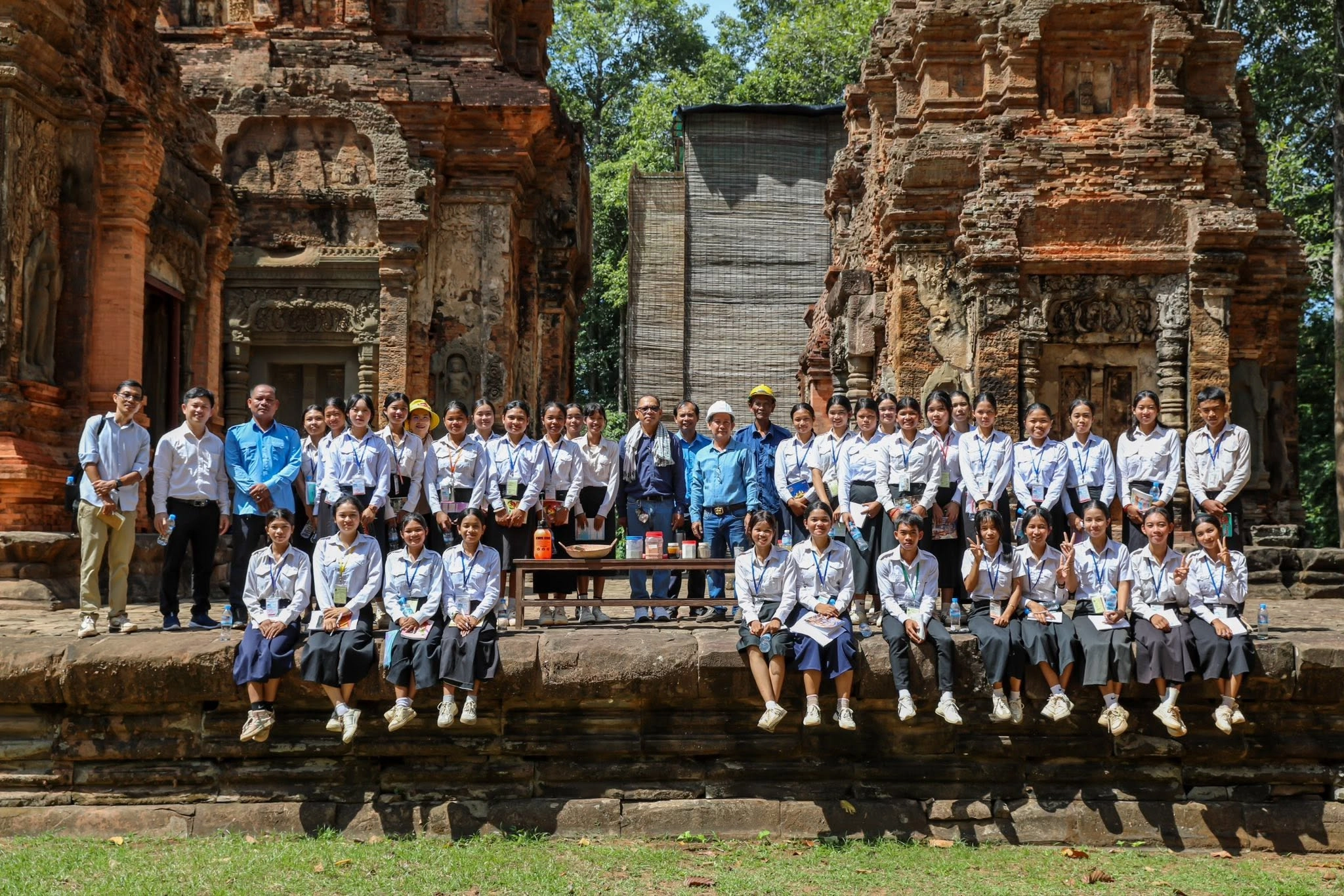
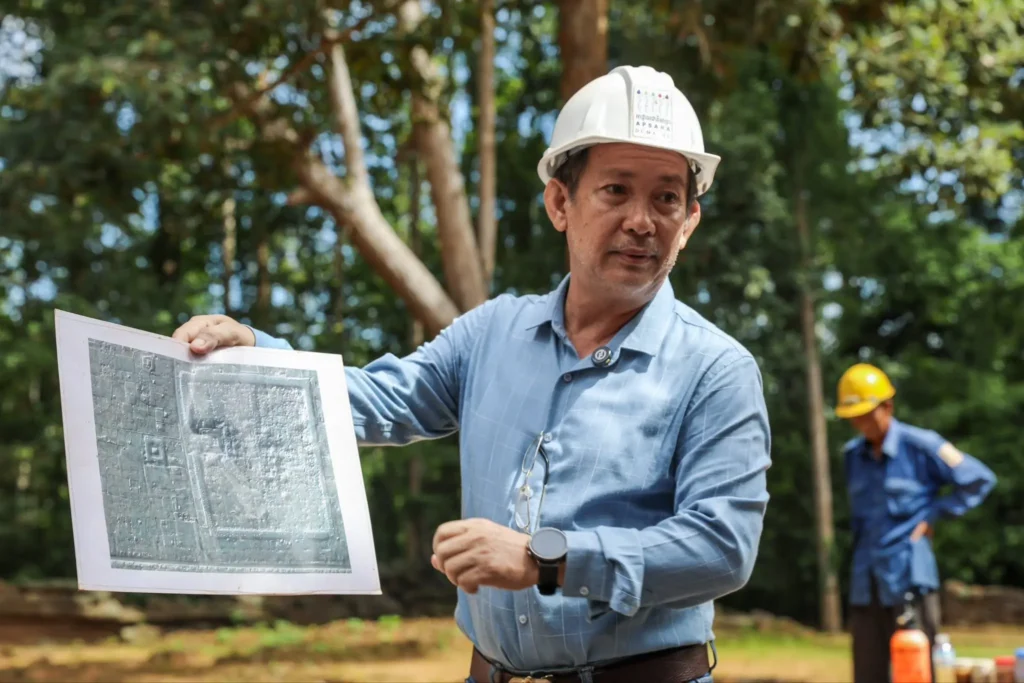
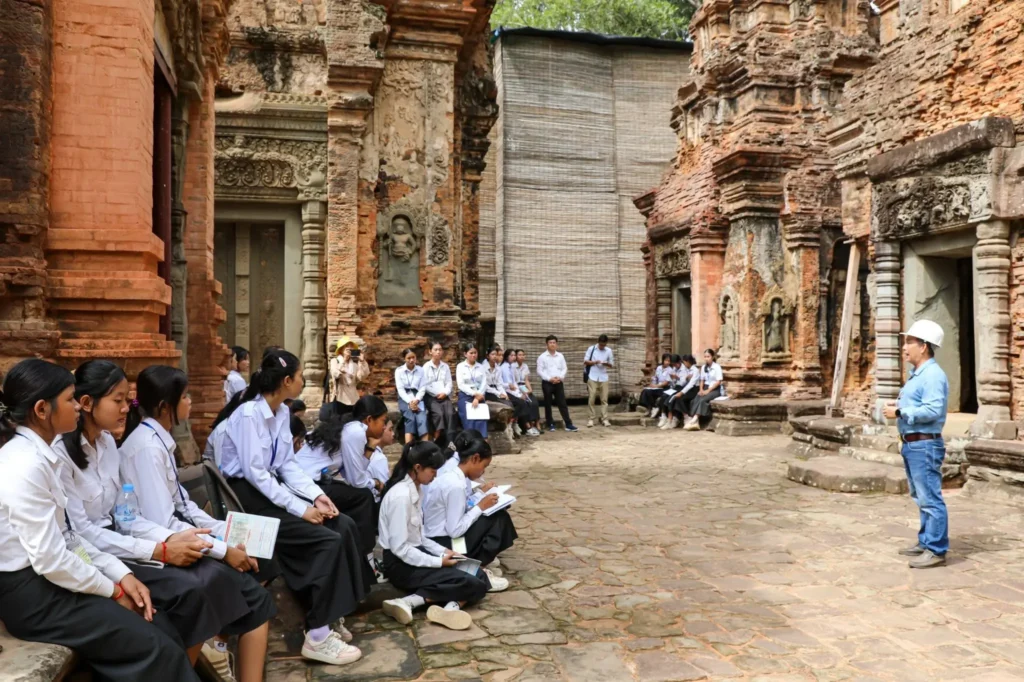
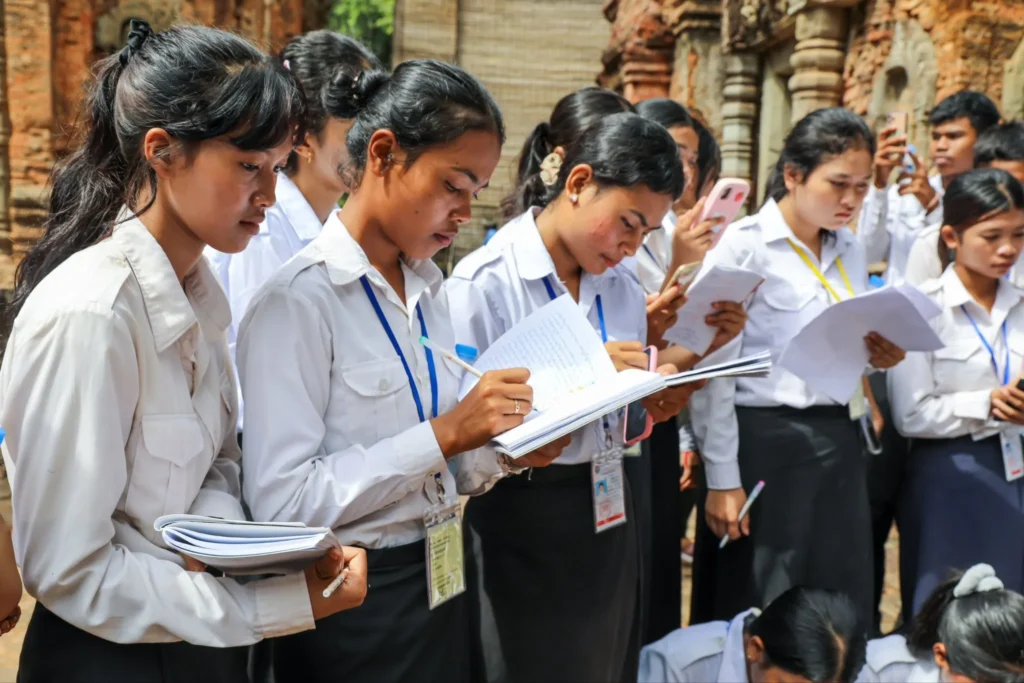
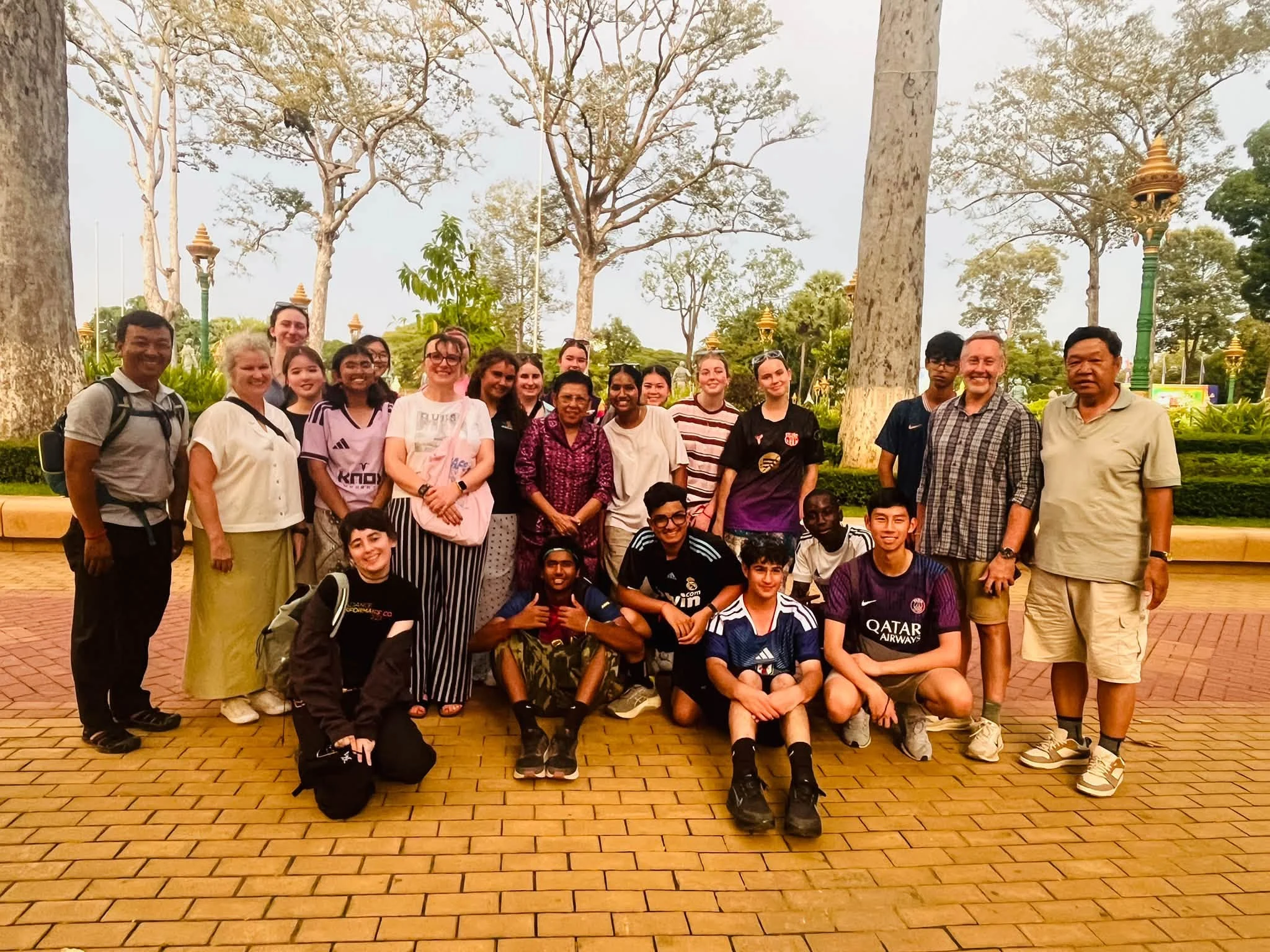
Through a recently organized dissemination workshop titled “The History and Conservation of Hariharalaya City” by the APSARA National Authority, Mr. Saray Kimhoul, the site manager for temple restorations in the Roluos area, conducted a technical presentation and shared experiences regarding the “Conservation and Restoration of Preah Ko Temple” with 50 students from Hun Sen Prasat Bakong High School. The training program aims to inspire the younger generation to value their cultural legacy and actively participate in safeguarding heritage assets within their local communities.
Mr. Saray Kimhoul highlighted that the restoration and conservation of ancient monuments demand immense patience, dedication, and the rigorous application of correct technical standards in line with the principles of the Angkor Charter and the ICC-Angkor/Sambor Prei Kuk framework. Implementing proper restoration methodologies is crucial to extending the lifespan of the temples and preserving their outstanding universal value as World Heritage, ensuring structural interventions prevent structural decay without altering original designs.
The conservation expert specified that traditional lime mortar techniques are essential in brick temple restorations to bind masonry, seal structural fractures, and mitigate water infiltration. Currently, repairing brick temples relies heavily on traditional mortar mixes, which young Cambodians continue to formulate based on ancestral knowledge passed down through generations. The raw materials used in this traditional mixture include slaked lime (from seashells), crushed brick powder, fine sand, palm sugar, charcoal, and natural hide glue. These ingredients are precisely measured to produce high-durability, structurally sound mortar. This methodology is ideally suited for ancient temples as it avoids modern cement components that trigger harmful chemical reactions—a technical strategy fully endorsed by the technical experts of the ICC-Angkor/Sambor Prei Kuk. Regarding materials management, he added that loose original bricks of good quality must be salvaged and reutilized as much as possible, particularly on external facades, to match the color profile of the historic masonry. Any newly fabricated replacement bricks must match original dimensional specifications and undergo high-temperature firing to mirror the structural properties of ancient bricks.
At present, several monuments within the Roluos group, including Preah Ko, have been successfully stabilized and rescued from high-risk conditions by the APSARA National Authority. Furthermore, Mr. Kimhoul outlined ongoing action plans and prospective conservation projects targeting other structural elements prone to deterioration to guarantee their preservation for future generations.
He emphasized that cultural conservation and restoration act as a bridge connecting the past to the present. As future custodians, the youth must acquire a deep understanding of national history, cultural identity, and architecture. This educational workshop serves not only to foster national pride and reinforce cultural roots but also opens pathways for young students to explore professional careers in archaeology and architecture, enabling them to sustain and promote ancestral legacies on the international stage.
Text: Yi Sotha
Images: Sin Pranei / Saray Kimhoul