APSARA National Authority Conducts Archaeological Excavation to Study Structure of Bakong Temple’s West Causeway Prior to Restoration
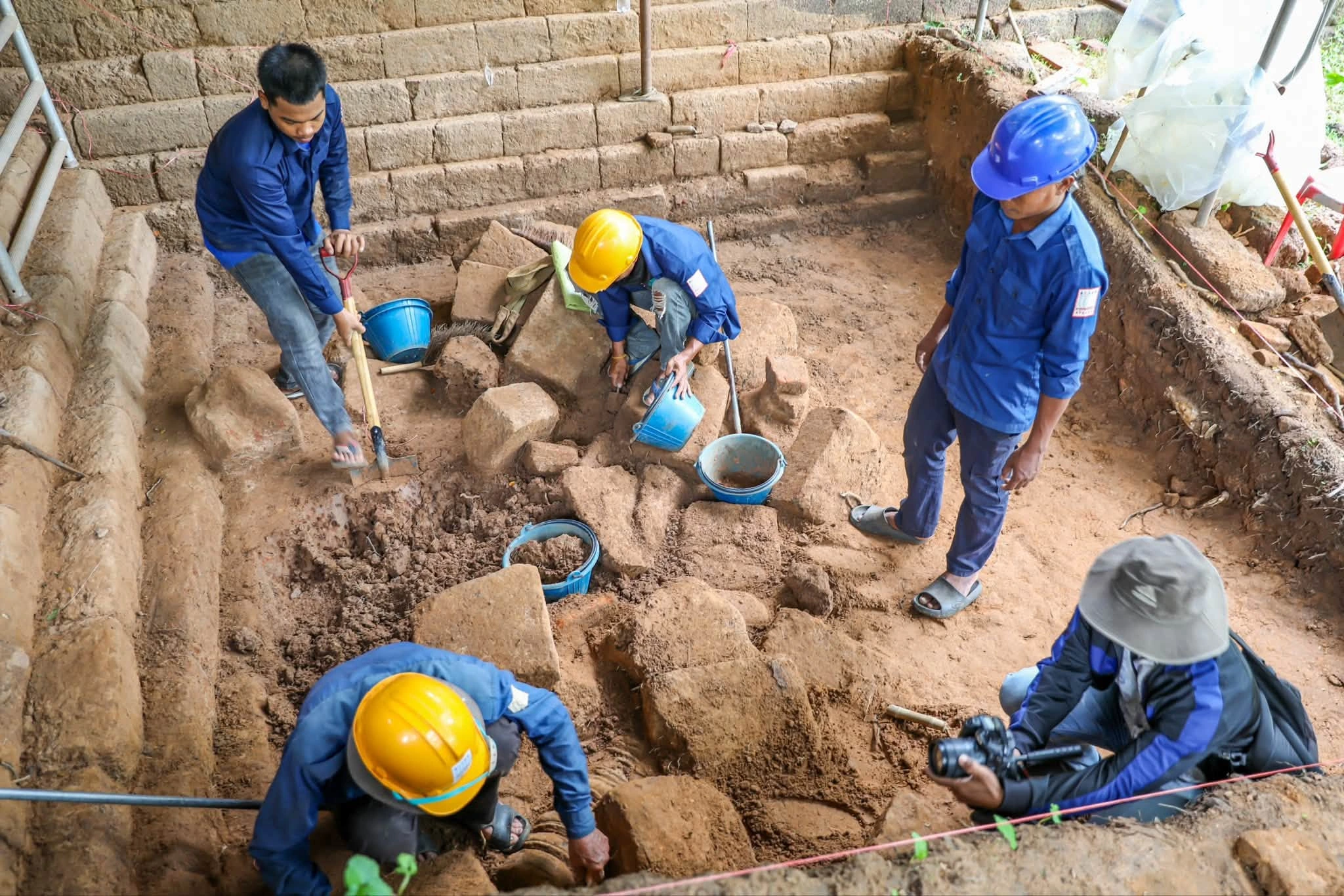
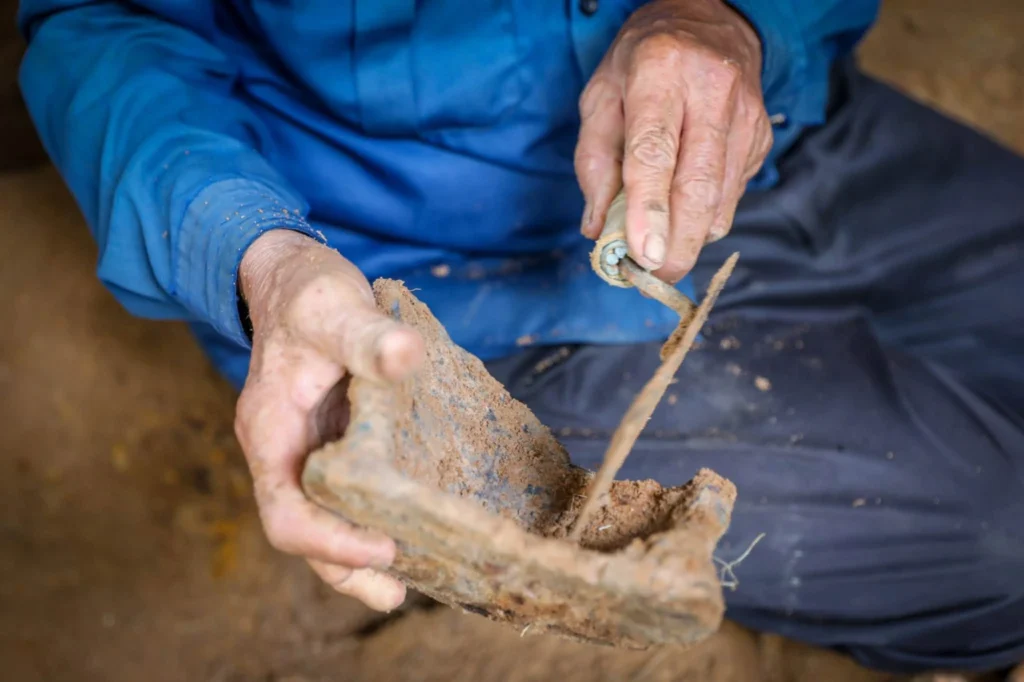
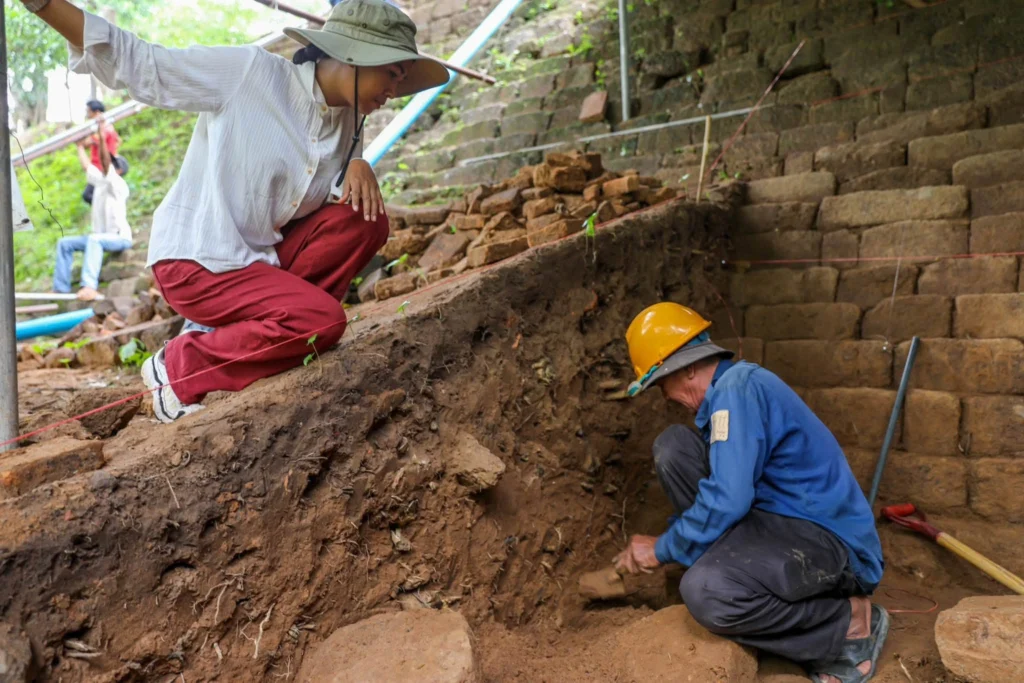
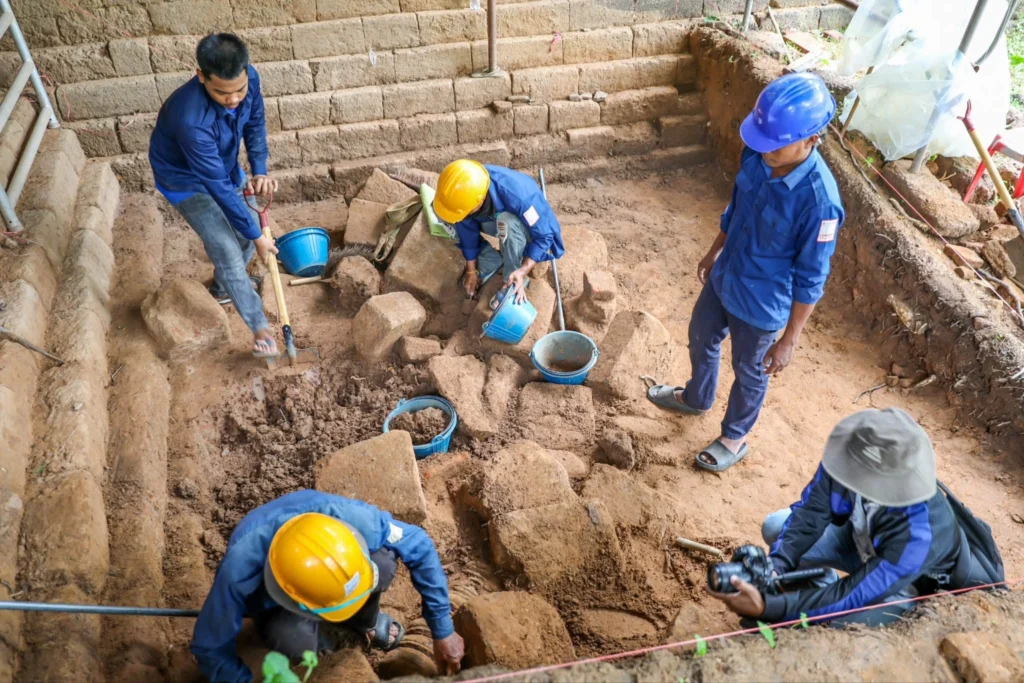
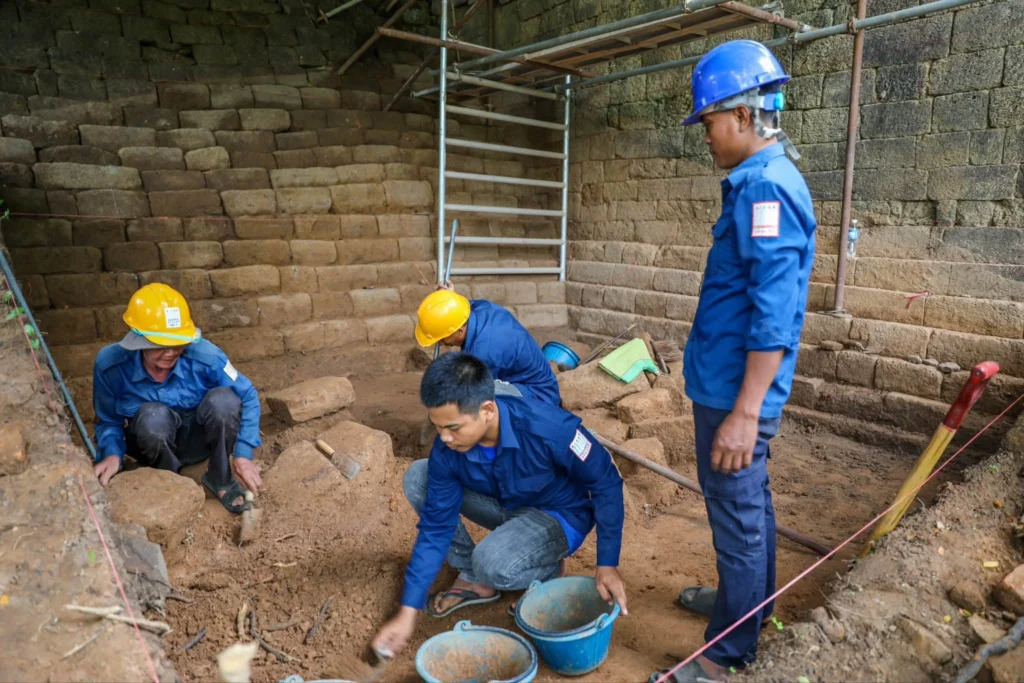
Archaeological experts from the APSARA National Authority are currently conducting excavations along the western causeway crossing the moat of Bakong Temple to collect technical data and study the damage to the entire structure before implementing a project to restore and enhance the aesthetics of this causeway.
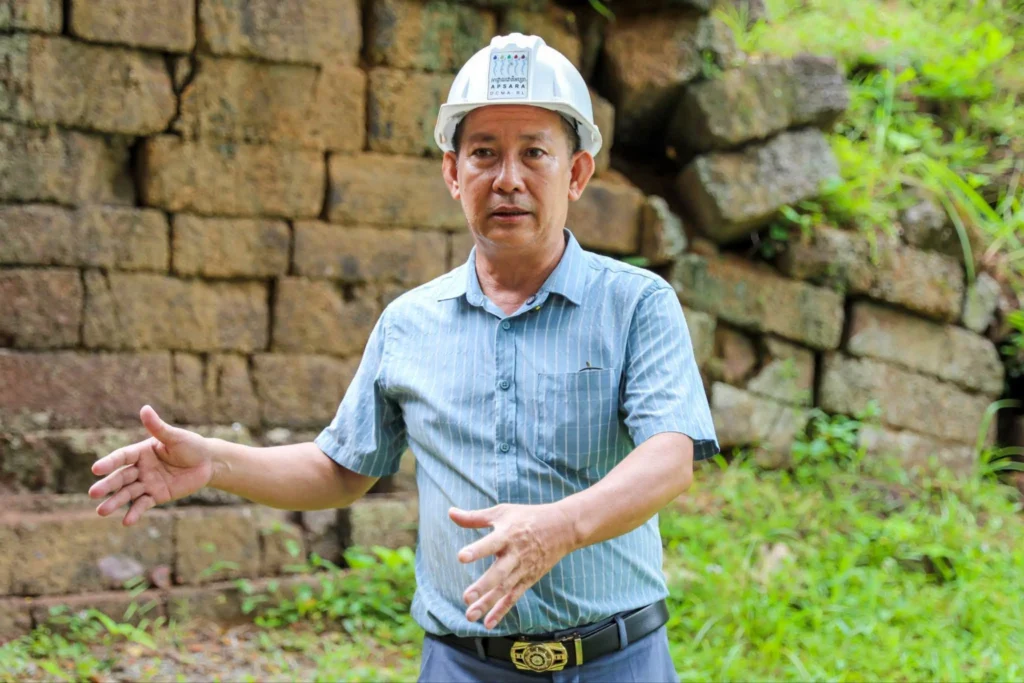
Mr. Saray Kimhoul, Head of the Roluos Area Conservation Team of the Department of Conservation of Monuments and Archaeology, said that the causeway across the western moat of Bakong Temple is 70 meters long, 12 meters wide, and 4 meters high. Before starting actual restoration work, the team must first conduct archaeological excavations to fully understand the original structure and to organize the collection of fallen laterite blocks and Naga body sculptures buried in the moat.
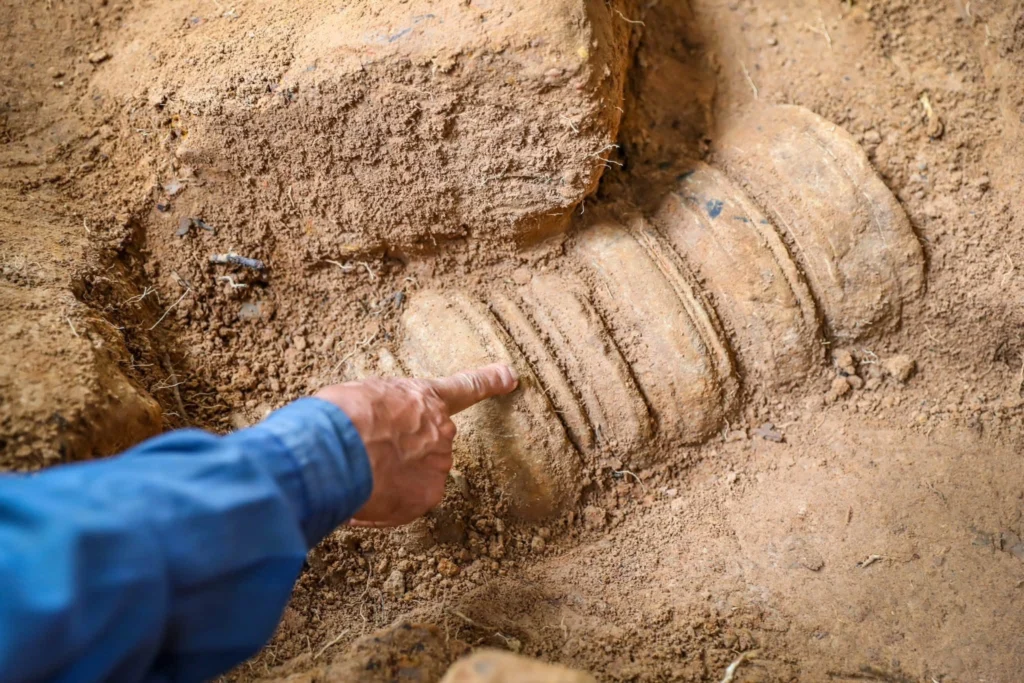
Currently, the structure of this causeway has been severely damaged after passing through more than 1,000 years. The retaining walls made of laterite on both sides have almost entirely collapsed. Meanwhile, most of the Naga body sculptures lining both sides of the road have also been lost from their original positions. The main factors causing this damage are tree roots spreading and soil erosion caused by rainwater every rainy season.
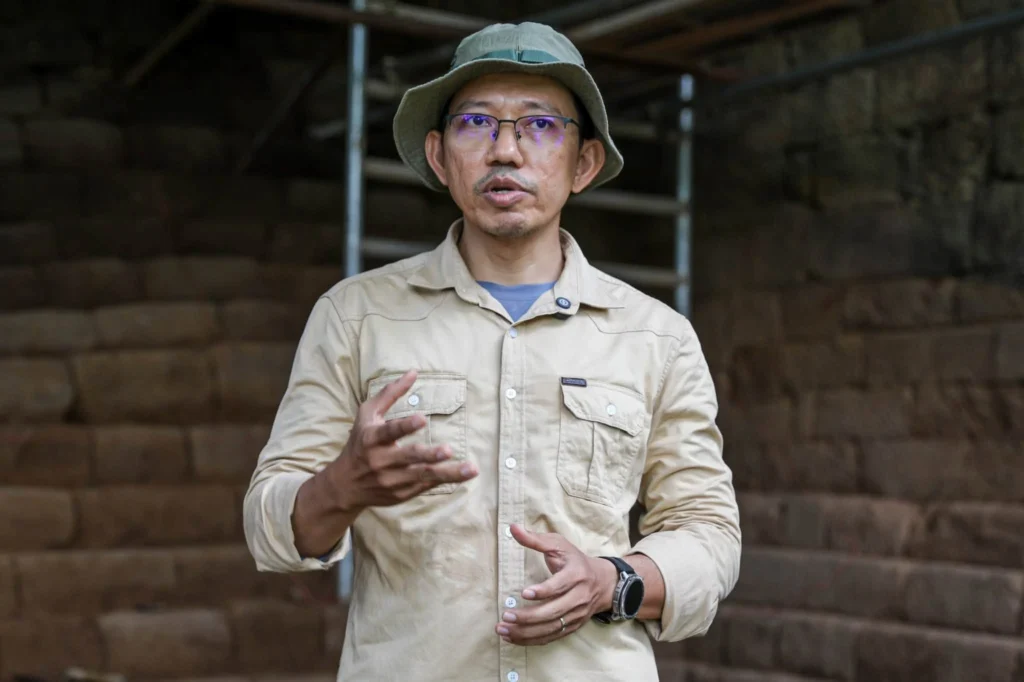
Dr. Chea Socheat, an archaeologist in charge of the excavation work at this site, confirmed that the western causeway crossing the moat of Bakong Temple has no history of archaeological study or restoration in the past. Therefore, conducting excavations at this time is extremely important to collect comprehensive data in accordance with the recommendations and technical standards of the International Coordinating Committee for the Safeguarding and Development of the Historic Site of Angkor and Sambor Prei Kuk.
The team has prepared an action plan and excavation techniques by setting the initial excavation locations in four areas, including: the northeast corner, southeast corner, southwest corner, and northwest corner. Afterwards, excavations will continue at the center and western parts of the causeway. This excavation aims to study: first, the foundation structure of the causeway, the thickness of the laterite retaining walls, and the soil compaction techniques within the causeway; second, examine the structural relationship between the causeway and the steps leading down into the moat, as well as various construction phases; third, investigate the upper part of the causeway to determine whether it was paved with sandstone, laterite, or just compacted soil, as there are currently no clear traces remaining; and finally, search for and retrieve fallen laterite blocks, Naga body sculptures, and 2 Garuda sculptures (which used to stand beside the Naga tails on the eastern side of the causeway, where currently only the pedestals remain) to assemble and return them to their original positions.
Text: Chhay Phanny
Photos: Sin Praney