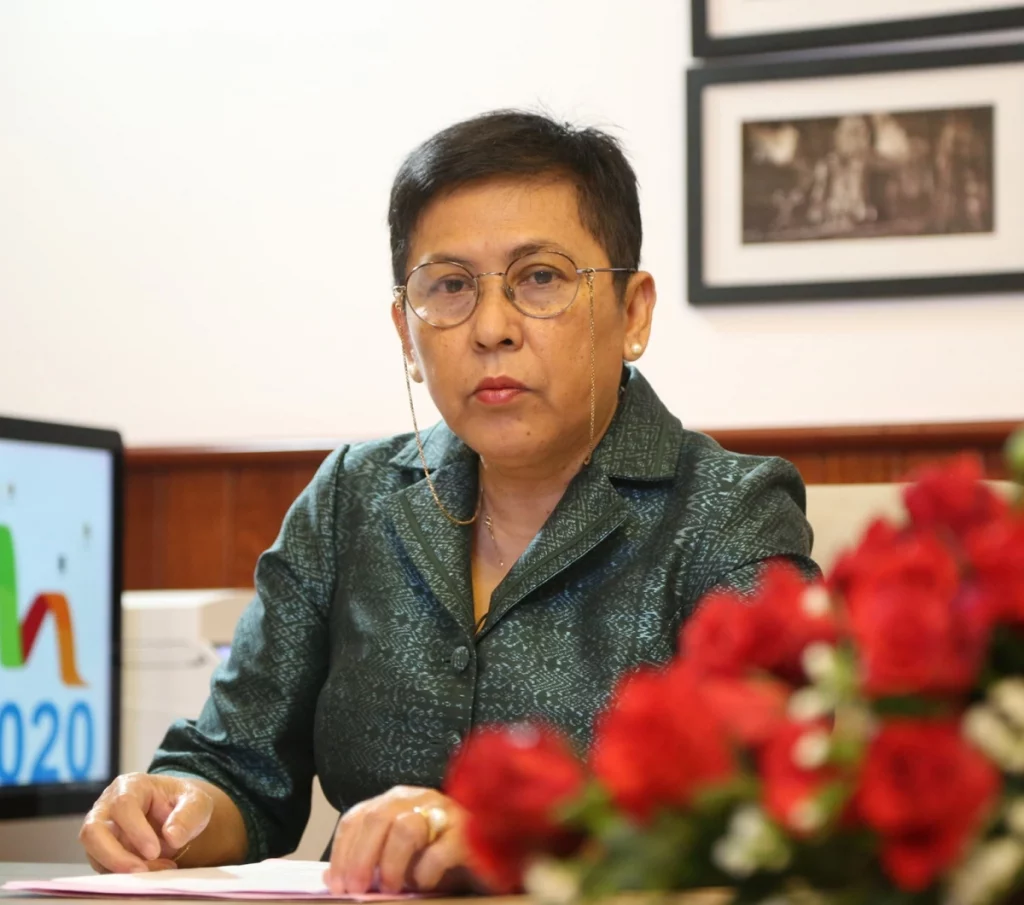
Welcome Remarks
The Ministry of Culture and Fine Arts warmly welcomes you to our official website. This platform has been created to promote, preserve, and celebrate the rich cultural identity and heritage of Cambodia. Through this site, we hope visitors will discover valuable insights into our traditional arts, cultural heritage, and ongoing cultural activities that reflect the depth and vibrancy of Khmer civilization.
We invite you to explore further, participate, and collaborate with us in safeguarding and promoting our national cultural legacy for present and future generations. Thank you!
“Cambodia’s culture is our collective memory, and it is our responsibility to safeguard it while inspiring creativity for tomorrow. Under our mandate, we dedicate ourselves to heritage conservation, the flourishing of arts, and cultural education for all citizens.”
H.E. Phoeurng Sackona
The Minister of Culture and Fine Arts
Recent News
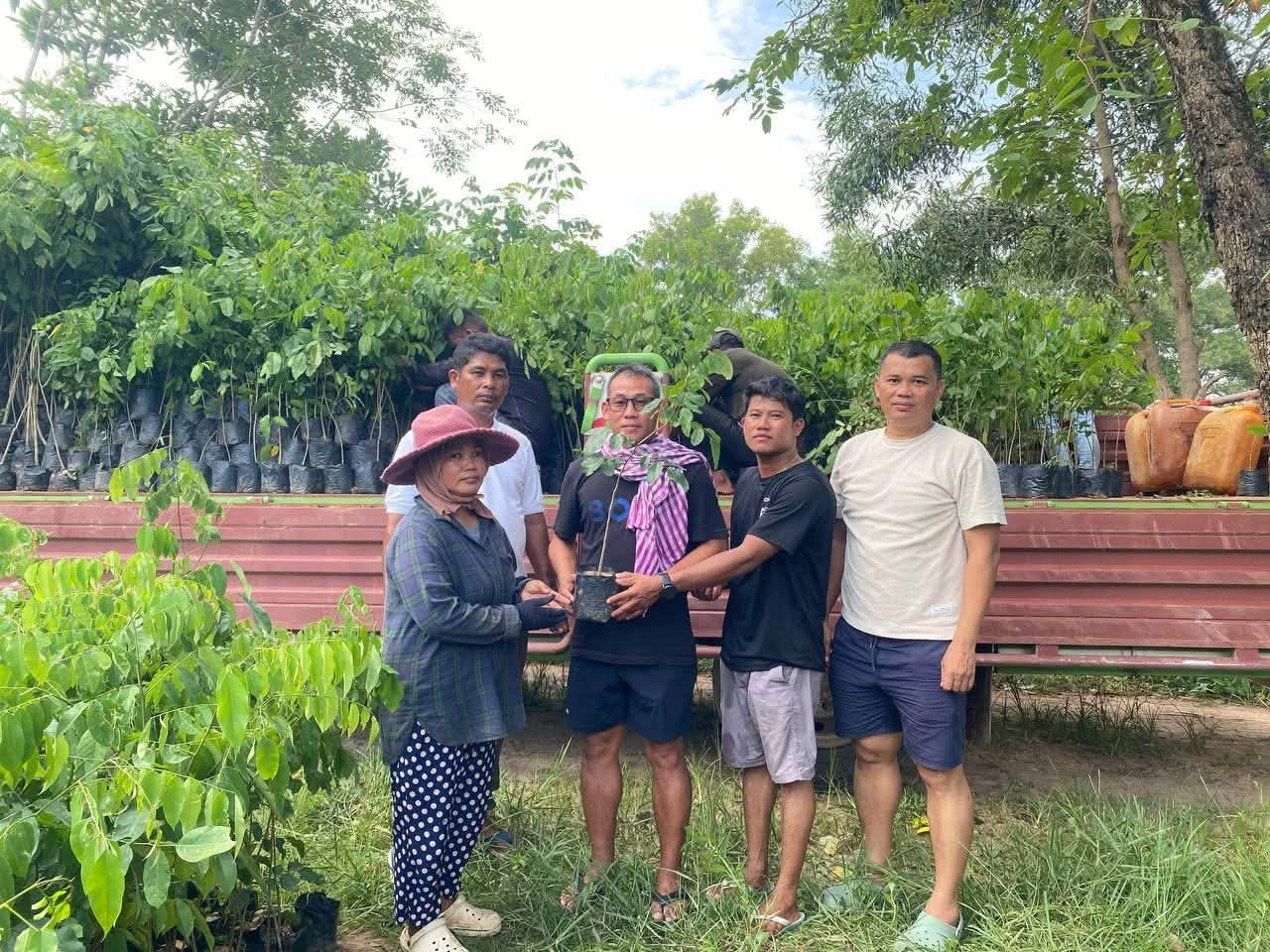
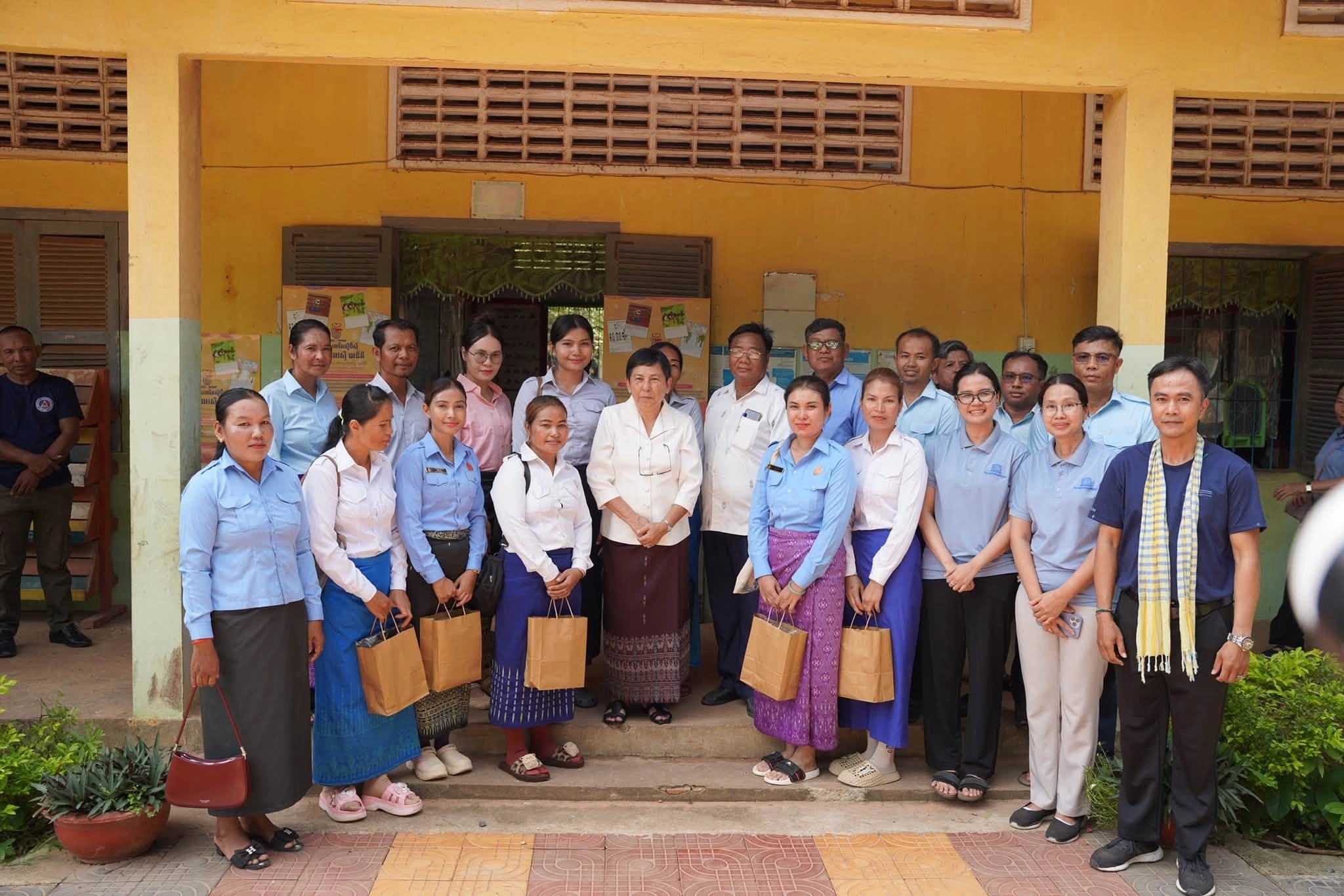
Events
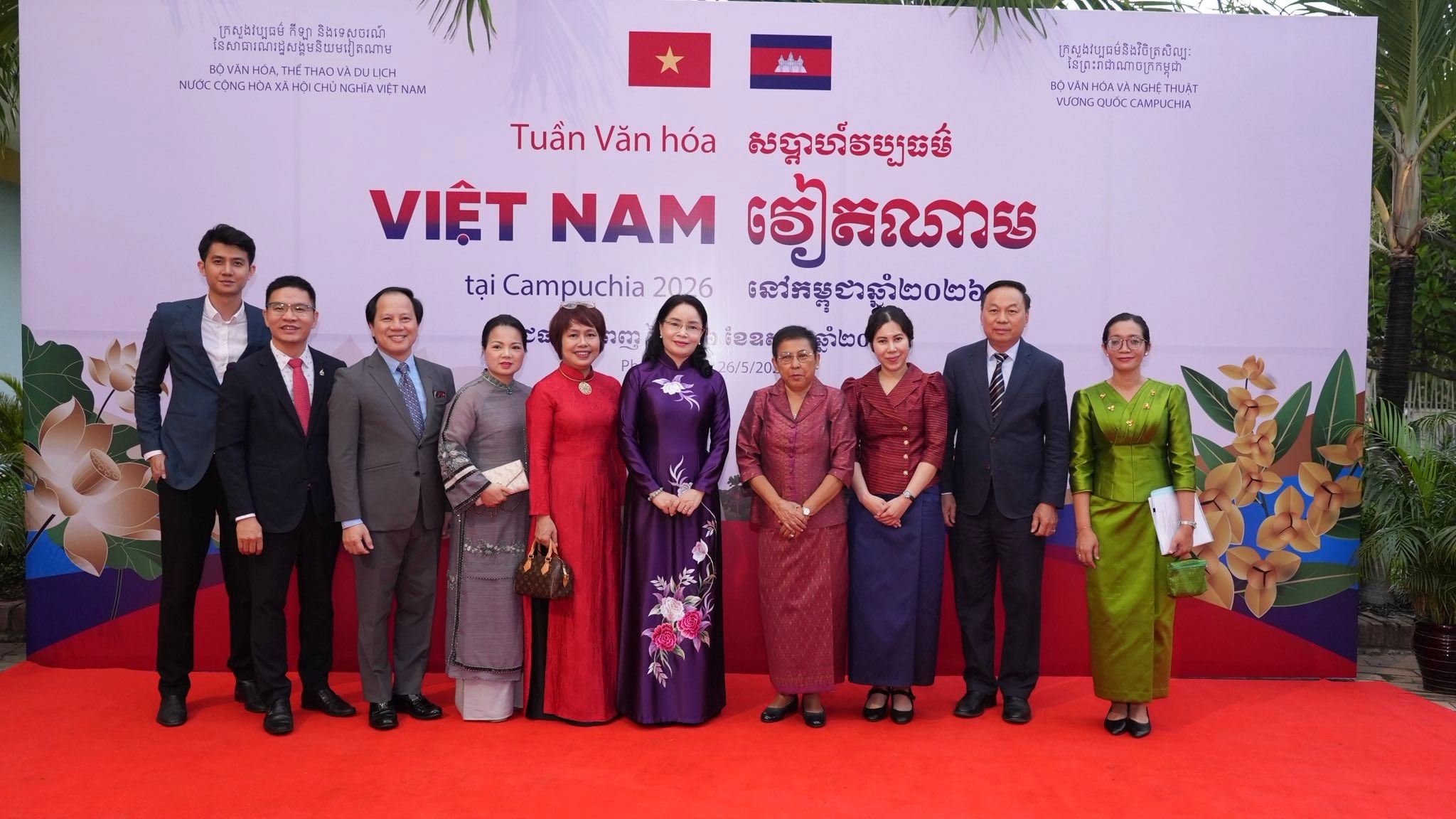
Instructions
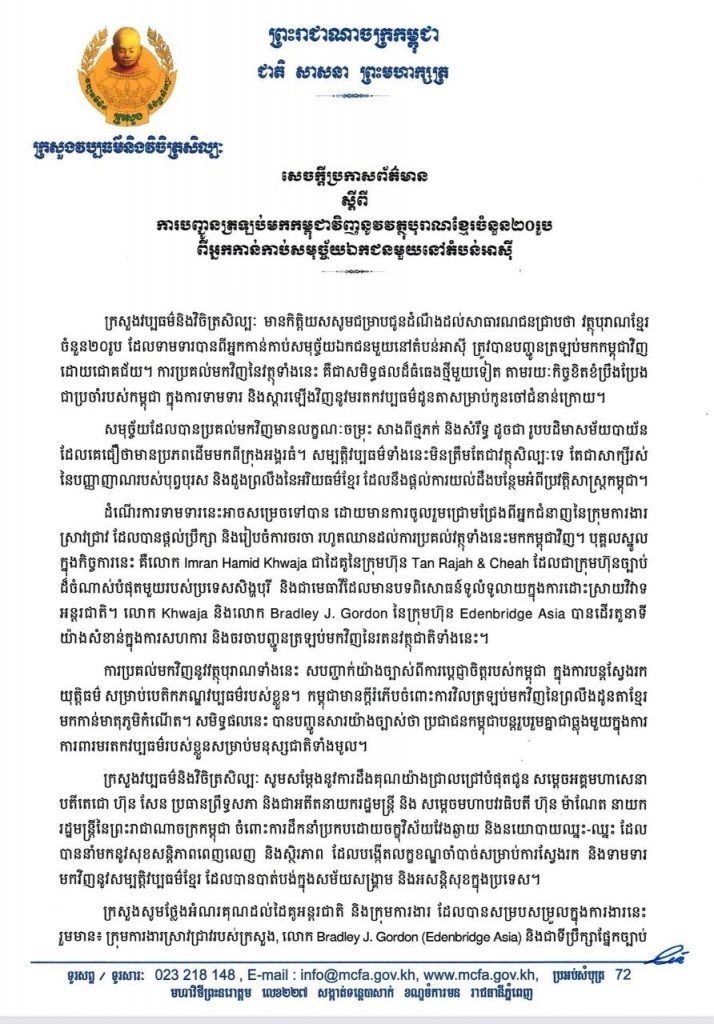
Press Release Regarding The Repatriation of 20 Khmer Antiquities from a Private Collection in Asia to Cambodia
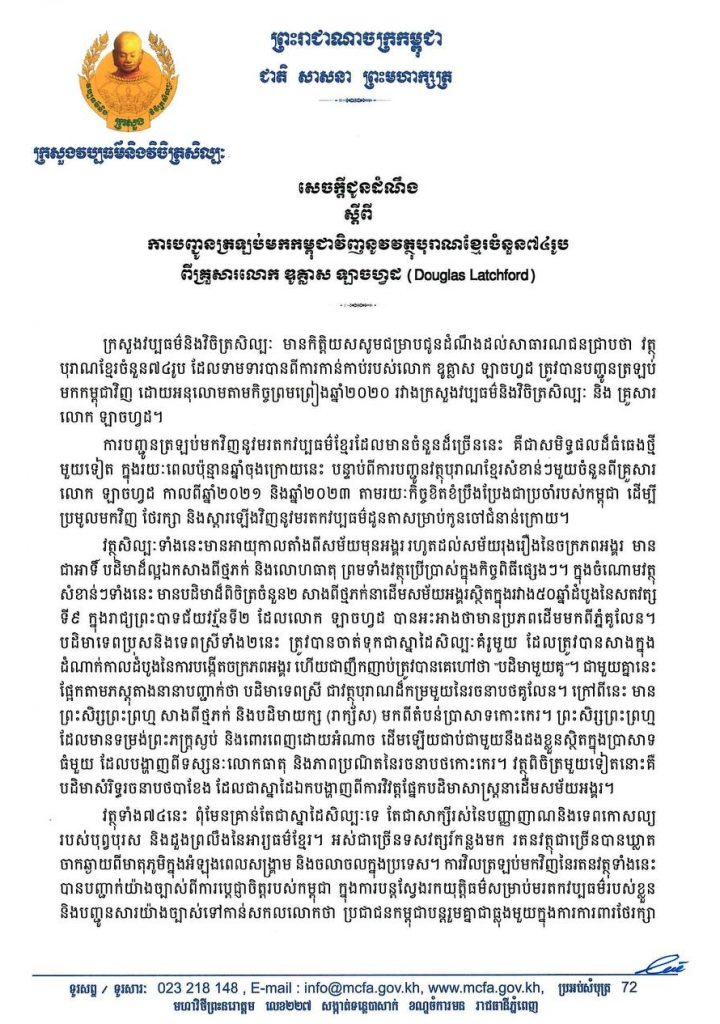
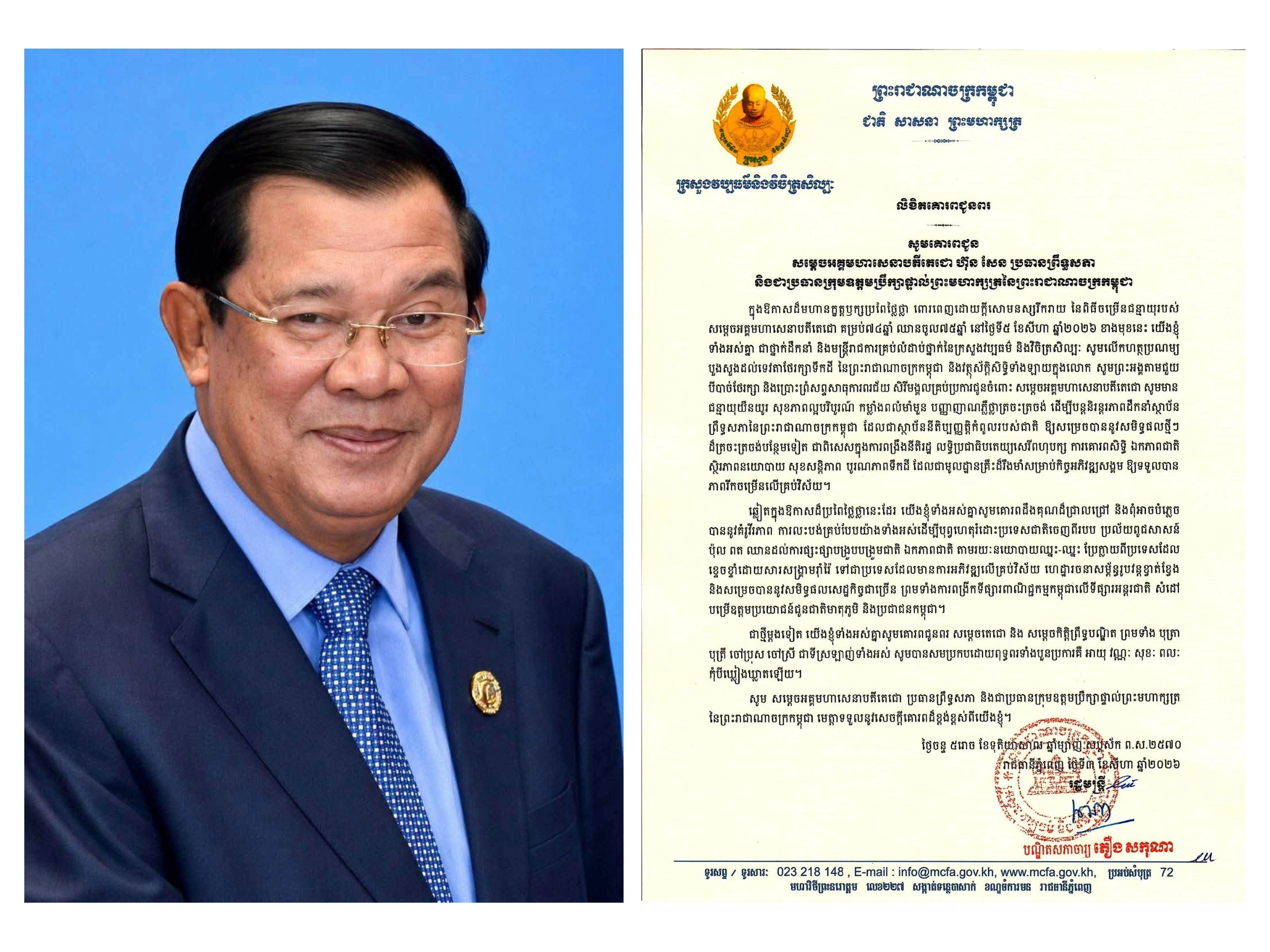
Announcement on the Repatriation of 74 Khmer Antiquities from the Family of Douglas Latchford to Cambodia
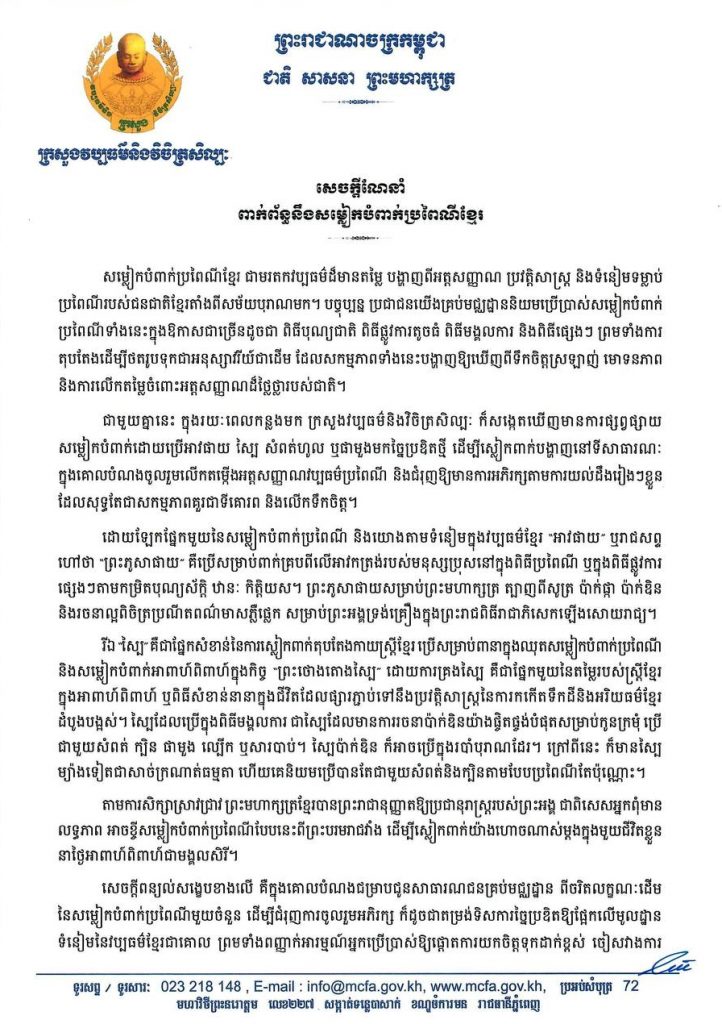
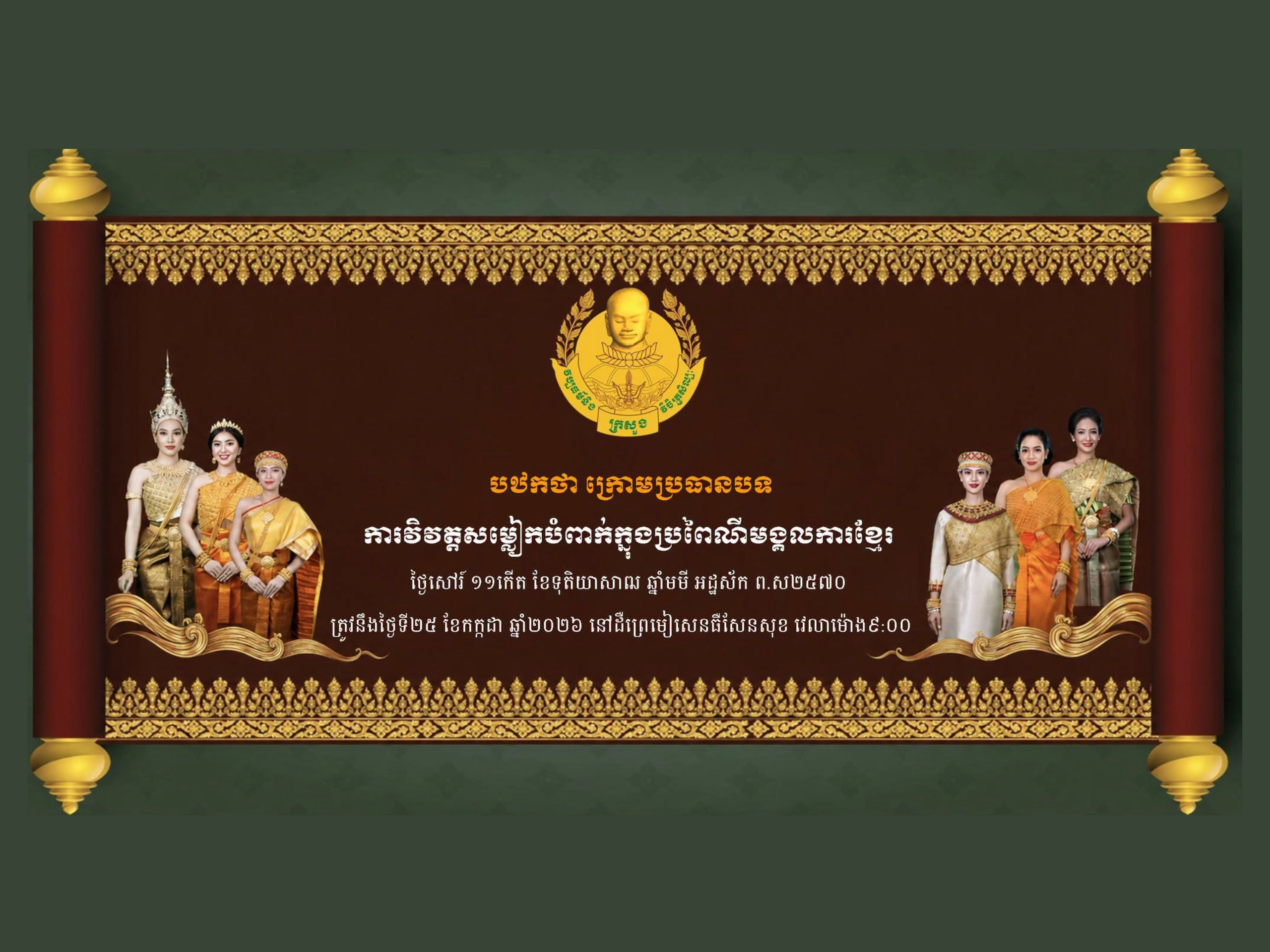
Guidelines from the Ministry of Culture and Fine Arts Regarding Khmer Traditional Clothing
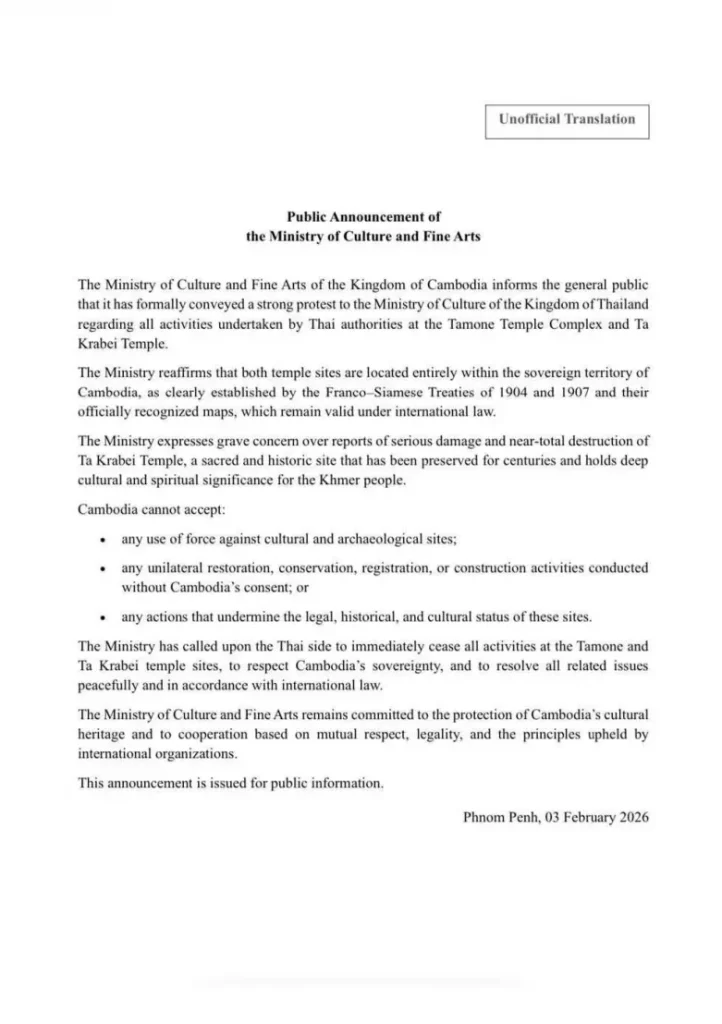
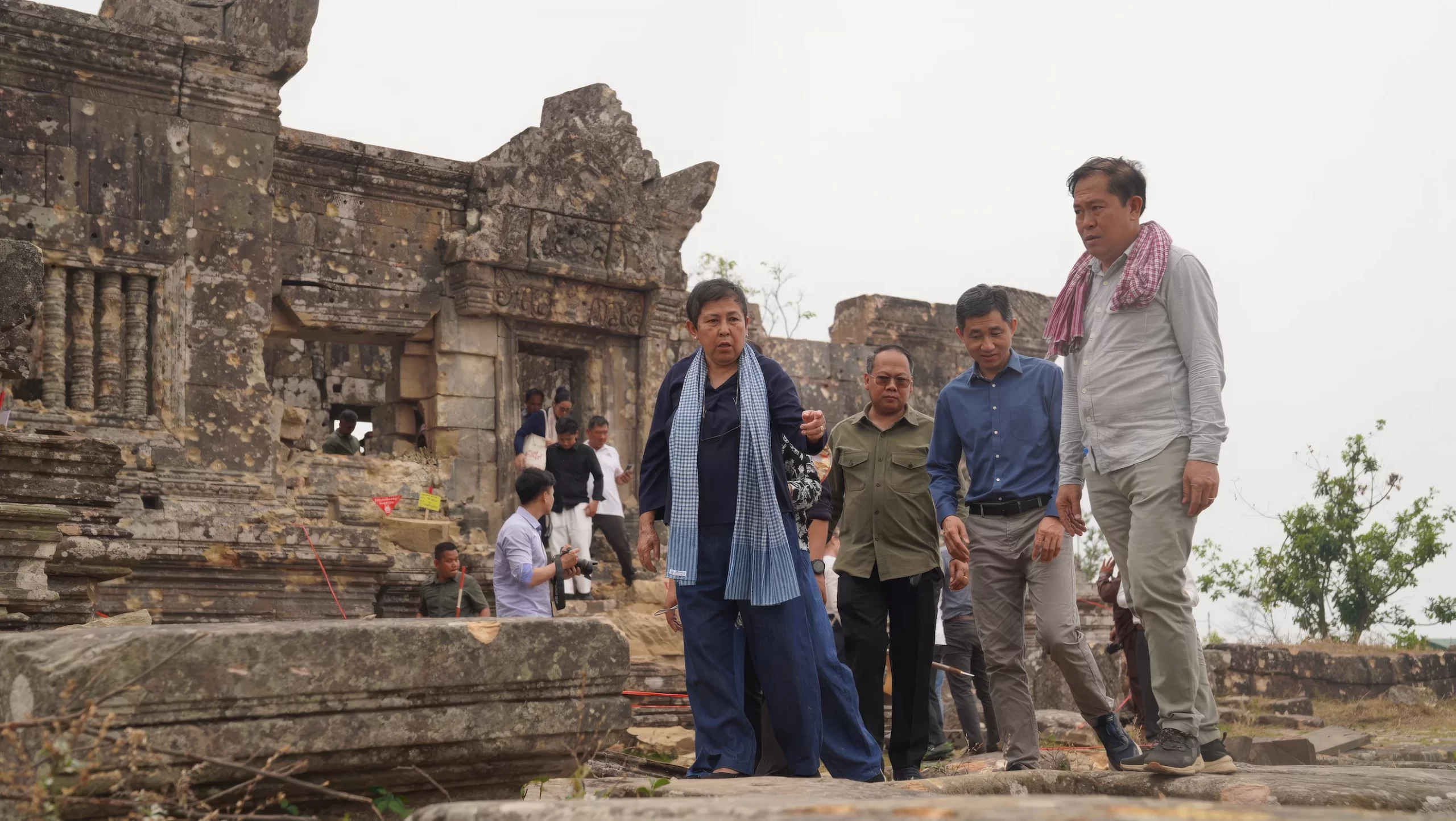
Public Announcement of the Ministry of Culture and Fine Arts informs the general public that it has formally conveyed a strong protest to the Ministry of Culture of the Kingdom of Thailand regarding all activities undertaken by Thai authorities at the Tamone Temple Complex and Ta KrabeiTemple.





Link To Related Websites
Tangible Cultural Heritage
Page
Cambodia’s culture and heritage reflect centuries of artistic achievement, historical depth, and community traditions that continue to define national identity. The Ministry of Culture and Fine Arts safeguards and promotes both tangible and intangible heritage, encompassing archaeological sites, architectural monuments, performing arts, traditional crafts, and living cultural expressions that connect generations.
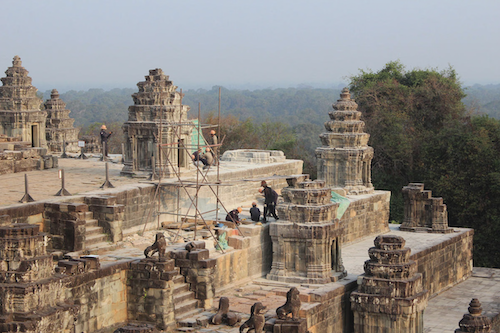
Archaeology & Conservation
Programs and initiatives to excavate, safeguard, and restore archaeological remains of historical significance.
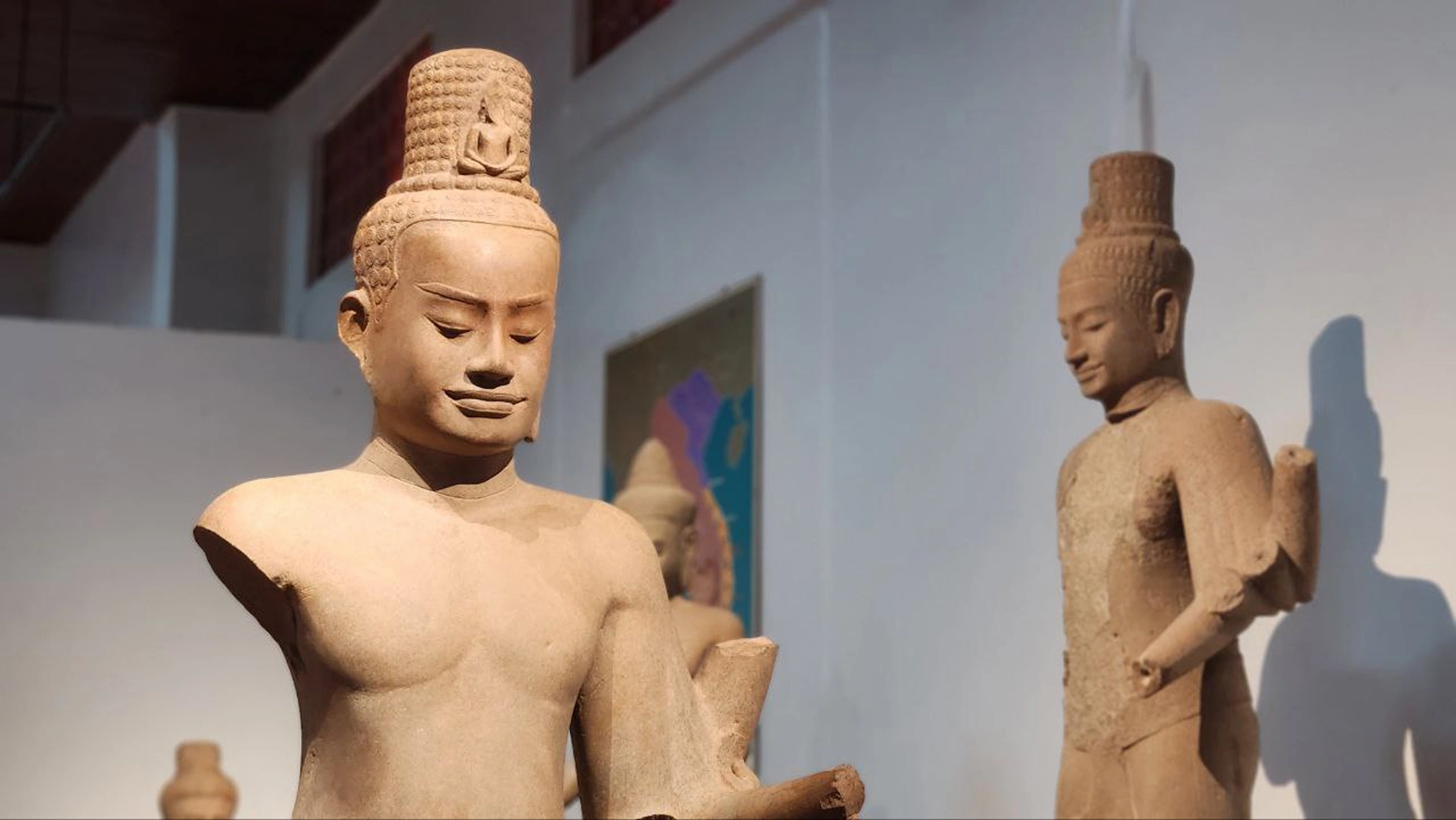
Antiquities
Identification, protection, and registration of objects of historical value.

Architecture
Conservation of historic buildings, traditional dwellings, and landmark structures.

Museums
Management and development of museum spaces that preserve and interpret Cambodia’s cultural legacy.
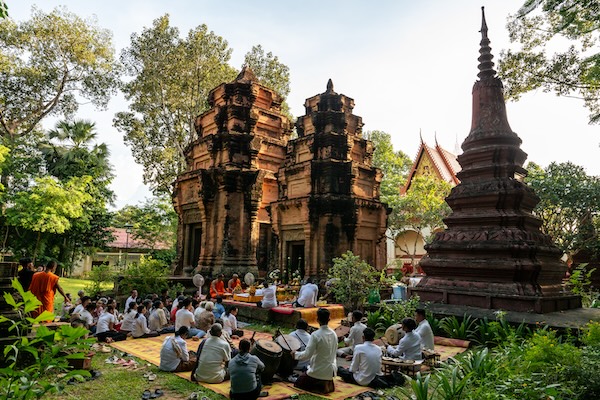
Monuments & Archaeological Heritage
Cambodia’s tangible heritage includes iconic temples, historic monuments, and archaeological sites that reflect centuries of artistic, religious, and architectural achievement, forming the foundation of the nation’s cultural identity.
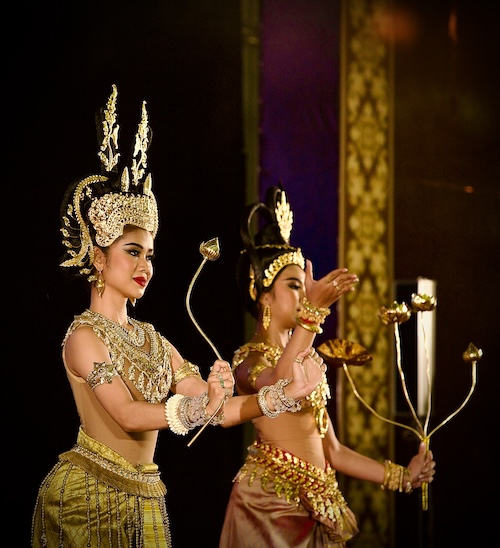
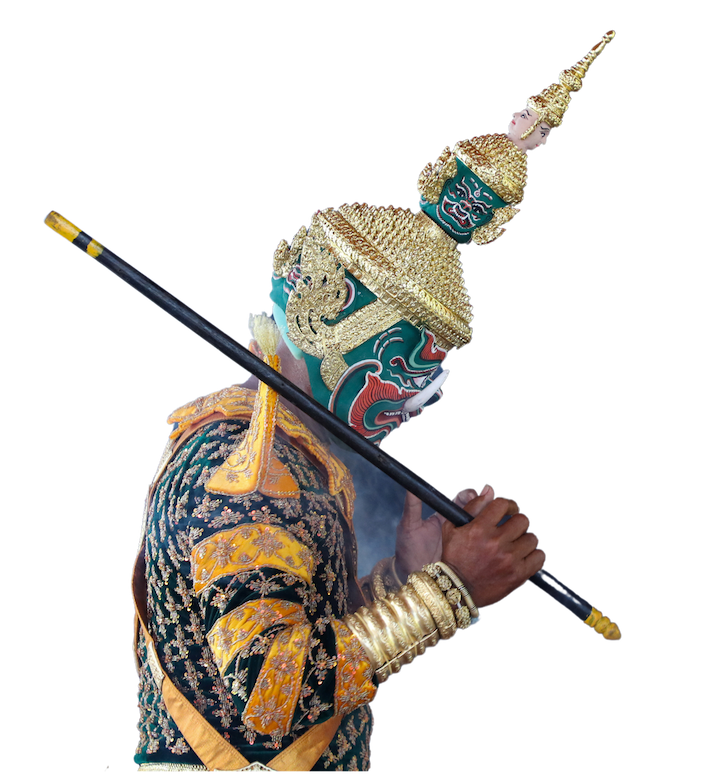
Living Traditions & Intangible Heritage
Intangible cultural heritage encompasses traditional dance, music, rituals, craftsmanship, oral traditions, and social practices that continue to be transmitted across generations and practiced throughout the country.
Safeguarding & Transmission
Through documentation, education, community engagement, and international cooperation, Cambodia actively safeguards both tangible and intangible heritage to ensure their continuity, relevance, and sustainable transmission to future generations.
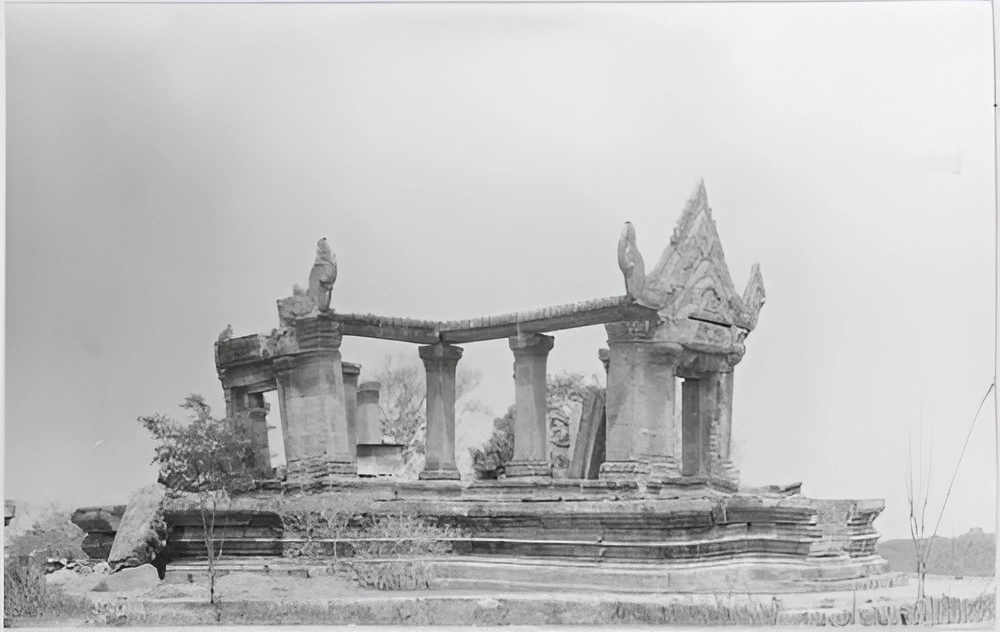 Photo Gallery
Preah Vihear Temple
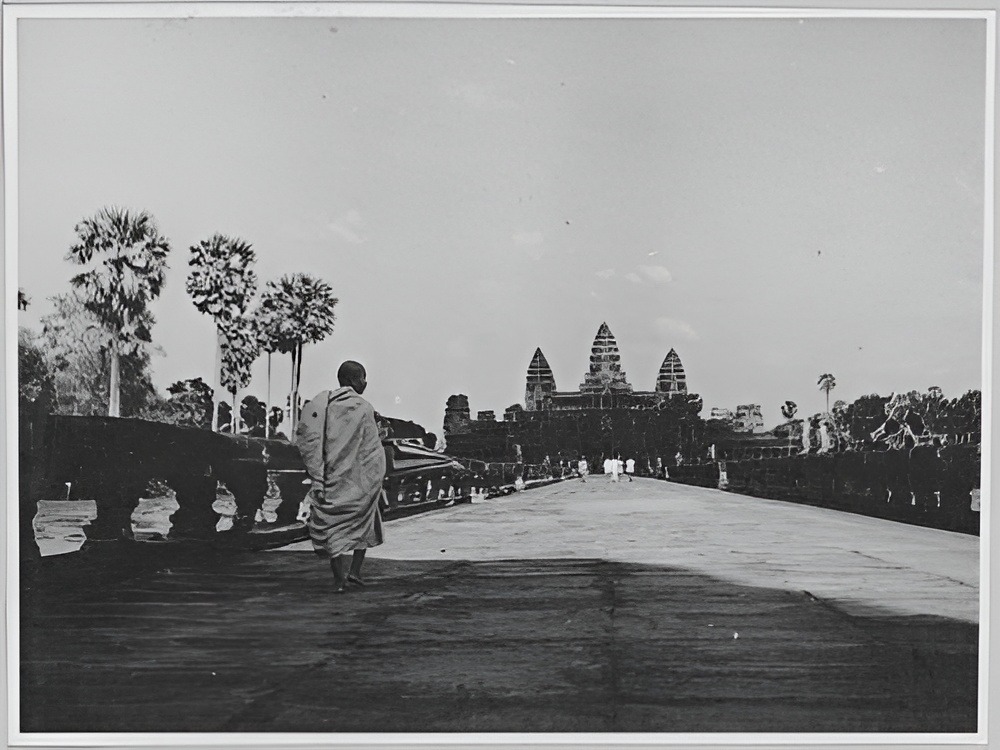 Photo Gallery
Angkor
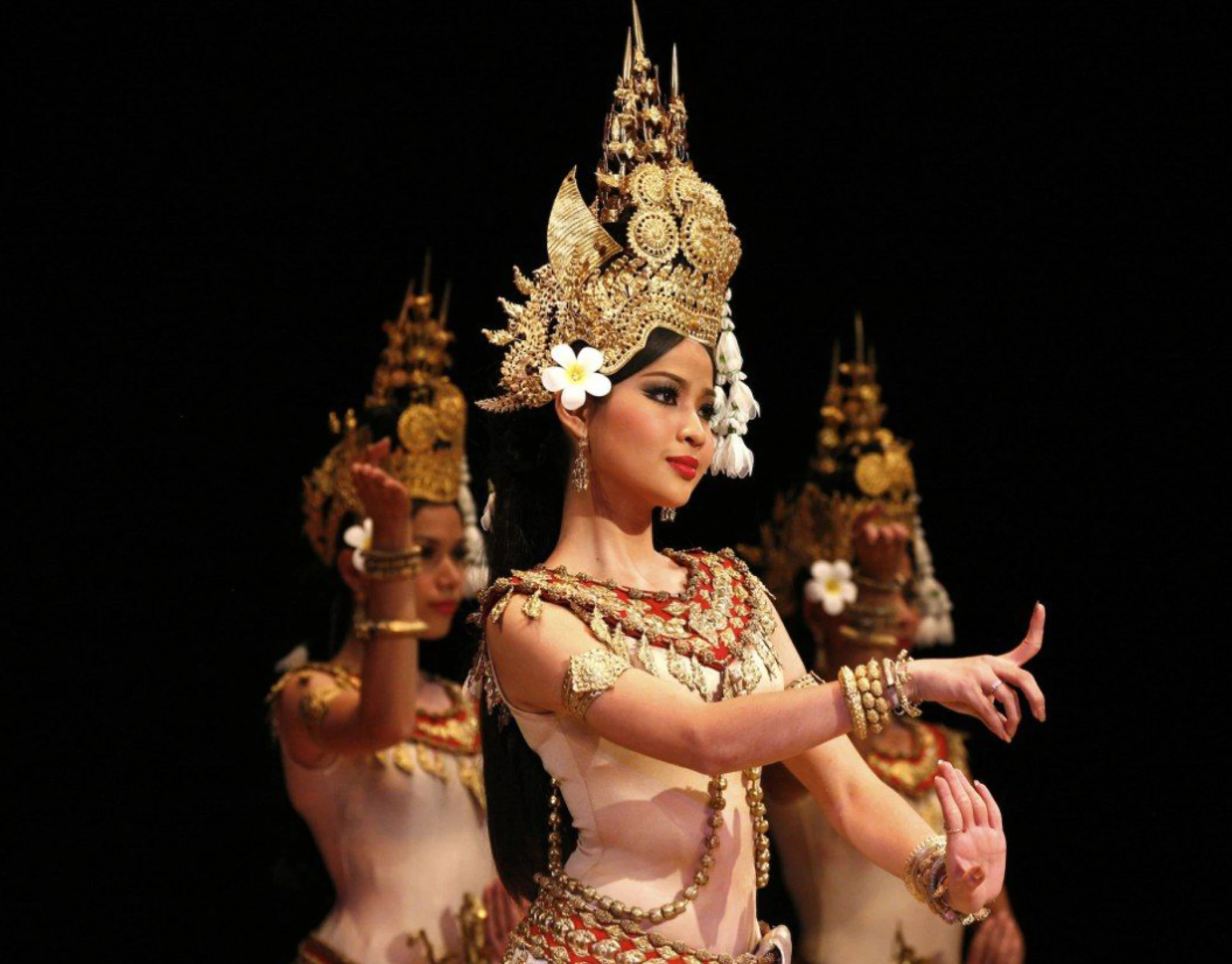 Photo Gallery
Royal Ballet of Cambodia
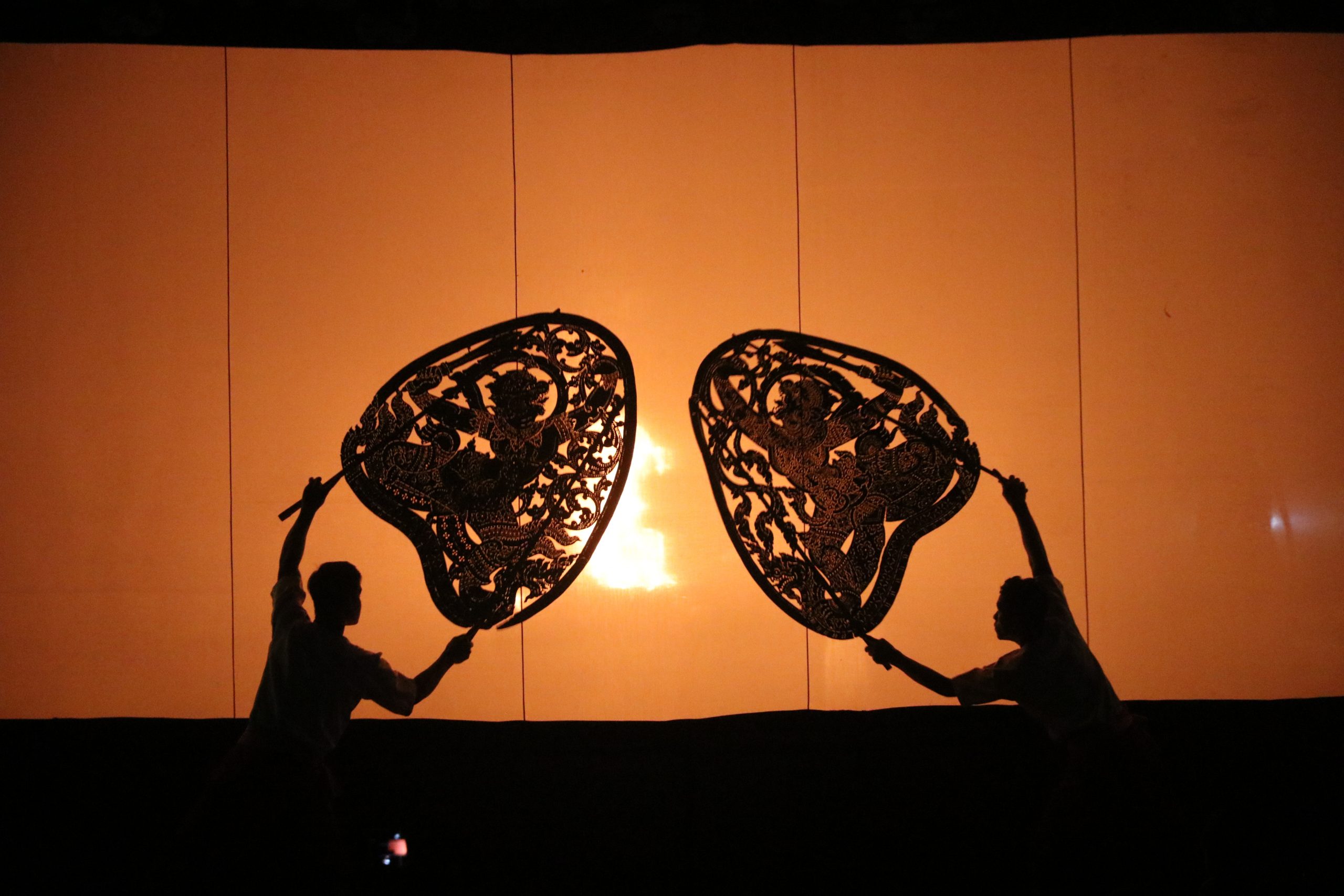 Photo Gallery
Sbek Thom, Khmer Shadow Theatre
 Photo Gallery
The 15th Cambodia International Film Festival 2026
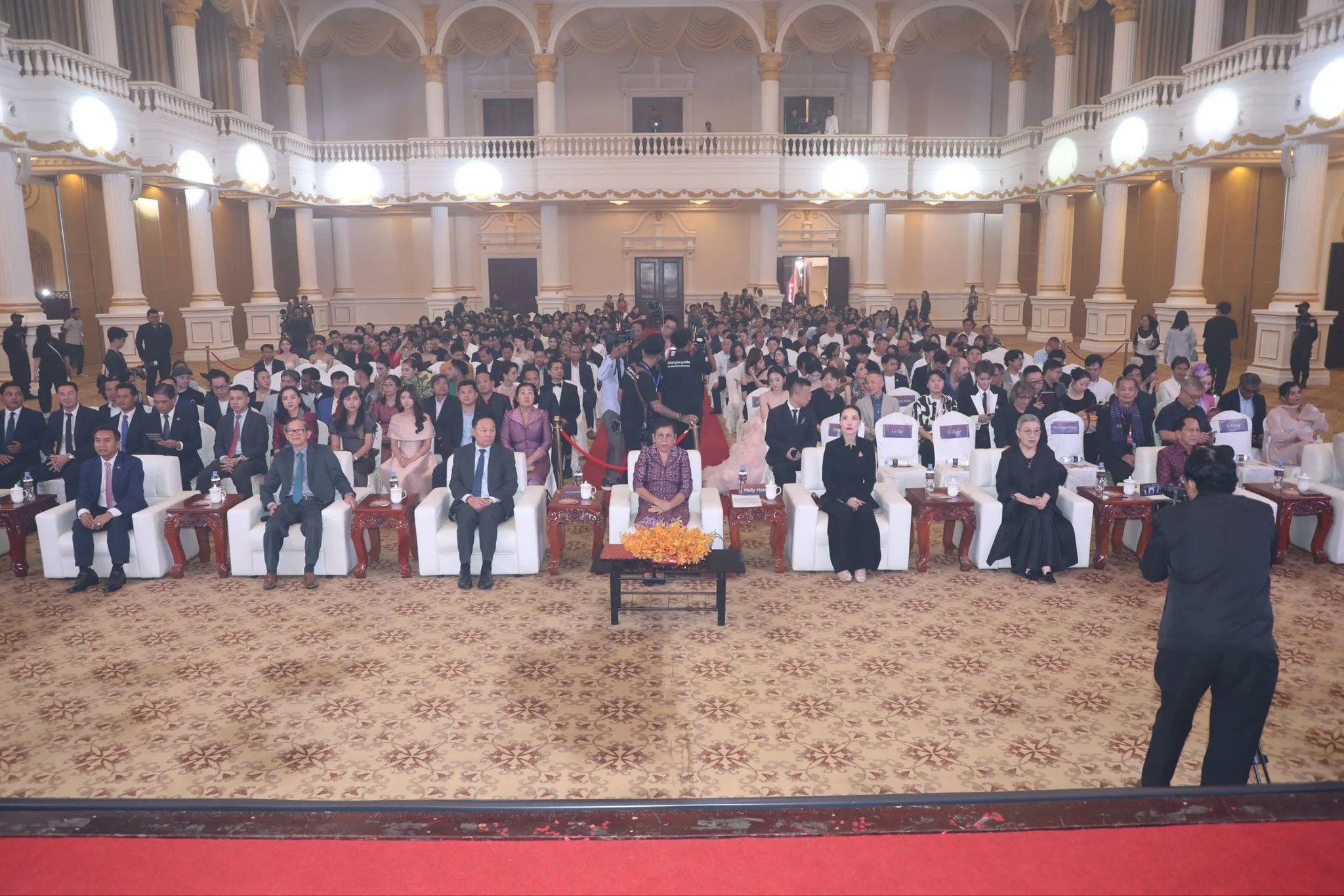
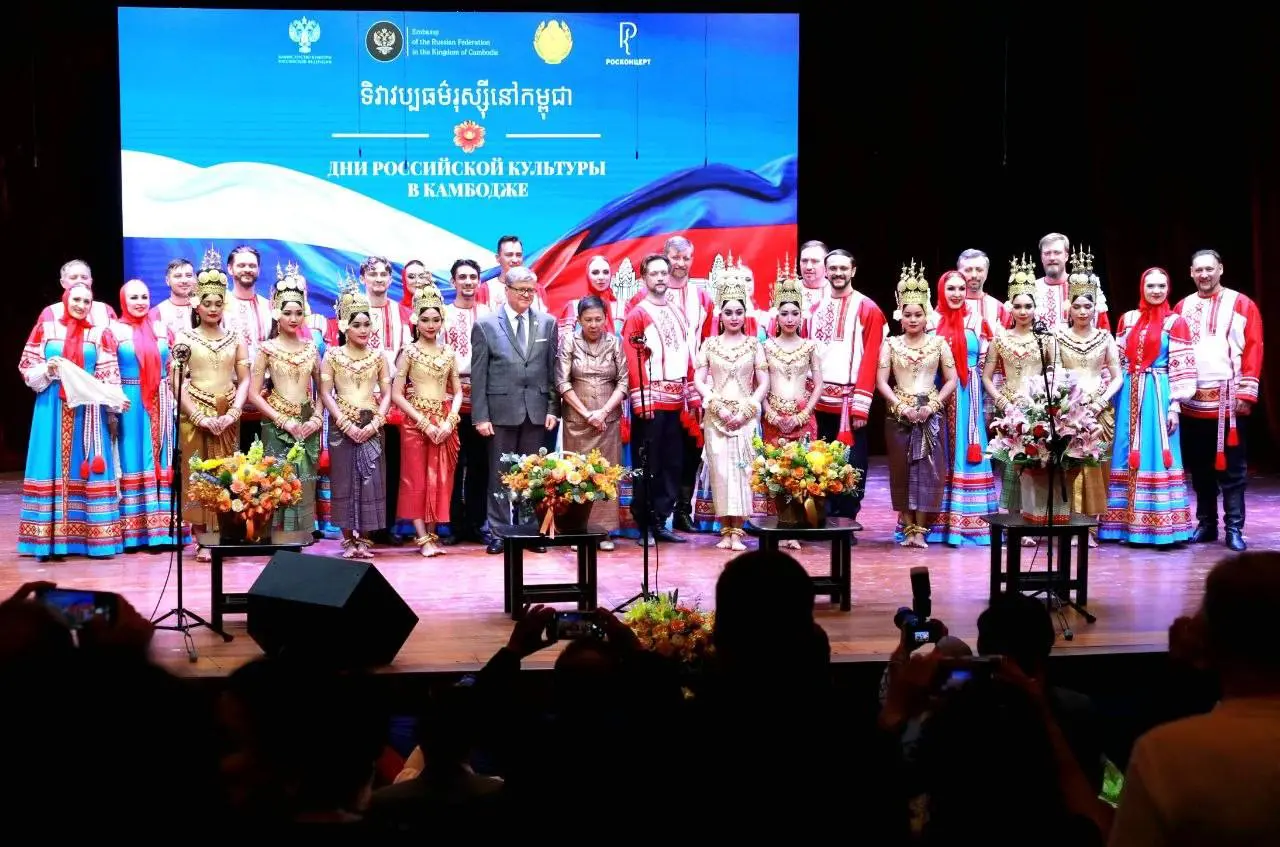
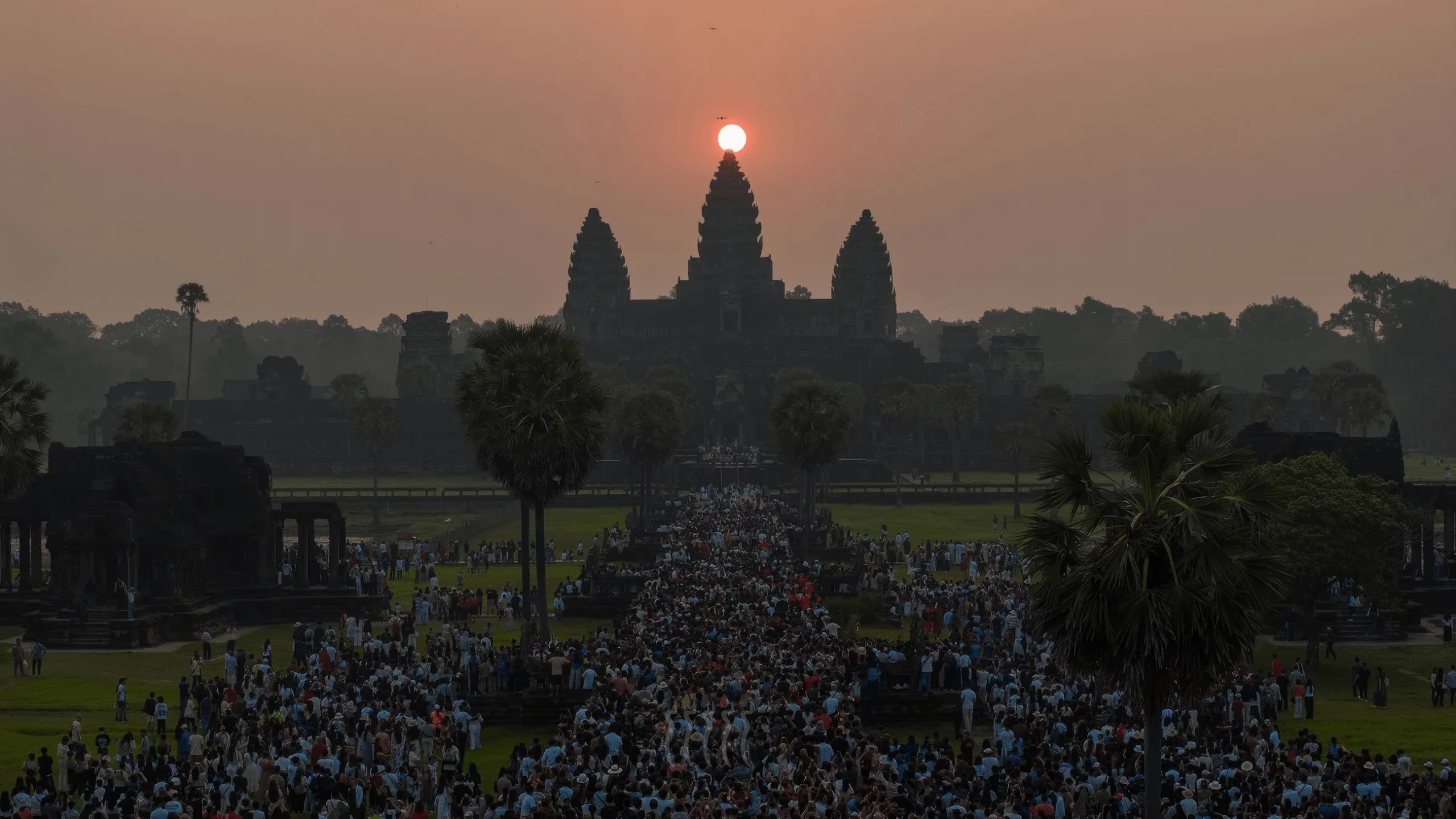 Photo Gallery
The Magnificent Angkor Equinox 2026!
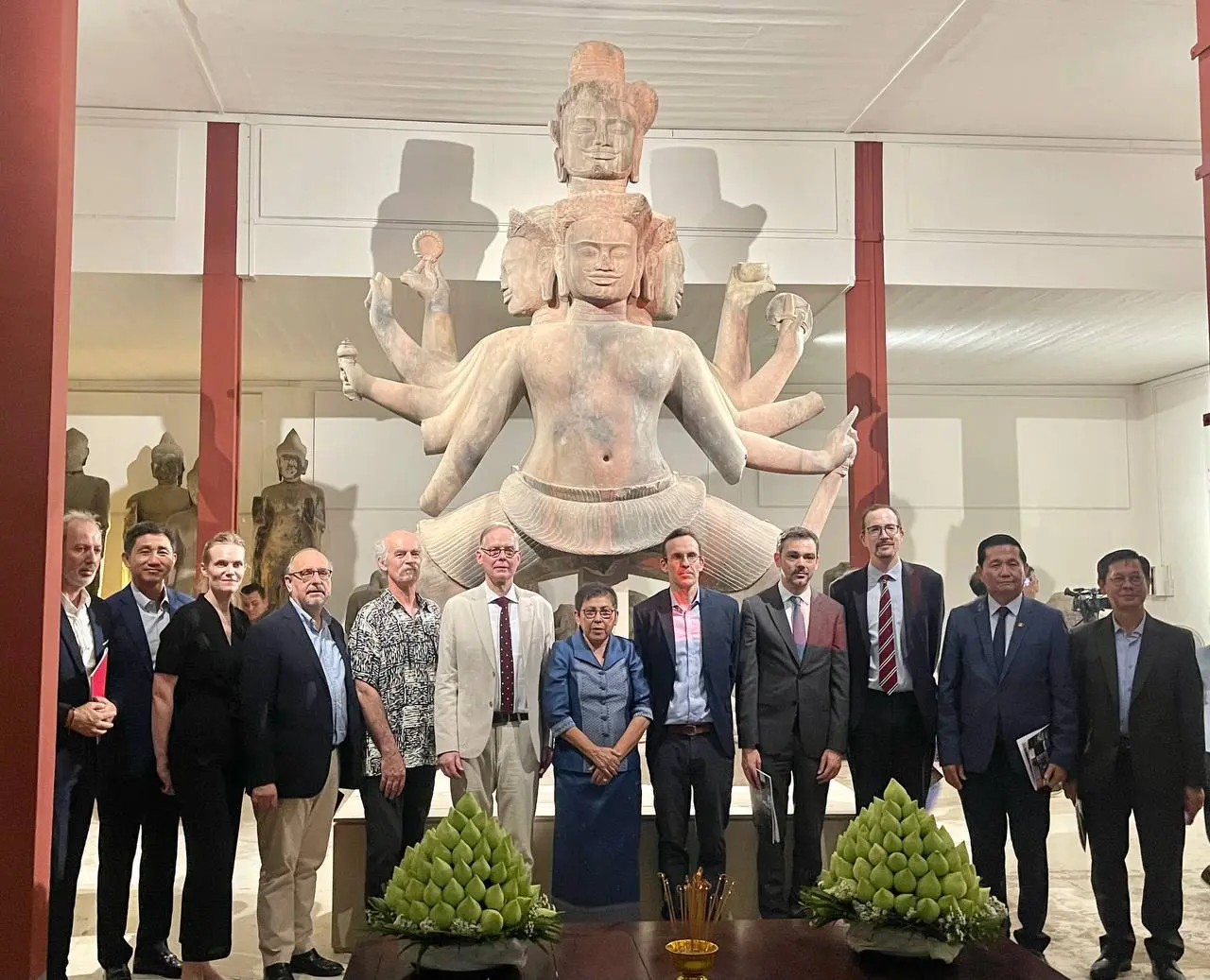
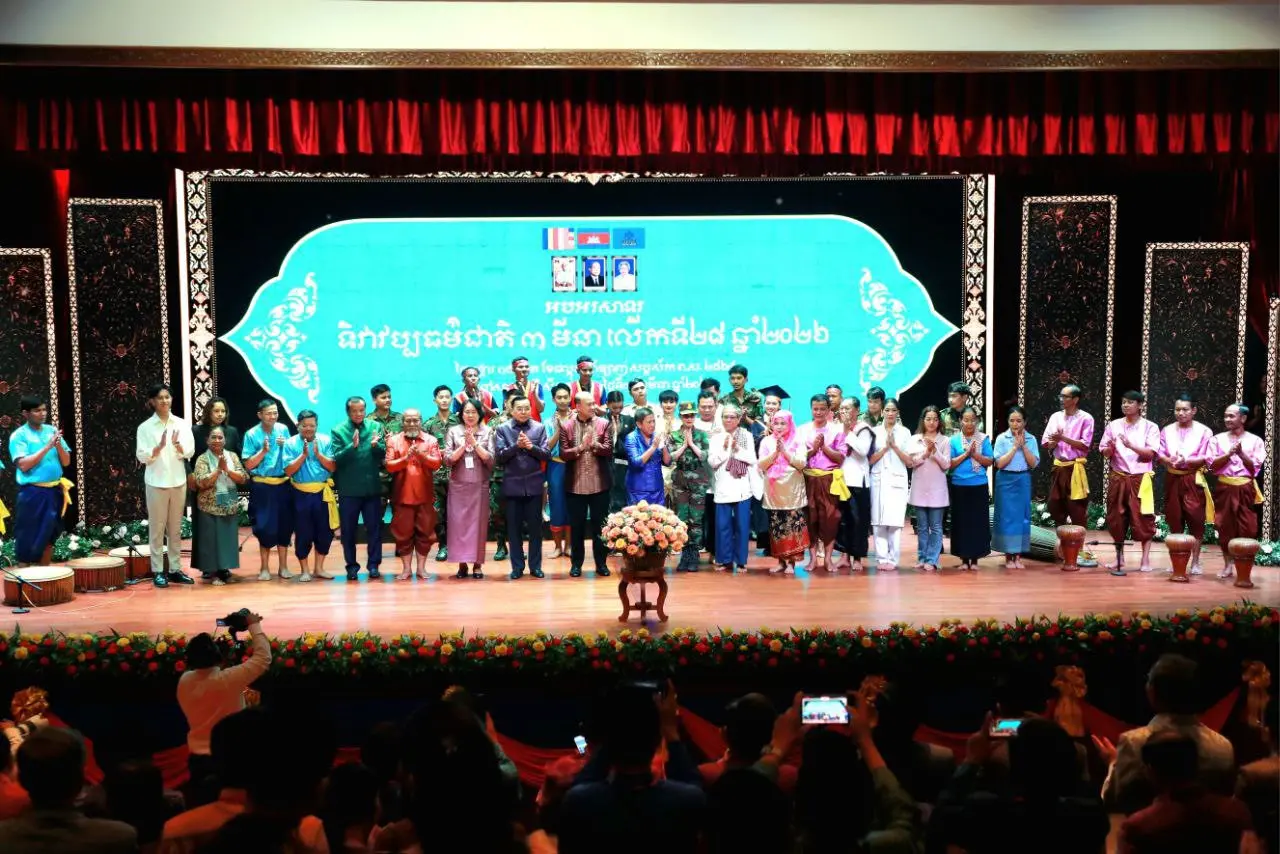 Photo Gallery
The Celebration of the 28th National Culture 2026
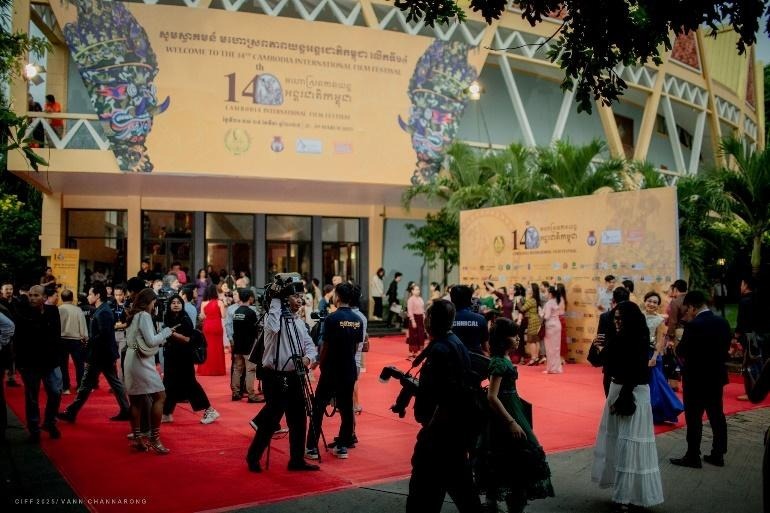 Photo Gallery
The 14th Cambodia International Film Festival (CIFF)
The Department of Information Technology and Digital Transformation
The Department of Information Technology and Digital Transformation has the following duties:
- Prepare strategic plans, action plans, and digital transformation projects of the Ministry
- Manage and operate information technology systems and provide digital services that support the daily operational sustainability of units under the Ministry
- Manage services, internet connection networks, transmit, and store national culture and arts data to ensure the security and order of the information technology system
- Prepare, develop information technology systems, and coordinate digital transformation work to ensure and support effective operations
- Build software applications, support digitalization, and digitalization on technology systems
- Coordinate the preparation and management of the information technology database system networks of relevant units
- Coordinate in conducting inspections on information technology systems to ensure that standard and cybersecurity principles trends are implemented
- Coordinate, manage, and maintain equipment and digital connectivity infrastructure within the Ministry as well as of the units under the Ministry
- Collaborate and coordinate the organization of digital literacy and key digital skills training courses for civil servants under the Ministry
- Monitor and evaluate the progress of digital transformation work across units under the Ministry
- Collaborate with inter-ministerial and various relevant institutions on digital transformation work
- Manage administrative, human resources, and financial tasks of the department within the framework of duty implementation
- Make reports on the work activities of the department monthly, quarterly, semi-annually, nine-months, and annually to the leadership
- Implement other duties as assigned by the Secretary General or the Deputy Secretary General in charge.
The Department of International Cooperation and ASEAN Affairs
The Department of International Cultural Cooperation has the following duties:
- Establish communication and cultural cooperation with national institutions, non-governmental organizations, national and international organizations, and ASEAN member countries regionally and globally
- Prepare and manage all documents of agreements, memorandums of understanding with non-governmental organizations, national and international organizations, and with countries in the region and globally in the culture and fine arts sector
- Coordinate and prepare the signing of agreements, memorandums of understanding, international protocols with various national and international development partners
- Inspect, monitor, and promote the implementation of agreements and memorandums of understanding with national and international partners, including promoting successful implementation
- Coordinate international cooperation and ASEAN affairs
- Strengthen and expand cooperation with national institutions, non-governmental organizations, national and international organizations, and various diplomatic corps to seek technical, material, or financial assistance that ensures the protection, conservation, and promotion of national culture and intangible culture
- Coordinate for leaders, civil servants, professors, students, and artists to conduct study tours, attend meetings, and various programs abroad in cultural activities or for other studies
- Prepare and coordinate formalities for international delegations participating in conferences, meetings, exhibitions, study tours, or other cultural events
- Prepare protocol formalities, travel documents, and various forms for the Ministry’s delegations going on study tours or participating in other cultural events abroad, and compile report documents for ongoing work
- Prepare documents and aide-mémoires for working discussions of the leadership with relevant parties within the framework of international cooperation and ASEAN
- Prepare and coordinate ASEAN cultural cooperation meetings and other international meetings
- Manage administrative, human resources, and financial tasks of the department within the framework of duty implementation
- Make reports on the work activities of the department monthly, quarterly, semi-annually, nine-months, and annually to the leadership
- Implement other duties as assigned by the Secretary General or the Deputy Secretary General in charge.
The Department of Legislation
The Department of Legislation has the following duties:
- Study, research, draft laws, and various legal normative documents related to the culture and fine arts sector
- Prepare plans for drafting laws and legal normative documents for the culture and fine arts sector
- Promote and strengthen the implementation of laws and legal normative documents in the culture and fine arts sector
- Review, advise, and revise the form and content of draft laws and legal normative documents related to the culture and fine arts sector prepared by the Ministry of Culture and Fine Arts
- Monitor and evaluate the impact of the implementation of laws and legal normative documents in the culture and fine arts sector
- Study and review laws and legal normative documents related to the culture and fine arts sector that are not appropriate for social progress, to raise opinions to the Minister and respectfully submit to the Head of the Royal Government to review and decide on making amendments and revisions
- Gather, compile, print, and archive for research the legal documents and legal normative documents
- Disseminate laws and legal normative documents related to the culture and fine arts sector at the national and sub-national levels
- Collaborate in studying with units under the Ministry that require laws or legal normative documents, as well as participate in drafting and organizing meetings or seminars to collect comprehensive inputs
- Collaborate and coordinate with relevant units in preparing forms and procedures for public service delivery at the national and sub-national levels
- Collaborate and coordinate legal reform work, judicial system reform and deconcentration work, and other reforms of the Ministry
- Participate in reviewing and providing opinions on the preparation of draft laws and various legal normative documents related to the culture and fine arts sector initiated by other ministries and institutions
- Collaborate with units under the Ministry of Culture and Fine Arts and relevant ministries and institutions in preparing the calendar for drafting laws and various legal normative documents related to the culture and fine arts sector
- Manage administrative, human resources, and financial tasks of the department within the framework of duty implementation
- Make reports on the work activities of the department monthly, quarterly, semi-annually, nine-months, and annually to the leadership
- Implement other duties as assigned by the Secretary General or the Deputy Secretary General in charge.
The Department of Planning and Statistics
The Department of Planning and Statistics has the following duties:
- Prepare and coordinate policies, strategic plans, institutional development plans, and annual operational plans of the Ministry
- Prepare grants and various concession agreements of the Ministry
- Study, research, inspect, monitor, and evaluate the implementation of the Ministry’s plans
- Compile and analyze data and statistics to determine action programs and modernize plans
- Prepare concept documents, strategies, plans, and development programs within the Ministry framework
- Manage and compile documents on aid projects, collaborative projects, and the status of project implementation
- Inspect, monitor, and evaluate the results of the public investment program plan implementation
- Gather, compile, and summarize reports on the Ministry’s work activities monthly, quarterly, semi-annually, nine-months, and annually
- Collaborate to provide statistical information to the Ministry of Planning as determined
- Prepare reports and relevant documents for organizing the Ministry’s congress
- Manage administrative, human resources, and financial tasks of the department within the framework of duty implementation
- Make reports on the work activities of the department monthly, quarterly, semi-annually, nine-months, and annually to the leadership
- Implement other duties as assigned by the Secretary General or the Deputy Secretary General in charge.
The Department of Finance
The Department of Finance has the following duties:
- Prepare, coordinate, summarize, and implement the budget strategic plan
- Gather, coordinate, summarize, and propose the annual budget project
- Prepare the quarterly cash revenue and expenditure program
- Support and coordinate with budget units in budget management
- Take responsibility for annual revenue and expenditure operations and accounting entries
- Prepare, manage, and implement the procurement plan
- Manage real estate, movable property, material inventory, and property inventory at all levels
- Distribute equipment and fuel to various units under the Ministry
- Prepare and disburse salaries and social benefits to civil servants under the Ministry
- Prepare construction, repair, and maintenance projects and programs for structures, buildings, and all types of equipment
- Prepare annual accounting entries
- Manage administrative, human resources, and financial tasks of the department within the framework of duty implementation
- Make reports on the work activities of the department monthly, quarterly, semi-annually, nine-months, and annually to the leadership
- Implement other duties as assigned by the Secretary General or the Deputy Secretary General in charge.
The Department of Human Resources
The Department of Human Resources has the following duties:
- Manage civil servants, officials based on work agreements, contracted officials, and other officials of the Ministry, such as recruitment, probation, changes in official status, promotion of grade and rank, appointment, transfer, termination of duty, disciplinary action, retirement, loss of professional fitness, and awarding of decorations
- Prepare all administrative letters for managing the civil servant framework of the Ministry
- Prepare the framework and human resources plan of the Ministry
- Study, research, prepare, and implement the strategic plan for human resources and institutional development of the Ministry
- Prepare salaries, remunerations, and various allowance regimes
- Prepare and implement a performance-based management system, as well as financial and non-financial incentive systems, and disciplinary sanctions
- Collaborate in preparing training, monitoring the implementation, and evaluating the training of the Ministry’s civil servants
- Prepare and maintain the individual files of the Ministry’s leadership, civil servants, officials based on work agreements, contracted officials, and other officials of the Ministry
- Prepare statistics on official management and work information tables of officials in the Ministry
- Manage administrative, human resources, and financial tasks of the department within the framework of duty implementation
- Make reports on the work activities of the department monthly, quarterly, semi-annually, nine-months, and annually to the leadership
- Implement other duties as assigned by the Secretary General or the Deputy Secretary General in charge.
Department of Administration
The Department of Administration has the following duties:
- Manage the administrative sector and coordinate the administrative status of all sectors of the Ministry
- Manage and circulate various documents of the Ministry that the department is in charge of
- Ensure administrative efficiency, security, and manage the social work of the Ministry
- Prepare and manage security, public order, environment, and aesthetics of the Ministry
- Take charge of coordinating and managing protocol work, organizing meetings, and various programs of the Ministry
- Coordinate the preparation, development, and management of digital systems to support and ensure the effective operation of units under the Ministry
- Manage, repair, and maintain buildings, furniture, office supplies, electrical, electronic, and information technology equipment of the units directly under the Ministry’s cabinet
- Manage state garages and vehicles assigned to the Ministry
- Collect, compile, manage, and maintain all documents and data of the Ministry
- Manage administrative, human resources, and financial tasks of the department within the framework of duty implementation
- Make reports on the work activities of the department monthly, quarterly, semi-annually, nine-months, and annually to the leadership
- Implement other duties as assigned by the Secretary General or the Deputy Secretary General in charge.