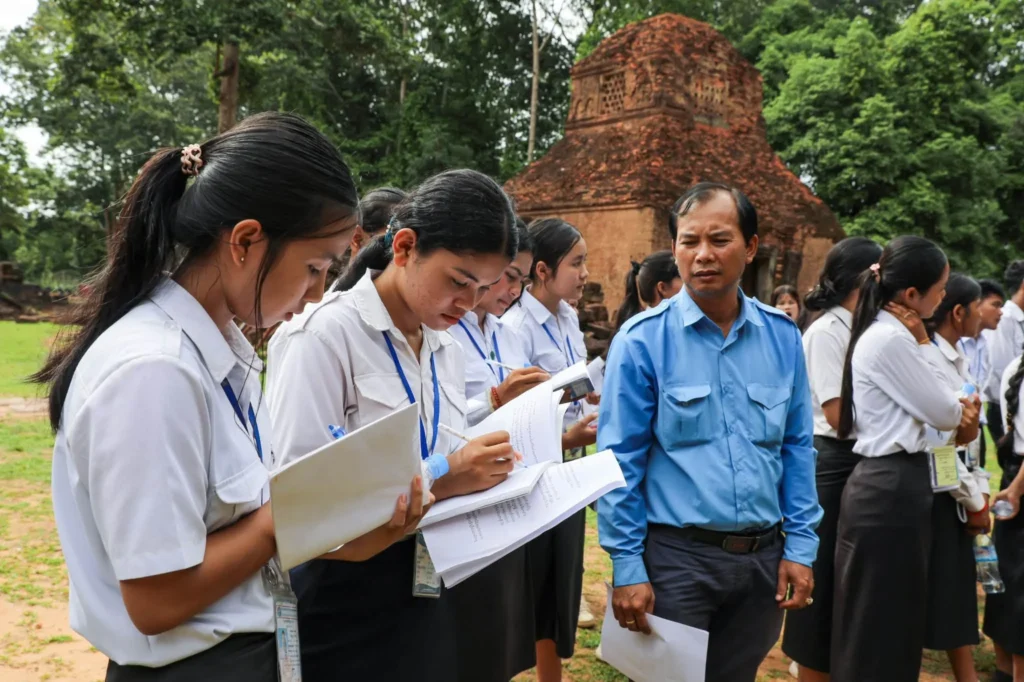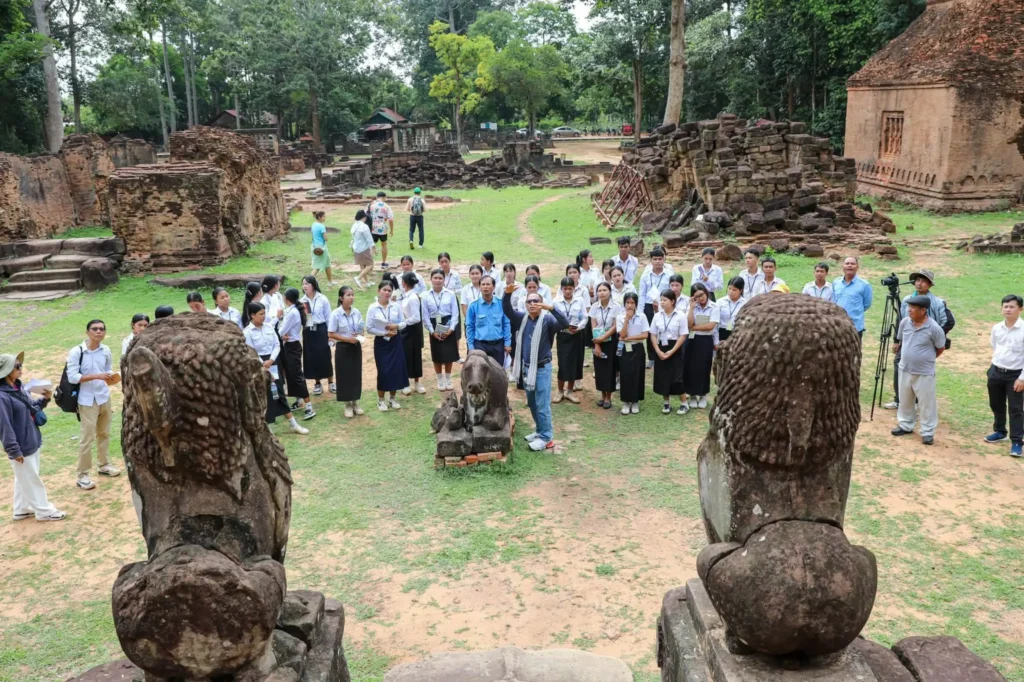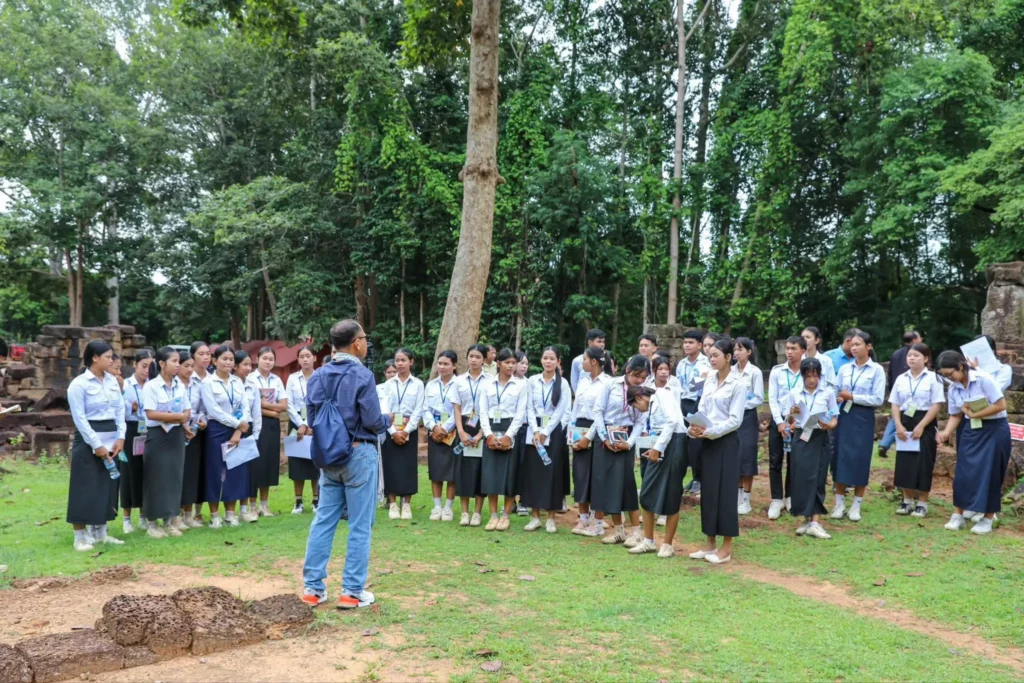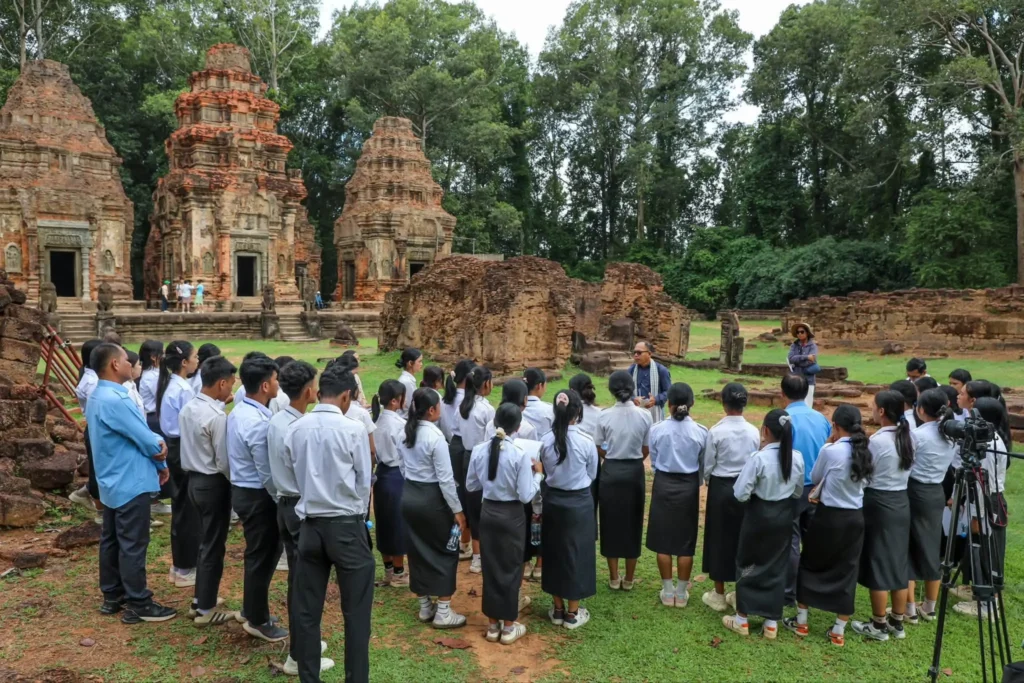
Hun Sen Prasat Bakong High School Students Explore the Secrets of Ancient Temples
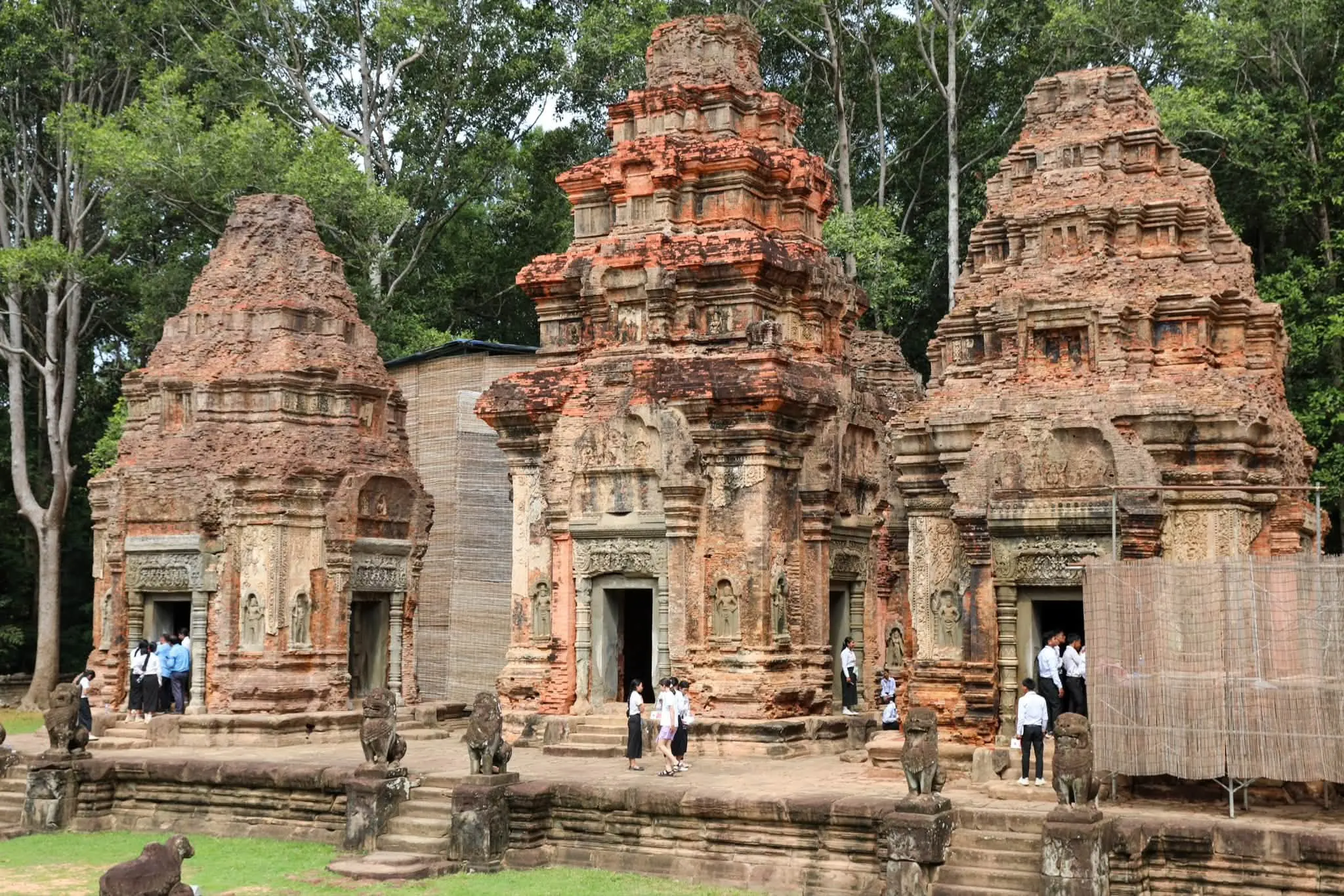
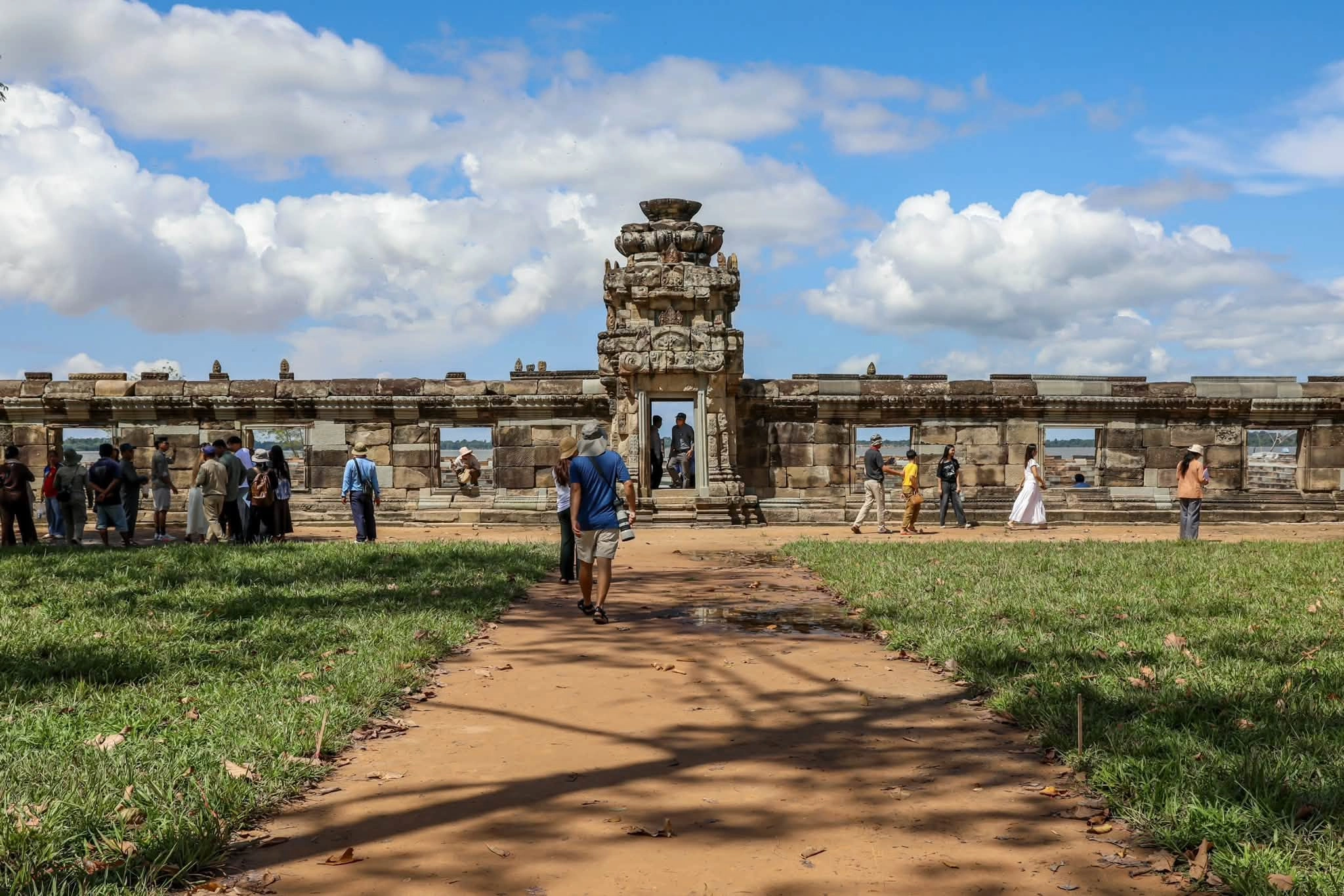
Studying art history is not merely about viewing the spectacular scenery of ancient structures; it is a crucial key to unlocking the secrets and historical clues of various temples, such as their construction periods and the evolutionary forms of architecture from one era to another.
Mr. Oun Sopheap, an archaeologist at the APSARA National Authority, explained that besides the chronological data obtained through archaeological excavations, comparative studies of the “art styles” of each temple serve as a key method helping researchers accurately determine the construction history of these temples. The evolution of Khmer art styles, from the pre-Angkorian to the Angkorian period, was taught during a training session of the Heritage Education Program to the students of Hun Sen Prasat Bakong High School.
Mr. Oun Sopheap highlighted that, based on past studies, experts have divided ancient art styles into two major phases, comprising 14 different styles:
- Pre-Angkorian Period (4 styles): Phnom Da, Sambor Prei Kuk, Prei Khmeng, and Kampong Preah.
- Angkorian Period (10 styles): Kulen, Preah Ko, Bakheng, Koh Ker, Pre Rup, Banteay Srei, Khleang, Baphuon, Angkor Wat, and Bayon.
Why is it necessary to categorize art styles? Because a vast majority of ancient temples did not leave behind inscriptions to provide us with general information. For instance, even Angkor Wat, a colossal architectural masterpiece, lacks any inscription directly confirming its construction date. Therefore, archaeologists must utilize the “comparative study” method based on two main components:
- Architecture and Architectural Decoration: Examining the layout, lintels, pediments, colonettes, and pilasters.
- Iconography or Sculpture: Studying the form, shape, and characteristics of the statues, as well as the narratives carved into the temple walls.
Learning about Khmer art history is a valuable endeavor that cannot be overlooked, as it is a rich cultural heritage deeply rooted and continuously surviving to the present day.
Mr. Oun Sopheap emphasized that as the succeeding generation, especially the youth living directly around ancient temple sites, they play an indispensable role in learning, participating in the preservation, and conserving these magnificent national heritage assets to ensure they endure indefinitely into the future.
Article: Neang Samnang
Photos: Sin Praney