

The end of Vassa festival and local customs around the Tonle Sap Lake.
The End of Vassa (Bos Sal Out Vassa) festival is consistently celebrated on the full moon of the 10th lunar month (Assuja), referred to in Buddhist discipline as “Pavaraná Day,” symbolizing the opportunity for monks to invite admonition or mutual guidance after completing their three-month Rains Retreat, which occurs only once a year.
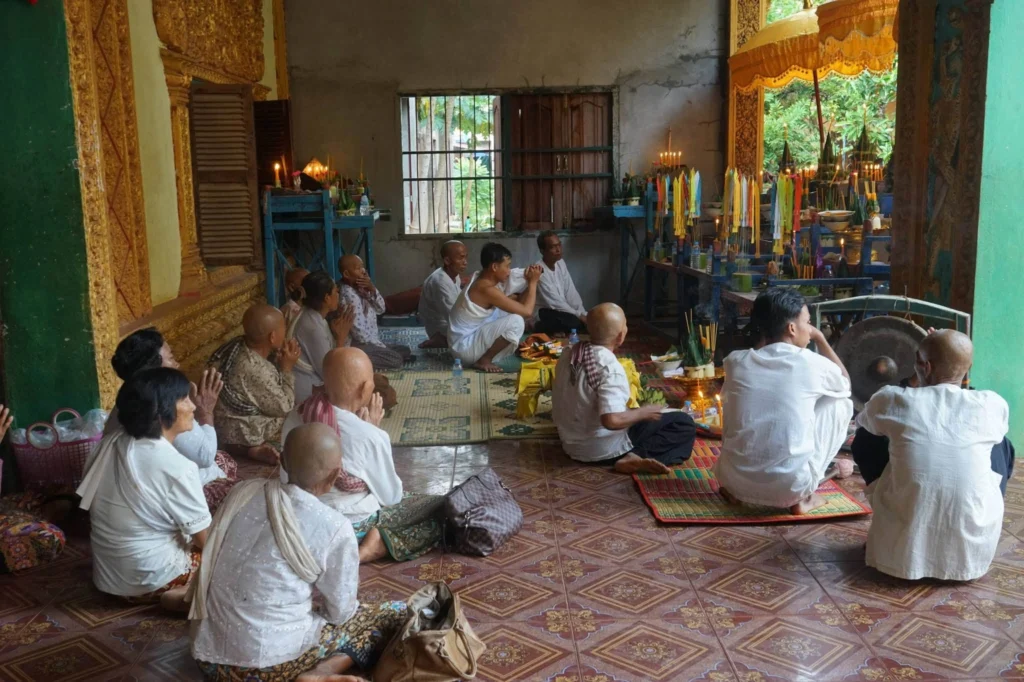
Although this Pavarana ritual is purely a monastic religious obligation, devout Buddhists eagerly prepare offerings and various food provisions to present to monks in the morning, alongside participating in Dhamma sermons—especially the preaching of the Great Jataka (Vessantara Jataka)—to accumulate spiritual merits.
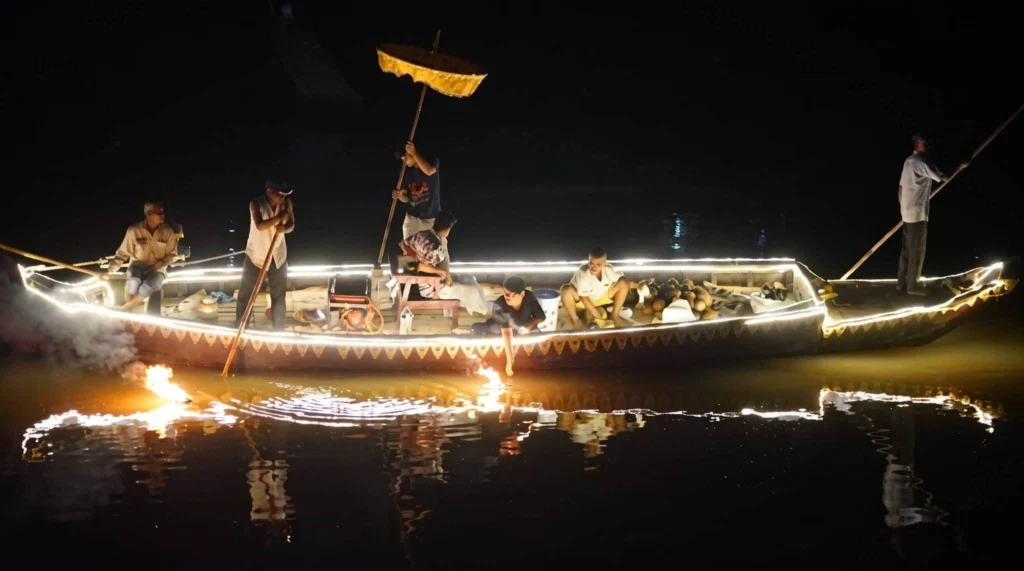
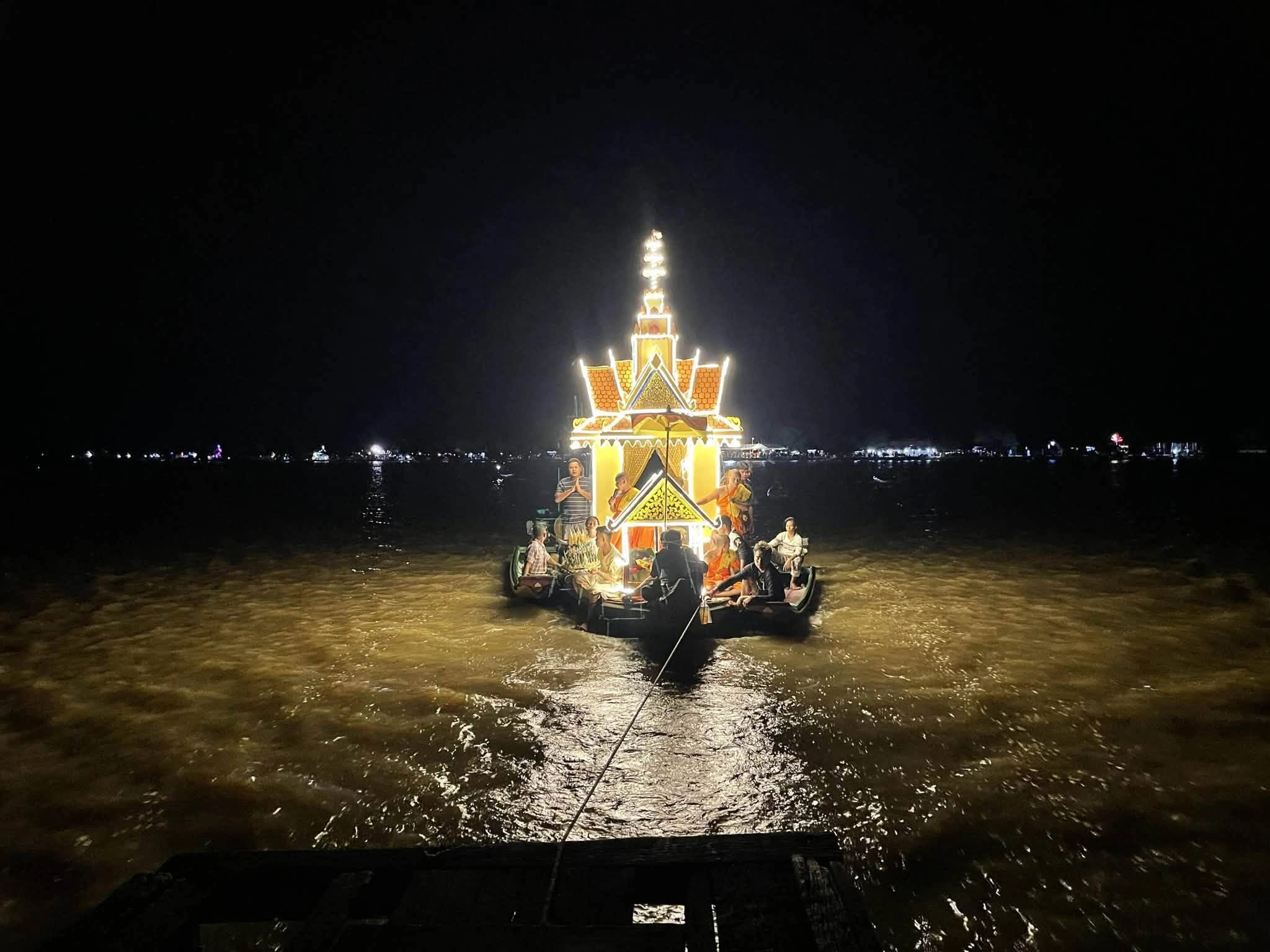
Alongside these religious proceedings, several pagodas in Siem Reap Province, particularly communities residing around the Tonle Sap Lake, maintain a unique traditional custom of preparing a “Sampov” (boat) or “Sangkhek” offering vessel. Inside these vessels, people arrange abundant provisions and supplies, including betel leaf arrangements (sla thmor doung), ritual rice pyramids (bay srei), cooked rice and curries, desserts, boiled chicken, fruits, drinking water, wine, cooking ingredients, rice, stoves, pots, pans, firewood, and various decorative items, to be floated along streams and rivers at night.
Specifically, in Kampong Phluk Commune on the day of the End of Vassa—a time when river water levels stabilize and stop rising—locals invariably organize a boat-racing ceremony dedicated to the Neak Ta (guardian spirits). They prepare illuminated floats and Sangkhek vessels at the pagoda beginning on the pavilion-setup day; the floats are crafted in the shape of a temple bearing ritual rice offerings dedicated to the masters of water and land (the Dragon King and Ta Kong Kuoch), while the Sangkhek vessels are fashioned into sailboat shapes featuring a large central sail intended for minor guardian spirits or minor phantoms. By afternoon, villagers gather rowing boats or prohoc boats to race and paddle joyfully from within the village out to the river mouth, with community members contributing funds and assorted sweets.
Following this, the boats are paddled toward the mouth near Koh Ta Popuh Teuk to organize boat races, led by a spirit medium (rupa snang) standing and commanding aboard a boat. Once the spirit medium finishes racing boats and dances joyfully to festive music, the illuminated floats and Sangkhek vessels are released into the water, and the boats paddle around them in three clockwise ceremonial circles (pradaksina). After completing the floating ritual, tradition dictates that the boats must paddle past “Koh Rang” located east of the village before returning to the settlement. Paddling past the village in this manner serves as a “trail-diverting” ritual to prevent any malevolent entities, ghosts, or demons from following the villagers back into their community.