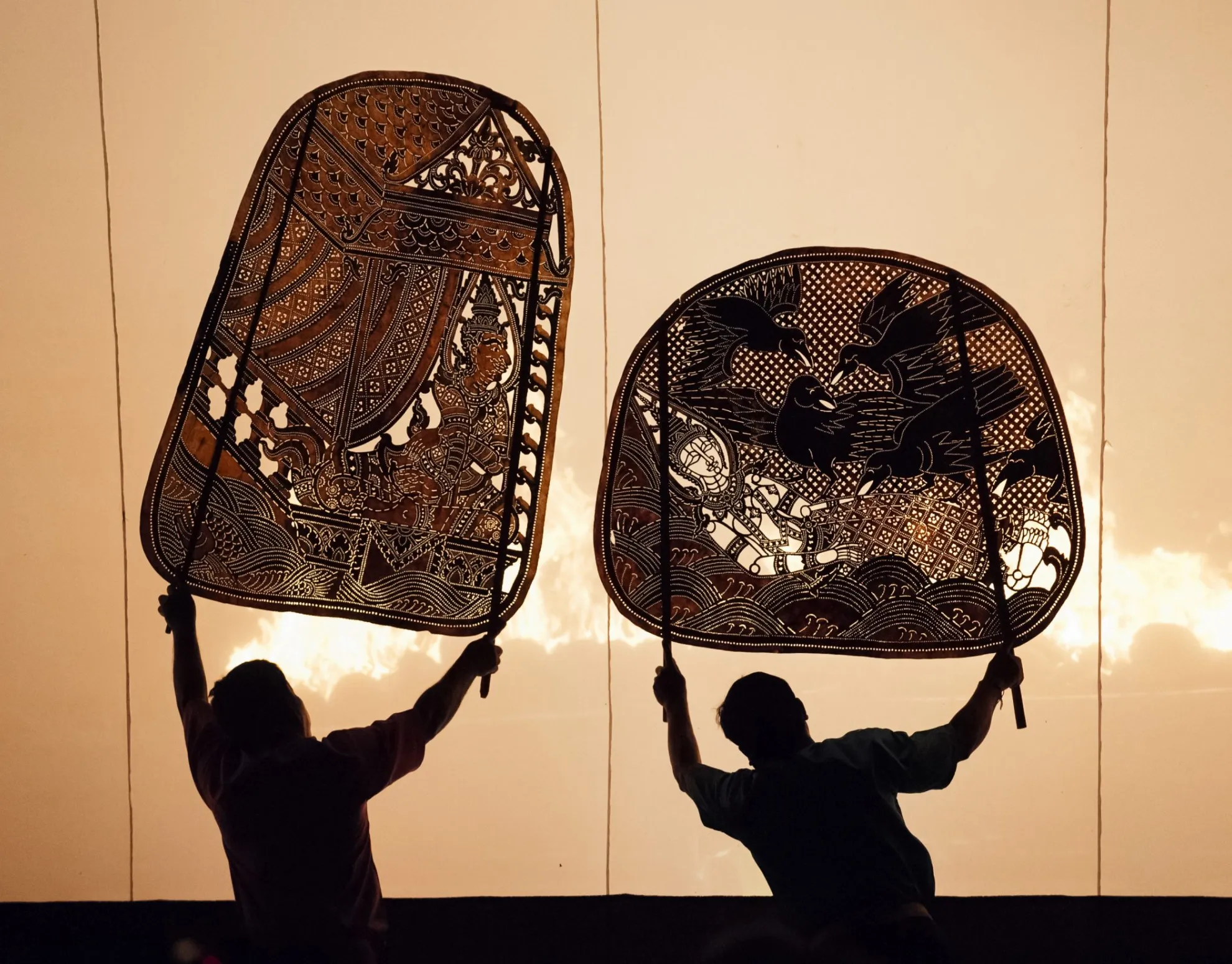
Sbek Thom, or Khmer Shadow Theatre, is considered by Cambodians to be a highly sacred art form, much like the Royal Ballet. Sbek Thom has always received royal patronage from the Monarch and has been actively supported by organizations, art associations, and maintained by various communities, such as the Sbek Thom of Wat Bo, the Kok Thlok artistic group, and the group led by Master Ty Chien.
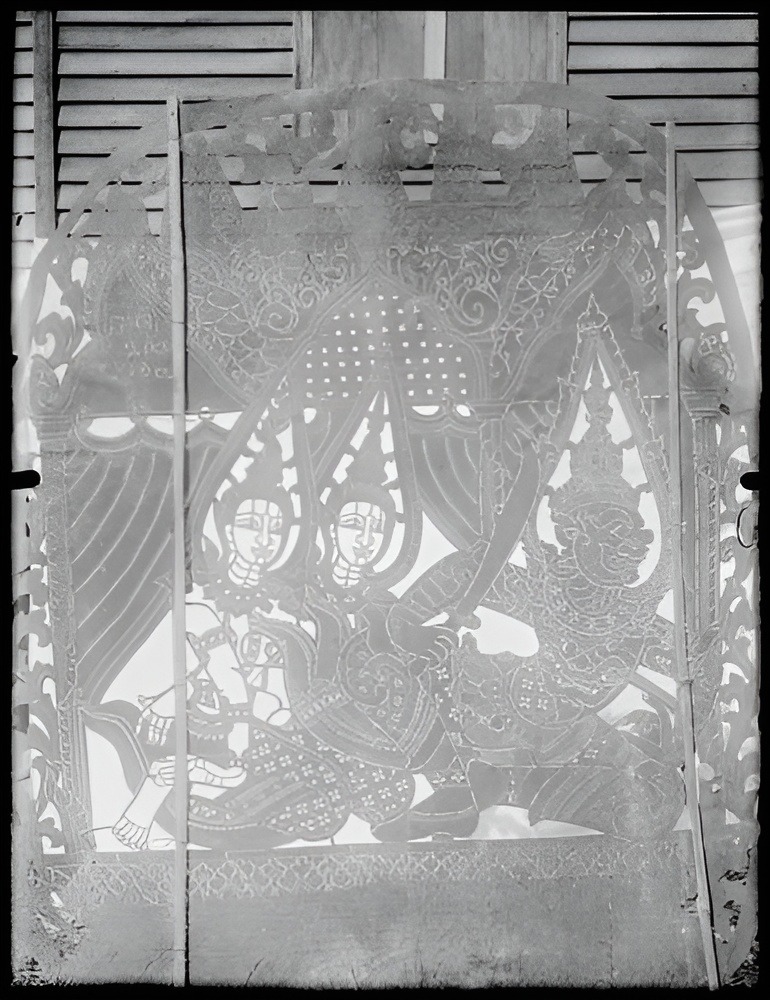
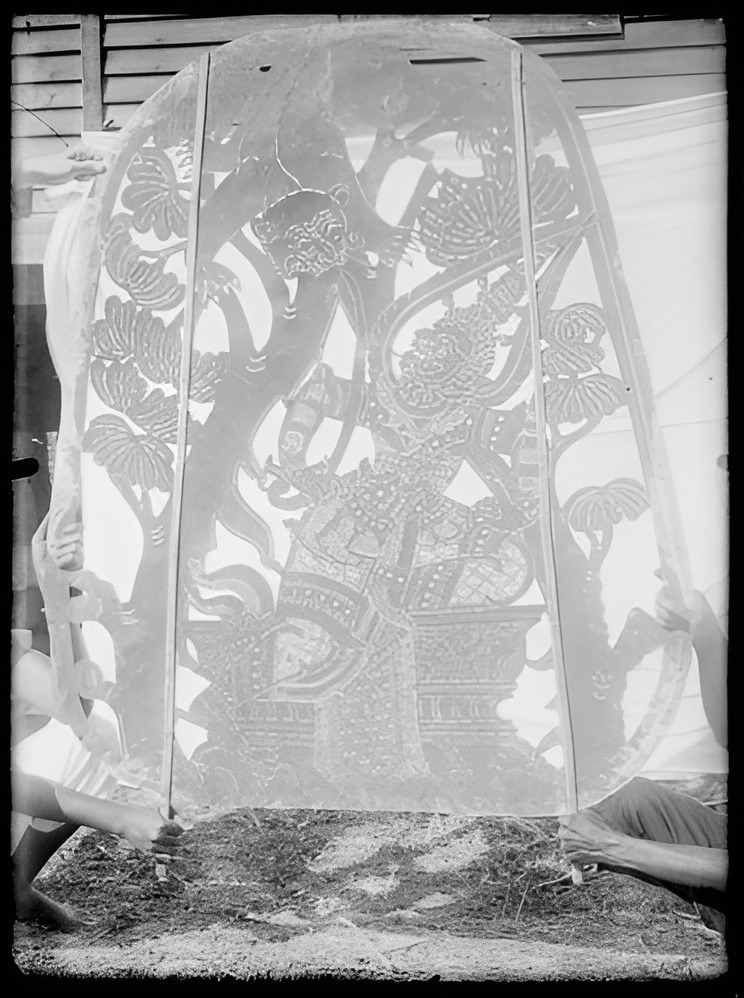
By tradition, Sbek Thom performs only the Reamker (the Khmer version of the Ramayana) and is performed only during major royal ceremonies, such as the King’s Coronation, Royal Birthdays, the cremation of members of the Royal Family, and significant traditional local ceremonies, such as the cremation of the Supreme Patriarch or a Chief Monk of a pagoda.
Sbek Thom requires hundreds of large leather panels, intricately carved to represent characters or specific scenes from the Reamker, which are brought out to perform in sequence according to the story. This theatre is performed with the accompaniment of a Pin Peat orchestra and narrators (the “Poul”) who use expressive tones to describe the story’s journey.
Cowhide is typically used to carve various characters, but for main characters like the Hermit and Preah Ream (Rama), bear or tiger skin is often used. Furthermore, the carving process must strictly follow specific traditions and taboos. According to ancient techniques, before the carving phase, the leather must be “tanned” first—meaning the fresh cowhide is cleaned thoroughly and then soaked in bark-infused water (specifically from the Kandaol tree) before being dried in the sun.
Generally, Sbek Thom performances are held at night. Originally, a large bonfire was lit behind a white cloth screen to project the shadows, but currently, electric lights are used instead. This allows performers to raise and dance with each leather panel against the light source. Sbek Thom performances also require a Pin Peat orchestra for accompaniment and narrators to describe the flow of the story. When the story reaches battle scenes where characters fight, the performers sometimes put the leather panels down and act out the fight themselves, mimicking the movements of the story with great vitality.
Due to the value of Sbek Thom which is deeply rooted in Khmer culture, and following the proposal of the Royal Government of Cambodia, UNESCO recognized and inscribed Sbek Thom on the Proclamation of Masterpieces of the Oral and Intangible Heritage of Humanity on November 25, 2005.