Heritage of Angkorian Buddhist Art: Exhibition of 3 Styles of Buddha Statues at the Norodom Sihanouk-Angkor Museum.
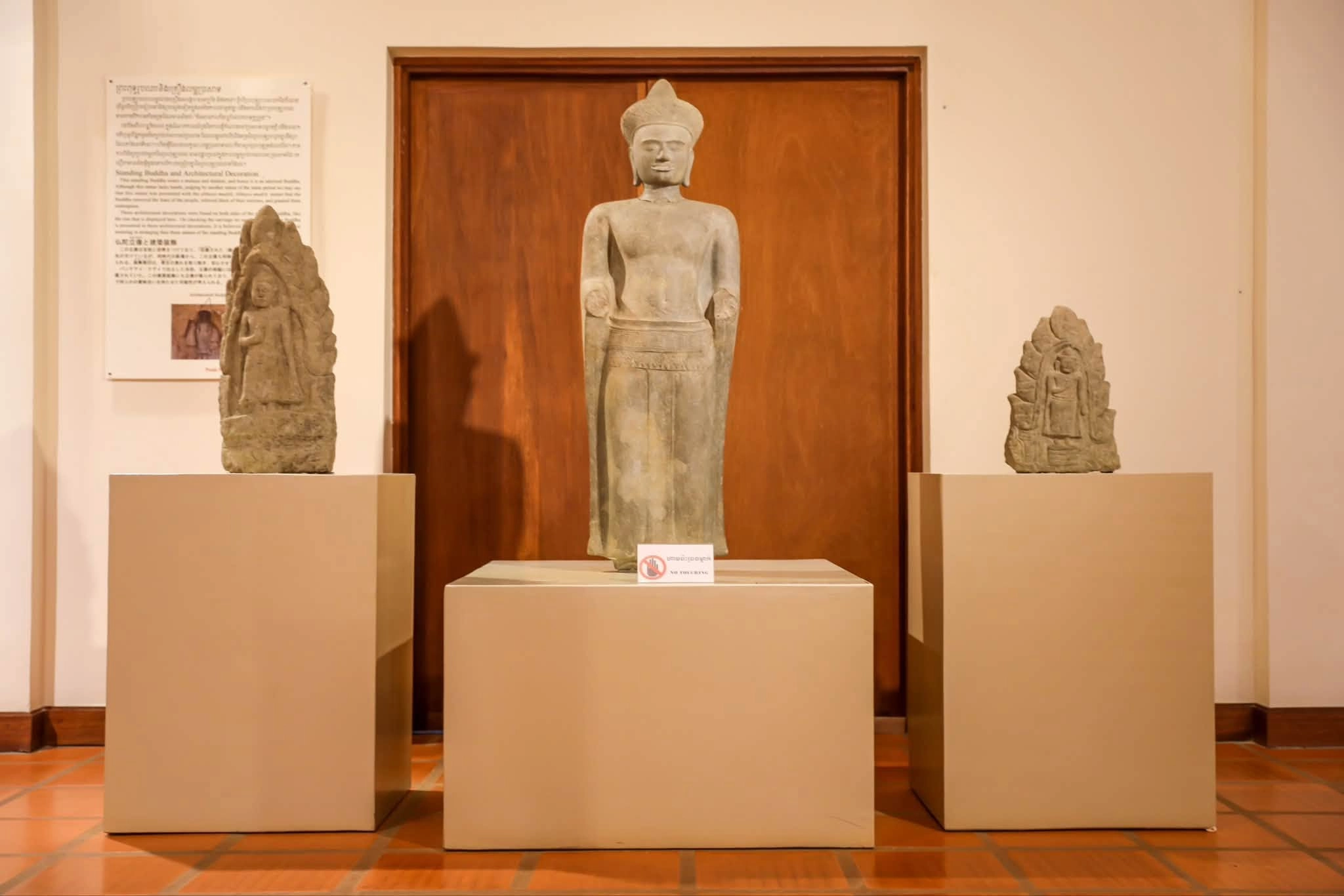
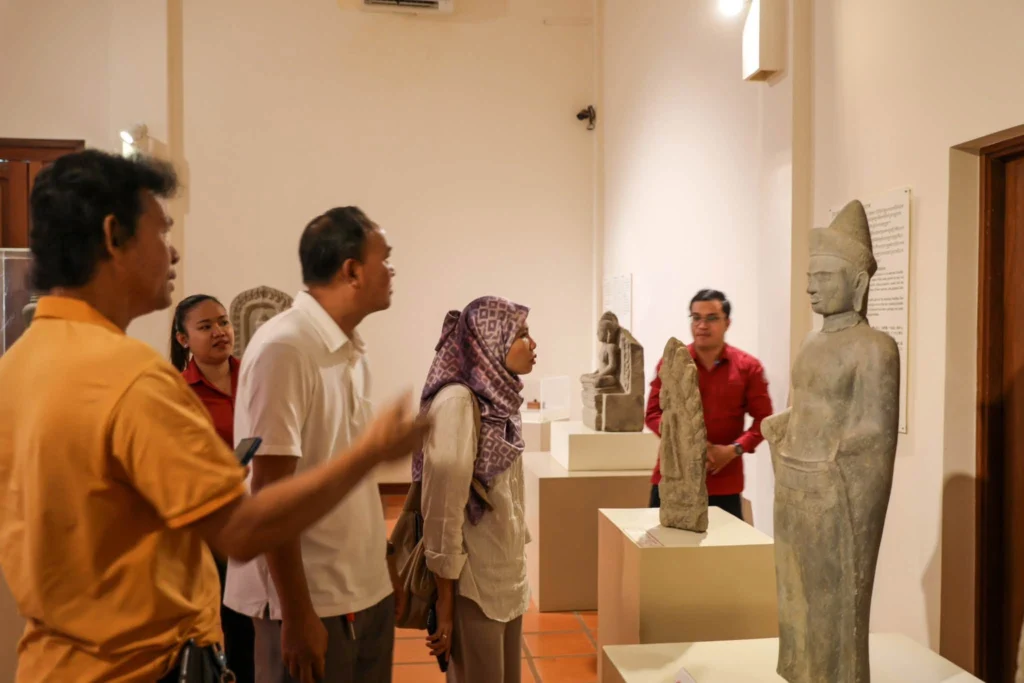
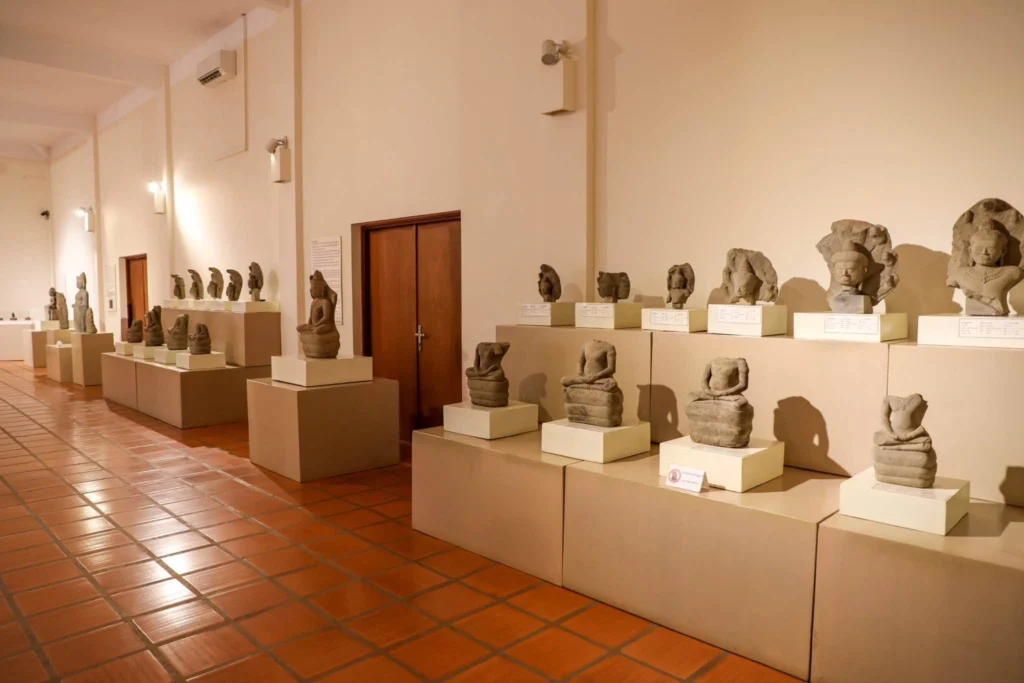
A total of 274 sandstone Buddha statue fragments carved during the Angkor period across three styles—Baphuon, Angkor Wat, and Bayon—are on display at the Norodom Sihanouk-Angkor Museum for public viewing and research.
These Buddha statues date back to approximately the late 13th century. Archaeological researchers discovered these rich fragments of Khmer art during excavations at Banteay Kdei Temple, after which experts cleaned and restored the artifacts for permanent public exhibition.
Mr. Voeun Vibul Sokhoma, a technical staff member at the Norodom Sihanouk-Angkor Museum, stated that the museum has displayed several fully intact Buddha statues from among the 274 pieces. He explained that while the Angkor period encompasses ten distinct artistic carving styles overall, the Mahayana Buddhist carvings unearthed at Banteay Kdei Temple represent only three specific styles: Baphuon, Angkor Wat, and Bayon.
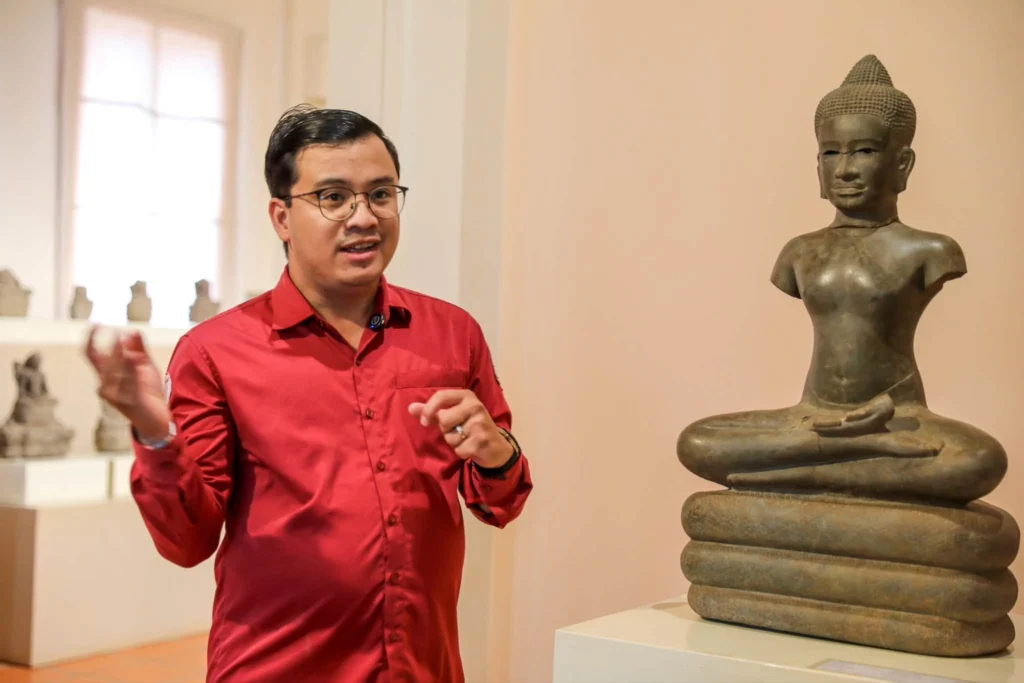
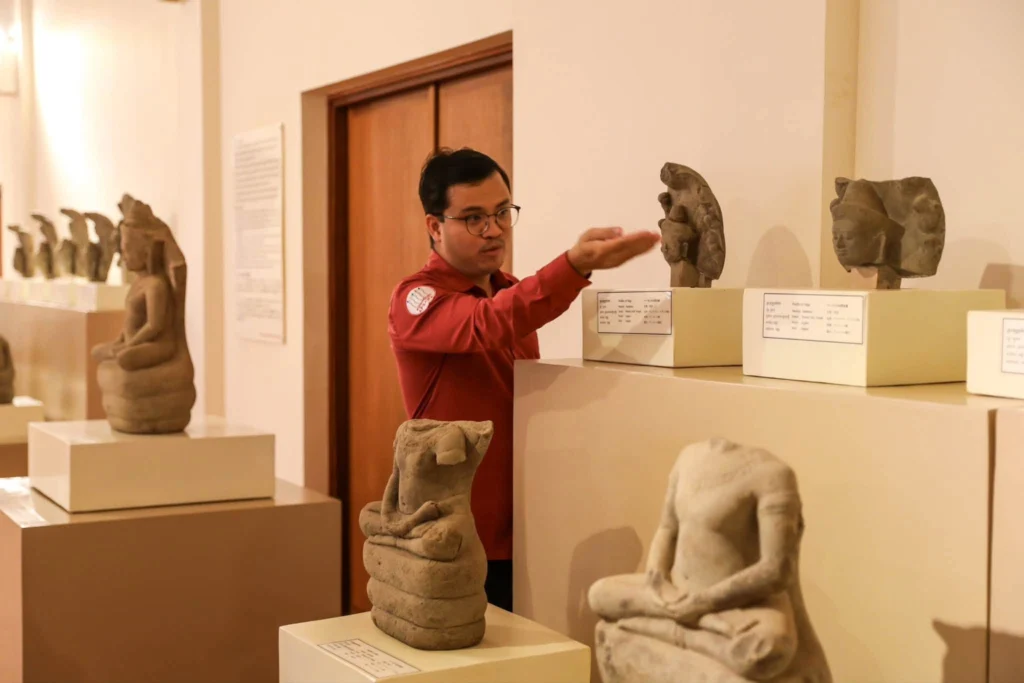
The Buddha statues across these three styles feature distinct characteristics. Baphuon style statues generally depict the Buddha seated in meditation sheltered by the Naga with open eyes, with some embellished with embedded gemstones while others are unadorned. The hair topknot is styled like corn kernels or lotus seeds, featuring a mustache and beard, while the robe covers both shoulders, leaving the chest exposed with a slender waist. Meanwhile, Angkor Wat style Buddha statues are characterized by the Buddha seated in meditation with open eyes, wearing a crown and regal ornaments including earrings, necklaces, armlets, wristlets, and anklets, similar to the carvings found within Angkor Wat Temple itself.
As for the Bayon style Buddha statues, they are identified by the Buddha seated in a posture of meditation with closed eyes. Statues in this artistic style feature tiered hair topknots, while the robe is draped over only one shoulder, covering the left shoulder.
These three artistic forms of Buddha statues from the Angkor period demonstrate that Khmer art continuously evolved across eras, exhibiting vast richness and distinct creative diversity.
Students and researchers wishing to study and explore these significant manifestations of rich Khmer art are invited to visit the Norodom Sihanouk-Angkor Museum, the nation’s premier archaeological museum. In addition to exhibiting these Angkorian Buddha statues across the three styles, the museum displays numerous other ancient artistic carvings, such as Bhaisajyaguru (the Healing Buddha) statues and a Buddhist boundary pillar featuring 1,008 Buddha images.